
- Focus & Attention
- Neuroprotection
- Anti-inflammatory
I spent two years chasing the next “cognitive enhancement breakthrough” before I realized I was ignoring the most fundamental question: Why is my brain inflamed in the first place?
That’s when I started looking at peptides differently — not as performance enhancers, but as tools for addressing the underlying cellular dysfunction that makes your brain feel like it’s running through mud. PAL-GHK is one of those compounds that doesn’t promise overnight superhuman focus. Instead, it works at the mitochondrial level to create the conditions your brain needs to actually function properly.
If you’re dealing with brain fog that won’t quit, poor stress resilience, or that feeling of “my brain just doesn’t work like it used to,” this guide breaks down what PAL-GHK actually does — and whether it’s worth your time and money.
The Short Version: PAL-GHK (Palmitoyl-Gly-His-Lys) is a lipidated peptide that binds copper ions and modulates gene expression to reduce neuroinflammation, support mitochondrial function, and protect against oxidative stress. It’s not a fast-acting nootropic — think 8-12 weeks of consistent use for noticeable cognitive benefits. Best for people addressing chronic inflammation or age-related cognitive decline, not for acute performance needs.
What Is PAL-GHK Peptide?
PAL-GHK is a modified version of the naturally occurring GHK peptide (glycyl-L-histidyl-L-lysine), a tripeptide sequence that’s been studied for decades for its role in wound healing and tissue repair. The “PAL” part — palmitoyl — is a fatty acid chain attached to the peptide to improve its stability and ability to penetrate cell membranes.
Here’s the interesting part: GHK peptides were first discovered in human plasma and have been shown to decline significantly with age. By your 60s, you have roughly 60% less circulating GHK than you did in your 20s. This decline correlates with decreased cellular repair capacity, increased inflammation, and — you guessed it — cognitive decline.
The lipidated version (PAL-GHK) was developed to enhance bioavailability and extend the peptide’s half-life in the body. Unlike straight GHK-Cu, which degrades quickly, the palmitoyl modification allows the peptide to remain active longer and cross biological barriers more efficiently — including the blood-brain barrier, which is critical for neurological effects.
People use PAL-GHK primarily for anti-aging and regenerative purposes, but the cognitive benefits come from its ability to address neuroinflammation and oxidative stress at the cellular level. It’s not a stimulant like caffeine or a direct cholinergic like Alpha-GPC. It’s more foundational — creating an environment where your neurons can repair, regenerate, and function optimally.
Reality Check: If you’re looking for an immediate cognitive boost for a presentation or exam, this isn’t it. PAL-GHK is a long-game compound. The benefits are cumulative and require consistent use over weeks to months. Think of it as infrastructure repair, not performance fuel.
How Does PAL-GHK Peptide Work? (The Science Without the Jargon)
PAL-GHK works through several interconnected pathways, but the core mechanism revolves around copper binding and gene expression modulation.
The peptide has high affinity for copper ions (Cu²⁺), and when it binds copper, it creates a complex that can influence hundreds of genes related to cellular repair, inflammation, and antioxidant defense. Copper is an essential cofactor for numerous enzymes in your brain, including cytochrome c oxidase (critical for mitochondrial energy production) and superoxide dismutase (a key antioxidant enzyme).
Here’s where it gets practical: by regulating copper availability and preventing excess free copper from generating reactive oxygen species (ROS) through Fenton reactions, PAL-GHK acts as both a pro-oxidant regulator and an antioxidant. It’s not flooding your system with antioxidants — it’s optimizing the metal ion balance that your endogenous antioxidant systems depend on.
A 2025 study published in The Journal of Dietary Supplements found that peptide formulations containing GHK-related compounds significantly improved hippocampal cognitive function markers and increased neuroplasticity indicators in animal models. The researchers noted increases in BDNF (brain-derived neurotrophic factor) and other neurogenesis markers after consistent administration.
In plain English: PAL-GHK helps your brain maintain the cellular environment needed for neurons to stay healthy, make new connections, and resist age-related damage. It’s particularly effective at suppressing pro-inflammatory cytokines like MCP-1 (monocyte chemoattractant protein-1), which recruit inflammatory cells to neural tissue and contribute to chronic neuroinflammation.
The mitochondrial angle is also significant. Copper is essential for cytochrome c oxidase function in the electron transport chain — the final step in ATP production. By maintaining optimal copper homeostasis, PAL-GHK supports mitochondrial biogenesis and energy production in neurons, which are among the most energy-demanding cells in your body.
Pro Tip: If you’re dealing with chronic inflammation (gut issues, autoimmune conditions, chronic stress), addressing those root causes will amplify PAL-GHK’s effects significantly. The peptide works with your body’s repair mechanisms — it doesn’t override them.
Benefits of PAL-GHK Peptide (What the Research Actually Shows)
Focus & Attention (Moderate Evidence)
The cognitive benefits of PAL-GHK are primarily indirect — they come from reducing the inflammatory and oxidative burden that impairs focus and attention in the first place. The 2025 study mentioned earlier showed improvements in hippocampal function, which is critical for learning, memory consolidation, and sustained attention.
The evidence here is moderate because most studies have been conducted in animal models or in vitro. Human trials specifically measuring cognitive outcomes with PAL-GHK are limited. However, the mechanisms are well-established: reducing neuroinflammation and oxidative stress consistently improves cognitive function across multiple studies with other compounds.
Anecdotally, users report clearer thinking and improved mental endurance after 8-12 weeks of consistent use, particularly those dealing with brain fog related to chronic inflammation or aging.
Neuroprotection & Anti-Inflammatory Effects (Strong Mechanistic Evidence)
This is where PAL-GHK shines. The peptide’s ability to suppress inflammatory cytokines (particularly MCP-1 and IL-6) is well-documented. Chronic neuroinflammation is implicated in nearly every neurodegenerative condition — Alzheimer’s, Parkinson’s, multiple sclerosis — and even in “normal” age-related cognitive decline.
Research shows that GHK peptides significantly reduce inflammatory markers in brain tissue and prevent the cascade of inflammatory signaling that damages neurons over time. The copper-binding mechanism also prevents metal-catalyzed oxidative damage, which is a major contributor to protein aggregation and cellular dysfunction in the aging brain.
A 2024 systematic review in Journal of Affective Disorders examining peptide-based interventions noted that compounds influencing metal homeostasis and inflammatory pathways show promise for protecting cognitive function, though the authors noted more human trials are needed.
Mitochondrial Support & Energy Metabolism (Emerging Evidence)
By supporting cytochrome c oxidase function and promoting mitochondrial biogenesis gene expression, PAL-GHK may help maintain neuronal energy production. This is especially relevant for aging brains, where mitochondrial dysfunction is a primary driver of cognitive decline.
The evidence here is mostly mechanistic — we know copper is essential for these processes, and we know PAL-GHK regulates copper homeostasis — but direct human trials measuring mitochondrial outcomes in the brain are lacking.
| Benefit | Evidence Level | Key Mechanism |
|---|---|---|
| Focus & Attention | Moderate (animal studies, anecdotal) | Reduced inflammation, improved hippocampal function |
| Neuroprotection | Strong (mechanistic, animal models) | Anti-inflammatory, antioxidant, gene modulation |
| Mitochondrial Support | Emerging (mechanistic) | Copper homeostasis, cytochrome c oxidase support |
Reality Check: The cognitive benefits are real, but they’re not dramatic or immediate. If you’re expecting a noticeable mental “kick” within hours or days, you’ll be disappointed. This is a long-term investment in brain health, not a productivity hack.
How to Take PAL-GHK Peptide (Without Wasting Your Money)
Dosage
Typical dosing for PAL-GHK ranges from 100-500 mcg (micrograms) depending on the formulation and delivery method. Most peptide protocols suggest starting at the lower end (100-200 mcg) and assessing tolerance and effects over 4-6 weeks before increasing.
Injectable forms (subcutaneous) are generally dosed at 100-200 mcg per injection, 2-3 times per week. Topical and oral formulations may require higher doses due to lower bioavailability, though specific data is limited.
| Form | Typical Dosage | Frequency | Notes |
|---|---|---|---|
| Subcutaneous injection | 100-200 mcg | 2-3x/week | Best bioavailability |
| Oral/sublingual | 200-500 mcg | Daily | Lower bioavailability, less studied |
| Topical (cosmetic formulations) | Varies widely | Daily | Primarily for skin, limited brain effects |
Timing & Administration
For cognitive benefits, empty stomach administration is generally recommended to maximize absorption. If using injectable forms, many users prefer morning or early afternoon dosing to avoid any potential sleep disruption, though PAL-GHK is not stimulating.
If you’re using an oral or sublingual form, hold it under the tongue for 60-90 seconds before swallowing to improve absorption through the mucous membranes.
Forms & Bioavailability
Subcutaneous injection is the gold standard for bioavailability. The peptide enters systemic circulation directly and avoids first-pass metabolism in the liver.
Oral forms are more convenient but face significant degradation in the digestive tract. Peptides are broken down by enzymes, so actual absorption is likely much lower than the stated dose. Some formulations use protective delivery systems (liposomes, enteric coating), but data is sparse.
Topical applications are primarily marketed for skin health and anti-aging. While there may be some systemic absorption, it’s unlikely to deliver meaningful amounts to the brain.
Cycling
There’s no established cycling protocol for PAL-GHK. Some users take it continuously for 8-12 weeks, then take a 4-week break to assess baseline function. Others use it consistently for months without cycling. Given the long-term nature of its benefits, consistency is more important than cycling.
Starting Protocol
- Start low: 100-200 mcg, 2-3x/week if injectable; 200 mcg daily if oral
- Assess for 4-6 weeks: Track subjective measures (focus, brain fog, mental endurance)
- Increase if needed: Move to 200-300 mcg doses after assessing tolerance
- Give it time: Minimum 8 weeks before making final judgments on effectiveness
Insider Tip: Keep a simple daily log for the first 12 weeks — rate your focus, energy, and brain fog on a 1-10 scale. The changes with PAL-GHK are gradual enough that you might not notice them day-to-day, but a written record will show trends over time.
Side Effects & Safety (What Could Go Wrong)
PAL-GHK is generally well-tolerated, but human safety data is limited. Most of what we know comes from GHK peptide research and anecdotal reports from users.
Common Side Effects
- Mild digestive discomfort if taken with food (oral forms)
- Injection site reactions (redness, mild irritation) with subcutaneous administration — usually resolve within 24 hours
- Potential copper imbalance with long-term, high-dose use (theoretical concern)
Who Should Avoid PAL-GHK
- Pregnant or nursing women: No safety data exists for this population
- Individuals with copper metabolism disorders (Wilson’s disease, Menkes disease): The peptide’s copper-binding properties could exacerbate imbalances
- Active cancer patients: GHK peptides influence cell proliferation and tissue repair pathways; consult an oncologist before use
Drug Interactions
| Medication/Substance | Interaction Type | Risk Level | Notes |
|---|---|---|---|
| Copper supplements | Additive effect | Moderate | May increase total copper load; monitor intake |
| Chemotherapy agents | Cell proliferation | High | Consult oncologist — peptides may interfere with treatment |
| Immunosuppressants | Immune modulation | Moderate | PAL-GHK has anti-inflammatory effects; discuss with physician |
| Blood thinners (warfarin, heparin) | Theoretical coagulation effect | Low-Moderate | Limited data; monitor for unusual bruising |
Important Safety Notes
Important: PAL-GHK is typically sold for research purposes only and is not FDA-approved for human consumption. If you’re sourcing this peptide, verify third-party testing for purity and sterility, especially for injectable forms. Contaminated peptides can cause serious adverse reactions.
If you experience persistent headaches, unusual fatigue, or signs of an allergic reaction (rash, difficulty breathing), discontinue use and consult a healthcare provider immediately.
Stacking PAL-GHK Peptide (The Combinations That Actually Work)
PAL-GHK works best when combined with compounds that address complementary pathways. Because it’s a foundational, anti-inflammatory peptide, it pairs well with both neuroprotective agents and cognitive enhancers.
For Cognitive Longevity & Neuroprotection
PAL-GHK (200 mcg, 3x/week) + Lion’s Mane (1000mg daily) + NAD+ precursor (NMN 250mg daily)
This stack targets neuroplasticity, mitochondrial function, and inflammatory reduction. Lion’s Mane stimulates NGF production for neuron growth and repair, while NMN supports cellular energy metabolism and DNA repair. PAL-GHK ties it together with its anti-inflammatory and copper homeostasis effects.
Take Lion’s Mane and NMN in the morning with breakfast. Administer PAL-GHK on an empty stomach, morning or early afternoon.
For Focus & Mental Clarity (With Anti-Inflammatory Foundation)
PAL-GHK (200 mcg, 3x/week) + Alpha-GPC (300mg) + L-Theanine (200mg) + Caffeine (100mg)
Use PAL-GHK as your long-term foundational compound (3x/week consistently), while the Alpha-GPC + L-Theanine + Caffeine stack handles acute focus needs. Alpha-GPC boosts acetylcholine for sharp cognition, L-Theanine smooths out caffeine’s edge, and caffeine provides the immediate alertness kick.
Take the focus stack (Alpha-GPC/Theanine/Caffeine) in the morning before work. PAL-GHK on separate days or earlier in the morning on an empty stomach.
For Stress Resilience & Mood Support
PAL-GHK (200 mcg, 3x/week) + Rhodiola Rosea (300mg) + Magnesium L-Threonate (144mg elemental Mg) + Ashwagandha (300mg, KSM-66 extract)
This stack addresses the inflammatory component of chronic stress (PAL-GHK), cortisol regulation (Ashwagandha), neurotransmitter support (Rhodiola), and neuronal magnesium status (Magnesium L-Threonate).
PAL-GHK in the morning on empty stomach. Rhodiola with breakfast. Magnesium L-Threonate before bed. Ashwagandha with dinner.
| Stack Goal | Key Synergy | Avoid Combining With |
|---|---|---|
| Neuroprotection | Lion’s Mane (NGF) + PAL-GHK (anti-inflammatory) | High-dose copper supplements |
| Focus | Alpha-GPC (acetylcholine) + PAL-GHK (mitochondrial support) | Excessive stimulants (overstimulation) |
| Stress/Mood | Adaptogens (cortisol) + PAL-GHK (inflammation) | Alcohol (counterproductive) |
What to AVOID Combining
- High-dose copper supplementation: PAL-GHK already influences copper homeostasis; adding additional copper could lead to imbalance
- Unproven “anti-aging” peptide stacks: Stacking multiple experimental peptides without understanding their individual mechanisms increases risk
- Immunosuppressants without medical guidance: PAL-GHK’s immune-modulating effects could interfere
Pro Tip: Don’t stack PAL-GHK with five other peptides and expect to know what’s working. Start with PAL-GHK alone for 8 weeks, establish a baseline, then add complementary compounds one at a time with 4-week assessment periods.
My Take (Is PAL-GHK Worth It?)
I’m going to be blunt: PAL-GHK is not for everyone, and it’s definitely not a beginner nootropic.
If you’re new to cognitive enhancement and looking for your first supplement, start with foundational compounds like Magnesium L-Threonate, Omega-3s, or Lion’s Mane. Those are safer, cheaper, better-studied, and more forgiving if you mess up the dosing.
PAL-GHK makes sense for a specific subset of people:
You’re a good candidate if:
- You’re dealing with chronic inflammation (gut issues, autoimmune conditions, high CRP levels)
- You’re over 40 and noticing age-related cognitive decline
- You’ve already dialed in the basics (sleep, diet, stress management, foundational supplements)
- You’re comfortable with experimental compounds and willing to invest 12+ weeks to assess results
- You have access to high-quality, third-party tested peptides
You should probably try something else if:
- You’re looking for an immediate cognitive boost — try Alpha-GPC + Caffeine + L-Theanine instead
- You’re dealing with acute stress or anxiety — Ashwagandha or Rhodiola are better first-line options
- You haven’t addressed foundational health issues — fix your sleep and gut health first before experimenting with peptides
My honest assessment: The research on GHK peptides is compelling, and the mechanisms make biological sense. But the human cognitive data is thin, and the quality control in the peptide market is inconsistent. If you’re going to try PAL-GHK, source it from a reputable vendor with third-party testing (especially for injectable forms), start conservatively, and give it a full 12-week trial before making judgments.
This isn’t a magic bullet. It’s a tool for long-term brain health optimization — and it works best when you’ve already built a solid foundation of sleep, nutrition, movement, and stress management.
If that sounds like too much work, it probably is. But if you’re serious about cognitive longevity and you’ve already handled the basics, PAL-GHK is worth exploring.
Recommended PAL-GHK Peptide Products
I know how frustrating it is to sort through dozens of brands making the same claims. These are the ones I've personally vetted — because quality is the difference between results and wasted money.
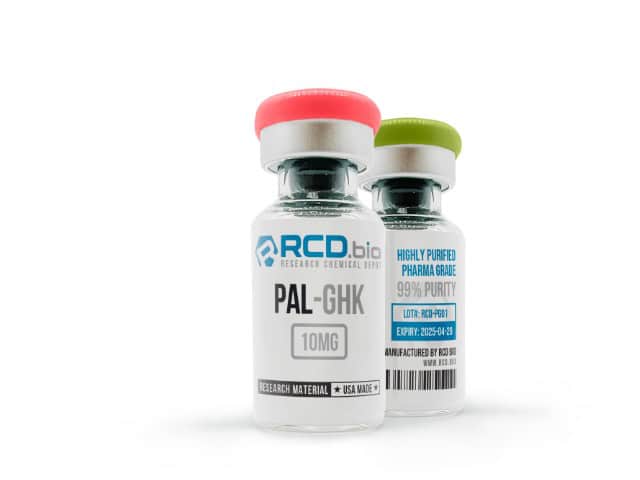
Disclosure: These are affiliate links. I earn a small commission if you purchase — at no extra cost to you. I only recommend products I personally use or have thoroughly researched.
Research & Studies
This section includes 2 peer-reviewed studies referenced in our analysis.