
- Focus & Attention
- Anabolic Signaling
- Mitochondrial Function
Four years ago, I went down the SARM rabbit hole — reading forum posts, watching YouTube channels, trying to separate legitimate research from broscience. YK-11 kept coming up as the “most anabolic SARM” with cognitive benefits thrown in as a bonus claim.
Here’s what I wish someone had told me back then: YK-11 is one of the least-studied compounds in the SARM category, and the limited research we do have raises more red flags than green lights — especially for anyone considering it primarily for brain benefits.
The Short Version: YK-11 is an investigational SARM with partial androgen receptor agonism that’s been studied primarily for muscle and bone effects. While it may influence dopamine signaling and mitochondrial function through androgen receptor pathways, recent studies show concerning effects on hippocampal oxidative stress and mitochondrial dysfunction. The cognitive benefit evidence is extremely limited, and safety data is insufficient.
Research Chemical Notice: YK-11 is an investigational compound that has not been approved by the FDA for human use. The information below is compiled from published research for educational purposes only. This is not medical advice and should not be interpreted as a recommendation for human consumption. Always consult a qualified healthcare provider.
What Is YK-11?
YK-11 occupies a strange position in the SARM landscape. It’s chemically structured as a steroidal compound — derived from dihydrotestosterone (DHT) — but it’s marketed and sold as a selective androgen receptor modulator. Technically, it’s both.
The compound was first synthesized by Japanese researchers Kanno et al. and studied for its effects on osteoblast (bone-building) cells. The initial 2011 research showed that YK-11 could stimulate bone cell proliferation more effectively than DHT itself, which generated interest in its potential for osteoporosis treatment.
But YK-11 never went through formal clinical development. It disappeared from academic research for years, then re-emerged in the grey market supplement world around 2015-2016 as a “muscle-building SARM” with claims that extended into cognitive enhancement territory.
The cognitive interest stems from androgen receptors being present throughout the brain — particularly in regions involved in learning, memory, and motivation. If YK-11 activates these receptors selectively, the theory goes, it could influence brain function. But theory and evidence are very different things.
Reality Check: The vast majority of information about YK-11’s effects comes from animal studies, in vitro (test tube) research, and anecdotal reports from bodybuilding communities. There are zero published human trials examining its cognitive effects, and only minimal data on its safety profile.
How Does YK-11 Work?
YK-11’s mechanism is where things get biochemically interesting — and where the gap between “how it works on paper” and “what it actually does in living humans” becomes a canyon.
The androgen receptor pathway: YK-11 binds to androgen receptors but acts as a partial agonist rather than a full agonist like testosterone. This means it activates the receptor, but not to the maximum extent. In theory, this selective activation could produce anabolic effects in muscle and bone while avoiding some of the unwanted androgenic effects in tissues like the prostate.
The compound also appears to work through a secondary mechanism involving myostatin inhibition. Myostatin is a protein that limits muscle growth. A 2018 study in Biological and Pharmaceutical Bulletin by Yatsu et al. found that YK-11 up-regulated follistatin expression in osteoblastic cells — follistatin is a myostatin antagonist. So YK-11 might work through two pathways: direct androgen receptor activation AND indirect suppression of a growth-limiting protein.
The brain angle: Androgen receptors are distributed throughout the brain, with particularly high concentrations in the hippocampus, amygdala, and hypothalamus. These regions are involved in memory formation, emotional regulation, and stress response. When androgens bind these receptors, they can influence dopamine synthesis and release, modulate neuronal excitability, and potentially affect mitochondrial biogenesis through activation of transcription factors like PGC-1α.
Translation: YK-11’s effects on androgen receptors in the brain could theoretically influence focus, motivation, and energy metabolism at the cellular level. But here’s the problem — recent research suggests the reality is more complicated and concerning than that clean theoretical model.
A 2023 study published in The Journal of Steroid Biochemistry and Molecular Biology by Dahleh et al. examined what YK-11 actually does in rat hippocampal tissue. The findings were not encouraging: YK-11 administration induced oxidative stress and mitochondrial dysfunction in the hippocampus — the exact opposite of what you’d want from a cognitive enhancer.
The 2024 follow-up study by the same research group found that YK-11 impaired hippocampal-dependent memory performance in behavioral tests and showed evidence of mitochondrial damage at the molecular level. The compound wasn’t supporting brain function — it was actively impairing it, at least in the rodent model.
So we have a compound that theoretically could enhance cognition through androgen receptor and mitochondrial pathways, but the limited mechanistic research we have shows it doing the opposite.
Reported Effects of YK-11 (What the Research Shows)
Let’s separate what’s actually been documented from what’s speculation and anecdote.
Documented Effects in Bone and Muscle Tissue
The most solid research on YK-11 comes from the original 2018 Biological and Pharmaceutical Bulletin study, which found that YK-11:
- Increased cell proliferation in MC3T3-E1 osteoblastic cells by approximately 2-fold compared to DHT
- Up-regulated follistatin expression (a myostatin inhibitor)
- Showed dose-dependent effects on bone cell differentiation markers
This is the evidence that launched a thousand forum threads claiming YK-11 was “the most anabolic SARM.” But these were test tube studies on isolated bone cells, not living organisms building muscle.
Cognitive Effects: More Concerning Than Promising
The cognitive effects profile based on current research:
| Reported Effect | Evidence Level | Key Finding |
|---|---|---|
| Focus/Attention | Anecdotal only | No controlled studies in humans |
| Memory function | Negative (animal) | Dahleh et al. 2024: impaired hippocampal-dependent memory |
| Mitochondrial support | Negative (animal) | Dahleh et al. 2023: induced mitochondrial dysfunction |
| Dopamine modulation | Theoretical | No direct measurement in published research |
User reports in research communities describe improved focus and motivation during YK-11 administration, but these are confounded by multiple factors: expectation effects, stacking with other compounds (YK-11 is rarely used alone), and the difficulty of separating perceived cognitive enhancement from increased physical energy and gym performance.
Important: The only controlled research examining YK-11’s effects on brain tissue found evidence of oxidative damage and mitochondrial dysfunction — not enhancement. This is a serious red flag that shouldn’t be dismissed based on anecdotal “focus and motivation” reports.
Research Administration Protocols (Doses Used in Studies)
The dosing information for YK-11 comes almost entirely from anecdotal reports rather than clinical trials, because there are no published human trials.
Doses Investigated and Reported
| Dose Range | Context | Notes |
|---|---|---|
| 5 mg/day | Lower end of reported use | Often used by first-time users |
| 10 mg/day | Mid-range typical dose | Most common in user reports |
| 15-20 mg/day | Higher end | Used by experienced users, higher risk |
Timing patterns observed in user reports:
- Once-daily administration, typically in the morning
- Split dosing (divided into 2 doses 8-12 hours apart) for doses above 10 mg
- Administration with or without food — no clear bioavailability data exists
Half-life: The pharmacokinetic profile of YK-11 has not been formally established. A 2019 study in Drug Testing and Analysis by Piper et al. examined YK-11 metabolism and identified multiple metabolites in urine samples, but didn’t establish half-life or time to peak concentration. User reports suggest a relatively short half-life (6-12 hours), which is why split dosing is common, but this is speculation.
Pro Tip: If someone is determined to research this compound despite the safety concerns, the pattern in research communities is to start at the lowest dose (5 mg) and assess tolerance and effects for 2-3 weeks before considering any increase. The “more is better” approach is particularly risky with a compound this poorly understood.
Adverse Events & Safety Profile
This is where the risk-benefit calculation for YK-11 becomes really problematic.
Observed Adverse Effects
From animal research:
- Oxidative stress in hippocampal tissue (Dahleh et al. 2023)
- Mitochondrial dysfunction with evidence of decreased mitochondrial membrane potential
- Impaired cognitive performance in behavioral testing
- Unknown effects on liver function (no hepatotoxicity studies exist)
From anecdotal human reports (not controlled studies):
- Hormonal suppression (decreased testosterone production)
- Elevated liver enzymes (based on bloodwork reports in online communities)
- Androgenic effects: acne, hair loss in predisposed individuals
- Joint pain or stiffness
- Mood changes (both positive and negative reports)
- Sleep disruption
Important: There are zero long-term safety studies for YK-11. The compound has never been through formal toxicology evaluation. Anyone using this compound is essentially participating in an uncontrolled experiment.
Who Should Avoid This Compound
This list is non-exhaustive but critical:
- Anyone under 25 (brain and endocrine system still developing)
- Women (virilization risk; no safety data in females)
- Anyone with pre-existing liver conditions
- Anyone with cardiovascular risk factors
- Anyone taking medications that affect hormone levels
- Anyone with a history of mood disorders or depression
Drug and Substance Interactions
| Medication/Substance | Interaction Type | Risk Level | Notes |
|---|---|---|---|
| Testosterone/Steroids | Additive androgenic | High | Compounds hormonal suppression risk |
| Aromatase inhibitors | Hormonal | Moderate-High | May exacerbate hormonal imbalances |
| Liver-metabolized drugs | Hepatic competition | Unknown | No P450 interaction data exists |
| Stimulants | Cardiovascular | Moderate | May compound cardiac stress |
| Alcohol | Hepatotoxic | High | Avoid combining |
| Other SARMs | Additive suppression | High | Common in practice, multiplies risks |
Post-Cycle Considerations: Research community protocols typically include post-cycle therapy (PCT) with compounds like Clomiphene or Tamoxifen to restore natural testosterone production after YK-11 use. The need for PCT suggests significant endocrine disruption is occurring.
Investigated Combinations in Research
YK-11 is rarely researched or reported as a standalone compound. Here’s what appears in research community protocols, organized by stated goal:
For Anabolic/Physique Goals (Primary Use Case)
Research communities report stacking:
- 5-10 mg YK-11 + 10-20 mg RAD-140 + 10-20 mg LGD-4033 — “triple SARM stack” for maximum anabolic effect
- 10 mg YK-11 + 20 mg MK-677 — combining a SARM with a growth hormone secretagogue
- Timing: Typically 8-12 week cycles with 4-8 weeks off
For Cognitive/Focus Claims (Less Common)
Occasionally reported combinations:
- 5 mg YK-11 + 200 mg L-Theanine + 100 mg Caffeine — attempting to combine purported androgen receptor cognitive effects with classic focus stack
- 5-10 mg YK-11 + 500 mg Alpha-GPC — cholinergic support
What to avoid combining:
- Multiple androgenic compounds (multiplies suppression risk and side effects)
- Hepatotoxic substances including alcohol, high-dose acetaminophen, or other liver-stressing compounds
- Stimulant-heavy stacks (cardiovascular stress)
Reality Check: The vast majority of YK-11 use occurs in bodybuilding/physique contexts where it’s stacked with multiple other SARMs and performance-enhancing compounds. Isolating cognitive effects from this multi-compound context is essentially impossible based on available reports.
Current Research Assessment
Here’s what I’d tell a friend asking about YK-11 for cognitive enhancement:
The evidence for cognitive benefits is essentially nonexistent. There are no human trials. The animal research that does exist shows concerning neurotoxic effects rather than cognitive enhancement. The “focus and motivation” reports you’ll find online are almost entirely anecdotal, confounded by polypharmacy, and likely driven more by expectation and the general stimulating effects of androgenic compounds than by any specific cognitive mechanism.
The safety profile is alarming. We have evidence of oxidative stress and mitochondrial dysfunction in brain tissue from animal models. We have widespread reports of hormonal suppression requiring pharmaceutical intervention to restore. We have zero long-term safety data. The risk-benefit calculation doesn’t make sense when we have dozens of compounds with actual cognitive research backing and established safety profiles.
Who this is most commonly investigated for: Bodybuilders and physique athletes looking for anabolic effects are the primary research population. Even in that context, YK-11 is considered a high-risk option compared to more-studied compounds.
Better alternatives for cognitive goals:
- For focus and motivation through dopamine pathways: L-Tyrosine or Mucuna Pruriens have actual safety data
- For mitochondrial support: Creatine, CoQ10, or PQQ have extensive research
- For androgen-related cognitive effects: Address testosterone optimization through lifestyle factors (sleep, stress management, resistance training, adequate fat intake) with medical monitoring
The current state of YK-11 research suggests this is a compound that should remain in the “investigational” category until proper human trials establish both efficacy and safety. The gap between theoretical mechanism and actual evidence is too wide, and the emerging safety signals are too concerning, to justify use for cognitive enhancement.
If someone is experiencing low motivation, poor focus, or cognitive fatigue, the answer is to investigate root causes — thyroid function, testosterone levels, sleep quality, chronic inflammation, nutrient deficiencies — not to reach for an unstudied research chemical with documented neurotoxic effects in animal models.
Recommended YK-11 Products
I know how frustrating it is to sort through dozens of brands making the same claims. These are the ones I've personally vetted — because quality is the difference between results and wasted money.
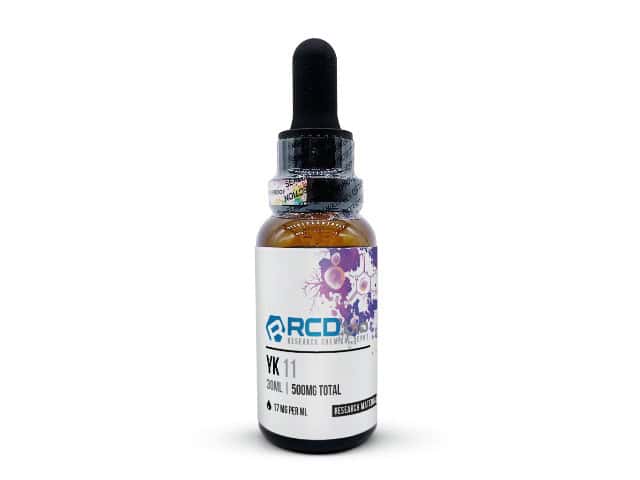
Disclosure: These are affiliate links. I earn a small commission if you purchase — at no extra cost to you. I only recommend products I personally use or have thoroughly researched.
Research & Studies
This section includes 5 peer-reviewed studies referenced in our analysis.