
- Neuroprotection and cognitive support
- Body composition and nutrient partitioning
- Antioxidant and anti-inflammatory defense
- Metabolic health and insulin sensitivity
- Gut-brain axis modulation
I’ll be honest — the first time someone told me to take a berry pigment for body composition and brain health, I thought they were out of their minds. A food coloring? Really? That was three years ago, and C3G has quietly become one of the most interesting compounds in my daily stack.
Not because it’s flashy. It won’t hit you over the head like caffeine or make you feel like you downloaded a new brain overnight. But the science behind this particular anthocyanin — the deep purple-red pigment in blackberries, black rice, and blood oranges — is surprisingly robust, spanning everything from Alzheimer’s prevention to insulin sensitivity to mitochondrial function.
If you’ve been hearing about C3G in bodybuilding circles and wondered whether the hype has any substance behind it, or if you’re looking for a long-game neuroprotective compound that won’t mess with your sleep or give you jitters, you’re in the right place.
The Short Version: Cyanidin 3-Glucoside is the most abundant anthocyanin in nature, extracted primarily from black rice. It enhances how your body handles glucose and fat through AMPK activation, provides neuroprotection via Nrf2 and BDNF pathways, and acts as a potent antioxidant. Best for people seeking long-term metabolic and brain health support — not an acute “feel-it-now” nootropic. Take 125–500mg daily before your biggest meal.
What Is Cyanidin 3-Glucoside?
Cyanidin 3-Glucoside — C3G for short, also called chrysanthemin — is the single most abundant anthocyanin found in nature. Anthocyanins are the flavonoid pigments that give berries, grapes, purple corn, and black rice their deep red-to-purple color. C3G specifically is a cyanidin molecule bonded to a glucose sugar, and that glucose isn’t just structural decoration — it’s what gives C3G a significant bioavailability advantage over its naked counterpart.
Cultures across Asia, Europe, and the Americas have used deeply pigmented berries and grains in traditional remedies for centuries, targeting everything from cardiovascular health to vision to inflammation. But modern scientific interest in C3G specifically didn’t pick up serious momentum until the early 2000s, when researchers identified it as the dominant anthocyanin — averaging around 82% of total anthocyanins — in many deeply pigmented foods.
Today, most supplemental C3G comes from black rice (Oryza sativa L.) extract, standardized to contain a specific percentage of the compound. You’ll find it in your blackberries, blueberries, black currants, elderberries, Aronia berries, blood oranges, and purple corn too — but you’d need to eat an impractical amount of berries daily to match a supplemental dose.
How Does Cyanidin 3-Glucoside Work?
Here’s what makes C3G genuinely interesting from a nootropics perspective: it doesn’t just do one thing. Most compounds have a primary mechanism and maybe a secondary effect. C3G hits multiple systems simultaneously, which is rare and — when the pathways converge — potentially more meaningful than any single action alone.
The Metabolic Engine
Think of C3G as a metabolic traffic cop. It activates AMPK — your body’s master energy sensor — which tells your cells to start pulling glucose out of the bloodstream and into muscle tissue via GLUT1 and GLUT4 transporters. The remarkable part? It does this independently of insulin. That’s a big deal for anyone dealing with insulin resistance or simply wanting to shuttle carbs toward muscle rather than fat storage.
On top of that, C3G ramps up PGC-1α, which drives mitochondrial biogenesis — literally building new cellular power plants. It also activates PPAR-α, promoting fatty acid oxidation and potentially nudging white fat cells toward behaving more like metabolically active brown fat. This “browning” effect, mediated through upregulation of UCP1 (thermogenin), means your body converts more stored fat into heat rather than hoarding it.
In plain English: C3G helps your body use carbs for fuel and muscle, burn fat more efficiently, and build more mitochondria. That’s a metabolic trifecta.
The Brain Protection System
C3G activates Nrf2, the master regulator of your cellular antioxidant defense system. When Nrf2 gets switched on, it upregulates a cascade of protective enzymes — heme oxygenase-1, glutamate cysteine ligase, and others — that neutralize reactive oxygen species before they damage neurons.
But C3G doesn’t stop at defense. In a 2023 Alzheimer’s mouse model study, Baek et al. found that C3G at 30 mg/kg/day for 16 weeks reduced both soluble and insoluble amyloid-beta peptides, improved autophagy (your brain’s garbage-collection system), reduced tau phosphorylation, and increased synaptic plasticity markers like synaptophysin and PSD-95 (Journal of Neuroinflammation, 2023). That’s essentially hitting every major Alzheimer’s pathology marker in one study.
C3G also mildly inhibits MAO-A and MAO-B enzymes, which increases available dopamine, norepinephrine, and serotonin. This likely explains the subtle mood lift and clean energy users report. And a 2025 study by Chen et al. showed C3G activates the ERK/CREB/BDNF signaling pathway in aging mice — partly through gut microbiota modulation and short-chain fatty acid production (Food Research International, 2025).
Reality Check: The cognitive evidence for C3G is exclusively from animal and cell studies. No human clinical trials have tested C3G specifically for brain outcomes. The mechanisms are well-characterized and plausible, but clinical translation in humans remains unproven. If you’re expecting a noticeable cognitive boost on day one, manage those expectations.
The Gut-Brain Connection
This is the part most supplement marketing overlooks entirely. C3G modulates your gut microbiota — increasing beneficial species like Faecalibaculum and Bifidobacterium, boosting short-chain fatty acid production, strengthening tight junction proteins, and reducing intestinal inflammation. These gut changes directly correlated with cognitive improvements in the animal models.
Your gut and brain aren’t separate departments. They’re on the same network. And C3G seems to work that connection from both ends.
Benefits of Cyanidin 3-Glucoside
Body Composition and Nutrient Partitioning
Evidence quality: Moderate — one human RCT plus strong animal data.
This is where C3G has the most translational evidence. A 2022 randomized, double-blind, placebo-controlled trial by Briskey et al. tested a blood orange extract standardized for C3G in overweight adults over six months. The treatment group saw significantly greater reductions in body mass (4.2% vs. 2.2%), BMI, waist circumference, hip circumference, fat mass, and both visceral and subcutaneous fat compared to placebo (Nutrients, 2022).
One caveat: this used a multi-compound blood orange extract, not isolated C3G. But the animal data on isolated C3G’s AMPK activation, GLUT4 translocation, and fat-browning effects strongly supports the idea that C3G is the primary driver.
Neuroprotection and Cognitive Support
Evidence quality: Promising but preclinical.
The Alzheimer’s model data is impressive — amyloid reduction, tau modulation, autophagy enhancement, synaptic plasticity improvement. The aging mouse study showing BDNF pathway activation and reduced brain atrophy adds another layer. But I want to be straight with you: nobody has run a human trial on C3G and cognition yet. The mechanisms check out. The translation is an educated bet.
Antioxidant and Anti-Inflammatory Defense
Evidence quality: Strong — extensive preclinical data, supported by human bioavailability studies.
C3G consistently demonstrates potent free radical scavenging and Nrf2-mediated antioxidant upregulation across dozens of studies. Its anti-inflammatory effects through NF-κB suppression are well-documented. A 2013 carbon-13 tracer study by Czank et al. confirmed that C3G’s bioavailability is actually 12.38% — substantially higher than previously believed for anthocyanins — with metabolites detectable in circulation for up to 48 hours (American Journal of Clinical Nutrition, 2013).
Insider Tip: That glucose molecule attached to cyanidin isn’t just baggage. It enables active transport via bilitranslocase — a pathway that naked cyanidin can’t use. Your body then cleaves the glucose post-absorption, releasing the active compound. This is why supplemental C3G works better than just eating the aglycone form.
Metabolic Health
Evidence quality: Moderate — consistent animal data with strong mechanistic support.
C3G and its primary metabolite protocatechuic acid (PCA) improve glucose homeostasis, enhance insulin sensitivity, and increase glucose uptake through AMPK-dependent pathways. If you’re working on metabolic health alongside cognitive performance, this dual action makes C3G particularly efficient.
How to Take Cyanidin 3-Glucoside
Dosage: 100–500mg daily. Most commercial capsules come in 125mg doses. Start with 125mg daily for the first two weeks to assess tolerance, then increase to 250–500mg if desired.
Timing: Take C3G 30 minutes before your largest meal of the day — ideally one containing carbohydrates. This is when the GLUT4-enhancing, nutrient-partitioning effects are most useful. You want those carbs shuttled into muscle, and C3G needs to be on board before the glucose hits your bloodstream.
Morning or midday dosing is preferred. C3G has mild stimulating properties via MAO inhibition that some users notice disrupting sleep when dosed late in the evening.
Forms: Look for black rice (Oryza sativa) extract standardized to at least 20% C3G — premium products hit 30%+, verified by HPLC testing. Aronia berry extract and purple corn extract are secondary options. Blood orange extract was used in the weight management RCT.
Cycling: No established need. The human pharmacokinetic study by Jeon et al. (2012) showed no accumulation after 14 days of daily dosing (Korean Journal of Physiology and Pharmacology, 2012), and the 6-month RCT raised no long-term safety flags.
Pro Tip: Avoid taking C3G immediately before or after exercise if your goal is training adaptation. Its potent antioxidant activity could theoretically blunt the hormetic stress signals that drive exercise-induced gains. Save it for meal times instead.
One more thing on bioavailability: That Czank tracer study found C3G metabolites peaked at around 10 hours in serum with half-lives ranging from 12 to 52 hours. This isn’t a compound you need to redose multiple times per day. Once daily gets the job done.
Side Effects and Safety
C3G has a remarkably clean safety profile. The Jeon et al. human pharmacokinetic trial in 12 healthy subjects over 14 days found no serious adverse events, no clinically relevant changes in physical exams, ECGs, vital signs, liver function, kidney function, hematology, or urinalysis. The only adverse event reported was one case of acute tonsillitis — deemed unrelated.
What users actually report:
- Mild GI discomfort (stomach upset, loose stools) during the first few days — typically resolves on its own
- Increased appetite when taken on an empty stomach — the insulin-sensitizing effects can drive hunger signals
- Subtle stimulation — clean energy that some users notice, potentially disruptive to sleep if dosed after 4pm
Drug interactions to watch:
- Blood sugar medications: C3G’s insulin-independent glucose uptake could potentiate hypoglycemia risk — monitor blood sugar closely if you’re on metformin, sulfonylureas, or insulin
- MAO inhibitors: C3G’s MAO inhibition is mild, but combining with pharmaceutical MAOIs (selegiline at high doses, phenelzine, tranylcypromine) could theoretically amplify monoamine levels beyond safe ranges
- Chemotherapy agents: Anthocyanins may alter the activity of certain chemo drugs — always consult your oncologist
Important: Pregnant and nursing women lack sufficient safety data for supplemental C3G doses. Eating anthocyanin-rich foods is fine — concentrated extracts are a different question. If you’re on blood sugar or psychiatric medications, talk to your prescriber before adding C3G.
Stacking Cyanidin 3-Glucoside
C3G plays well with others. Its multi-pathway mechanism means it can complement compounds working through entirely different channels without redundancy.
For cognitive enhancement:
- C3G + 7,8-Dihydroxyflavone: C3G’s PGC-1α activation pairs with 7,8-DHF’s direct TrkB receptor agonism — two roads converging on enhanced BDNF signaling and neuroplasticity
- C3G + Polygala tenuifolia: Both target BDNF through complementary mechanisms for compounding neurotrophic support
- C3G + Caffeine: The mild MAO inhibition from C3G amplifies and extends caffeine’s effects, producing cleaner, longer-lasting energy without the crash
For body composition:
- C3G + Epicatechin: C3G handles nutrient partitioning while epicatechin inhibits myostatin — a combination that supports lean mass from two different angles
- C3G + Creatine Monohydrate: Complementary pathways for recovery, strength, and metabolic efficiency
For recovery and inflammation:
- C3G + Palmitoylethanolamide: Both activate PPAR-α through different mechanisms — comprehensive anti-inflammatory support without the downsides of NSAIDs
- C3G + Boswellia serrata: Multi-target anti-inflammatory stacking
What to avoid combining:
- Pharmaceutical MAOIs — the risk of monoamine excess is low but real
- High-dose antioxidant stacks immediately around exercise — you risk blunting the adaptive signaling that makes training productive
My Take
C3G is a quiet performer. It’s not going to give you the “whoa” moment of your first racetam experience or the immediate clarity of a well-timed caffeine and L-theanine stack. If you’re looking for something dramatic and acute, look elsewhere.
But here’s what I’ve noticed over months of consistent use: my body handles carb-heavy meals better — more energy after eating, less of that post-lunch fog. My morning fasted blood glucose readings have tightened up. And while I can’t isolate the cognitive effects from everything else in my stack, the mechanistic data on BDNF, autophagy, and neuroprotection is compelling enough that I consider it a worthwhile long-term investment in brain health.
Who this is best for:
- People focused on body composition who want to get more out of their nutrition
- Anyone building a long-term neuroprotective stack alongside compounds like Lion’s Mane or Bacopa Monnieri
- Metabolic health optimization — especially if insulin sensitivity is a concern
Who should probably try something else:
- If you need acute cognitive enhancement for an exam next week, this isn’t your compound
- If you’re already lean and metabolically healthy, the body composition benefits may be marginal
The quality of your C3G matters. Look for black rice extract standardized to 20%+ C3G with HPLC verification and third-party heavy metal testing — rice-derived products can carry arsenic and cadmium if the sourcing isn’t tight. Start with 125mg before your biggest meal, run it for a month, and pay attention to how you feel after eating. That’s where you’ll notice it first.
Recommended Cyanidin 3-Glucoside Products
I know how frustrating it is to sort through dozens of brands making the same claims. These are the ones I've personally vetted — because quality is the difference between results and wasted money.
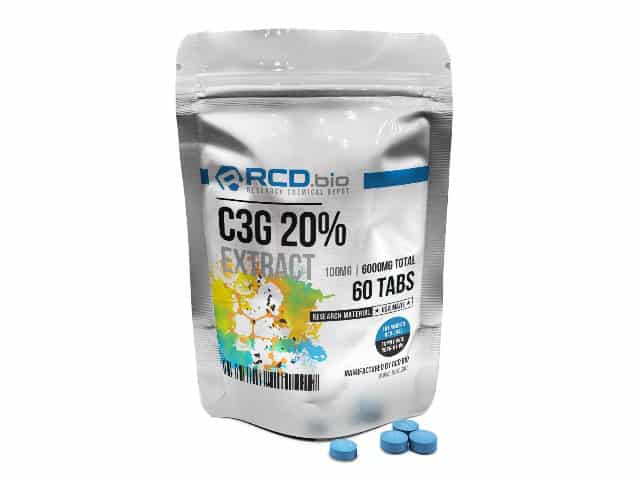
C3G (Cyanidin 3 Glucoside) Tablets by Research Chemical Depot
Shop Now →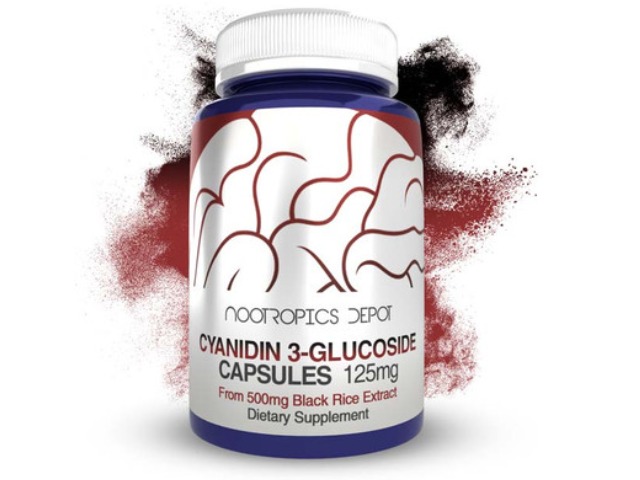
Cyanidin 3-Glucoside Capsules | 125mg | Black Rice Extract by Nootropics Depot
Shop Now →Disclosure: These are affiliate links. I earn a small commission if you purchase — at no extra cost to you. I only recommend products I personally use or have thoroughly researched.
Research & Studies
This section includes 4 peer-reviewed studies referenced in our analysis.