
- Supports healthy GABA signaling and stress response
- Promotes liver health and alcohol metabolism
- Neuroprotective and anti-neuroinflammatory properties
- May reduce anxiety through GABAergic modulation
- Activates antioxidant defense pathways (Nrf2/HO-1)
I’ll be honest — the first time I heard about dihydromyricetin, it was from a buddy who swore it was the “secret weapon” that let him drink all night and wake up fresh. My immediate reaction was skepticism. I’ve been in the supplement world long enough to know that anything marketed as a hangover cure is usually about 90% hype and 10% wishful thinking.
But then I started digging into the actual research. And what I found surprised me — not because DHM is some miracle party pill (it’s not), but because its real benefits are far more interesting than the hangover angle. We’re talking about a compound with serious neuroprotective credentials, genuine GABA-A receptor modulation, and a traditional use history that stretches back over a thousand years. The hangover thing? That’s barely scratching the surface.
The Short Version: Dihydromyricetin (DHM) is a flavonoid extracted from vine tea (Ampelopsis grossedentata) that modulates GABA-A receptors, supports liver function, and shows strong preclinical evidence for neuroprotection and anxiety reduction. It’s best suited for people looking for gentle, long-term brain support or liver protection — not a quick cognitive boost. The biggest catch is its poor bioavailability (~4%), which limits how much of the science actually translates to real-world results with current supplement formulations.
What Is Dihydromyricetin?
Dihydromyricetin — also called ampelopsin or DMY — is the primary bioactive compound in Ampelopsis grossedentata, a plant known as “Teng Cha” (藤茶) or vine tea. It’s not some obscure lab creation. This stuff makes up roughly 35% of the dry leaf weight, which is an absurdly high concentration for a single bioactive. For context, most “standardized extracts” on the supplement market are proud of hitting 5-10%.
The Yao people of southern China have been brewing vine tea for over a thousand years, using it to treat everything from sore throats and fevers to jaundice and liver complaints. It’s one of those traditional remedies that, when you look at the modern research, actually holds up remarkably well.
DHM hit the Western research radar in a big way in 2012, when a team at UCLA published a landmark study showing that it counteracted alcohol intoxication in rodent models. That paper launched a wave of “hangover cure” supplement products — and while the marketing got way ahead of the science, the underlying mechanisms they uncovered are genuinely fascinating.
What makes DHM interesting from a nootropics perspective isn’t the alcohol angle. It’s the fact that this compound sits at the intersection of GABAergic modulation, neuroinflammation, and antioxidant defense — three systems that matter enormously for long-term brain health.
How Does Dihydromyricetin Work?
Think of your brain as a city with two competing forces: excitation (the gas pedal) and inhibition (the brakes). GABA is your brain’s primary braking system. When the brakes work well, you feel calm, focused, and able to think clearly. When they don’t, you get anxiety, racing thoughts, and that wired-but-tired feeling that makes everything harder.
DHM works as a positive allosteric modulator of GABA-A receptors. In plain English, it doesn’t slam on the brakes directly — that’s what benzodiazepines do, and that’s why they’re so problematic. Instead, DHM makes your existing brakes work more efficiently. It’s like upgrading your brake pads rather than stomping harder on the pedal.
Here’s where it gets really interesting. DHM increases expression of a protein called gephyrin — the scaffolding molecule that anchors GABA-A receptors in place at your synapses. More gephyrin means more functional GABA receptors properly positioned to do their job. A 2014 study in transgenic Alzheimer’s disease mouse models found that DHM restored gephyrin levels, improved GABAergic transmission, and reversed cognitive deficits. That’s not just calming you down — that’s physically restructuring synaptic architecture.
Beyond the GABA system, DHM operates through several other well-characterized pathways:
- Anti-neuroinflammation: It suppresses the TLR4/NF-κB inflammatory signaling cascade and inhibits the NLRP3 inflammasome — two of the most important drivers of chronic brain inflammation
- Antioxidant defense: Activates the Nrf2/HO-1 axis, your body’s master antioxidant switch
- Metabolic support: Turns on the AMPK/SIRT1/PGC-1α pathway, which regulates cellular energy metabolism and autophagy (your cells’ housekeeping system)
- BDNF enhancement: Increases brain-derived neurotrophic factor — the growth signal that supports new neural connections
The practical takeaway? DHM isn’t doing one thing — it’s working across multiple systems that collectively determine how well your brain ages, handles stress, and recovers from damage. It’s a protector, not a stimulant.
Benefits of Dihydromyricetin
Let me be upfront about the evidence landscape here: DHM has excellent preclinical data and limited human clinical data. The mechanisms are well-understood, the animal studies are compelling, but we’re still waiting for the large-scale human trials that would move this from “very promising” to “definitively proven.” That distinction matters.
Neuroprotection and Cognitive Support
In Alzheimer’s disease mouse models, DHM reversed behavioral deficits, reduced amyloid-β peptide levels, and restored functional synapses (Liang et al., 2014 in Journal of Biological Chemistry). A 2025 study in Frontiers in Pharmacology found that DHM significantly improved performance on novel object recognition and Y-maze tests in brain aging models. A 2022 paper in Nature Scientific Reports showed it improved cognitive impairments caused by social isolation.
The pattern across these studies is consistent: DHM protects existing neurons, supports synaptic function, and improves cognitive performance under conditions of stress or degeneration.
Anxiety and Stress Response
Through its GABA-A modulation, DHM has demonstrated anxiolytic effects in multiple animal models. It enhanced GABAergic neurotransmission in the hippocampus, reducing anxiety-like behavior and even seizure susceptibility. This is the benefit that makes the most intuitive sense given the mechanism — better GABA signaling should translate to calmer, more resilient stress responses.
Liver Protection and Alcohol Metabolism
DHM upregulates alcohol dehydrogenase (ADH) and acetaldehyde dehydrogenase (ALDH) — the two liver enzymes responsible for breaking down ethanol and its toxic byproduct acetaldehyde. The 2012 UCLA study showed it counteracted acute ethanol intoxication, reduced withdrawal symptoms, and decreased voluntary alcohol consumption in rodents.
Reality Check: Despite what every party-supplement brand wants you to believe, no peer-reviewed human study has directly demonstrated that DHM reduces hangover symptoms like headache, nausea, and fatigue. The animal data on alcohol metabolism is solid, but “faster alcohol metabolism in rats” doesn’t automatically equal “you’ll feel great after a night out.” The mechanism makes sense; the proof in humans isn’t there yet.
Anti-Inflammatory Effects
This is where the human data is strongest. A randomized, double-blind, placebo-controlled trial found that 600 mg/day of DHM for 12 weeks produced a significant decrease in serum TNF-α — a key inflammatory marker. It’s just one trial, but it’s real human evidence that DHM’s anti-inflammatory effects aren’t limited to petri dishes.
How to Take Dihydromyricetin
Dosage: 300-600 mg daily for general neuroprotective and anti-inflammatory support. Doses up to 1,200 mg/day (divided into 2-3 doses) have been used in clinical trial protocols. If you’re new to DHM, start at 300 mg daily for two weeks before increasing.
Timing: Take with food. There’s no strong evidence favoring morning versus evening, but given the GABAergic activity, some users prefer evening dosing to support relaxation and sleep. If you’re using it specifically around alcohol consumption, take 300-600 mg 30-60 minutes before drinking.
Forms: Capsules (300-500 mg) are most common and convenient. Bulk powder is available for those who want flexibility. Look for ≥98% purity standardized extract.
Cycling: No established cycling protocol exists, and DHM’s mechanism doesn’t suggest tolerance development. Continuous use appears feasible, but given the limited long-term human data, taking periodic breaks (one week off per month) is a reasonable precaution.
Insider Tip: Here’s the elephant in the room — DHM has an oral bioavailability of roughly 4%. That means for every 500 mg capsule you swallow, your body is effectively using about 20 mg. This is its biggest practical limitation. Emerging formulations using γ-cyclodextrin complexes (which boost bioavailability ~3x) and liposomal delivery systems (3-5x improvement) are promising, but most supplements on the market don’t use these yet. Keep an eye on this space — better delivery technology could dramatically change DHM’s real-world effectiveness.
Side Effects & Safety
DHM has a genuinely favorable safety profile. Vine tea has been consumed for over a thousand years, and modern toxicity studies found no adverse effects in mice at doses up to 22 g/kg body weight — that’s an enormous margin. No instances of liver injury have been reported, which is notable given that it’s often taken specifically for liver support.
Common side effects are infrequent and mild:
- Mild gastrointestinal discomfort
- Occasional nausea
- Diarrhea (usually at higher doses)
Important: DHM inhibits several cytochrome P450 enzymes in vitro — particularly CYP3A4 (which metabolizes roughly half of all pharmaceutical drugs), CYP2D6, and CYP2E1. If you’re taking statins, SSRIs, beta-blockers, calcium channel blockers, immunosuppressants, or acetaminophen regularly, talk to your doctor before adding DHM. The clinical significance of these interactions hasn’t been established in humans, but the precautionary principle applies — especially with narrow therapeutic index medications.
Who should avoid DHM:
- Pregnant or breastfeeding women (safety not established)
- Children under 18 (not studied)
- Anyone on medications metabolized by CYP3A4/2D6/2E1 without medical guidance
- Note that isolated DHM supplements are not approved in South Korea or Canada due to insufficient safety data
Stacking Dihydromyricetin
DHM pairs well with compounds that complement its liver-protective and antioxidant properties — but there’s an important caveat about what NOT to combine it with.
Good combinations:
- N-Acetylcysteine (600 mg): Both support glutathione pathways and liver detoxification. A logical pairing for liver health.
- Milk Thistle / Silymarin (200-400 mg): Complementary hepatoprotective mechanisms through different pathways. This is the most common commercial pairing.
- B vitamins: General metabolic cofactors that support the energy metabolism pathways DHM activates.
- Magnesium (200-400 mg glycinate or threonate): Supports GABAergic function through a different mechanism, potentially amplifying DHM’s calming effects without competing for the same receptor sites.
What to AVOID — and this is the counterintuitive part:
A significant 2020 study found that combining DHM with curcumin, daidzein, or resveratrol diminished DHM’s effects on GABA-A receptors. The researchers specifically warned that DHM’s GABA-related benefits “can be severely reduced when mixed with other flavonoids.”
This is a big deal. Many supplement users reflexively stack popular flavonoids together, assuming more is better. With DHM, that logic backfires. If you’re taking DHM specifically for its anxiolytic and GABAergic benefits, keep it away from quercetin, resveratrol, and curcumin.
Pro Tip: Also avoid combining DHM with benzodiazepines or other GABAergic drugs — the additive CNS depression risk is real, even though DHM is a modulator rather than a direct agonist.
My Take
Here’s my honest assessment: DHM is one of the more genuinely interesting compounds I’ve come across, and also one of the most frustrating. The science is there — the mechanistic picture is rich, multi-targeted, and well-characterized. The traditional use history gives me confidence in the safety profile. But that 4% bioavailability number haunts everything.
In my experience, DHM’s effects are subtle. You’re not going to take it and feel a wave of calm wash over you like you might with L-Theanine or phenibut. It’s more of a background player — something that, over weeks of consistent use, contributes to better stress resilience and a general sense of evenness. The people I’ve seen benefit most are those who give it 4-8 weeks of consistent use rather than expecting acute effects.
Who this is best for:
- People looking for long-term neuroprotective and liver support
- Those who drink occasionally and want to support their liver’s recovery capacity
- Anyone seeking a gentle, natural approach to stress management without the risks of stronger GABAergic compounds
Who should probably try something else:
- If you want immediate, noticeable cognitive effects — look at Alpha-GPC or Lion’s Mane instead
- If you need strong anxiolytic relief right now — L-Theanine or honokiol will give you more perceptible results
- If you’re buying it purely as a “hangover cure” — temper your expectations significantly
The compound I’m most excited about watching isn’t DHM itself — it’s DHM in next-generation delivery systems. When cyclodextrin or liposomal formulations become standard, that 4% bioavailability jumps to 12-20%, and suddenly a lot of that preclinical promise becomes much more relevant to what you actually experience. For now, DHM earns a spot in my liver-support rotation, and I respect it for what it is: a compound with enormous potential that current technology hasn’t fully unlocked yet.
Recommended Dihydromyricetin Products
I know how frustrating it is to sort through dozens of brands making the same claims. These are the ones I've personally vetted — because quality is the difference between results and wasted money.
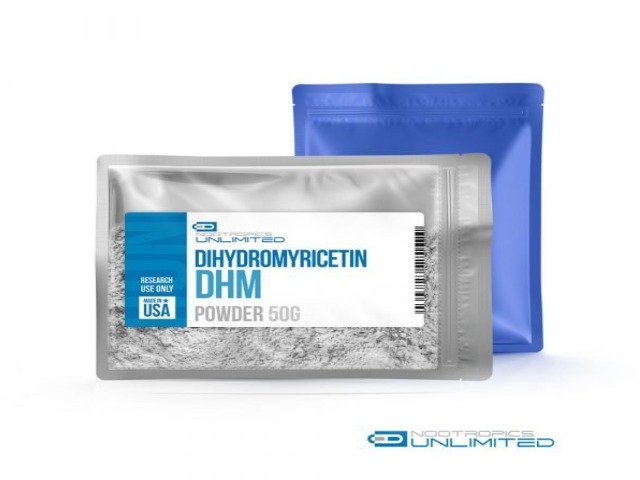
Dihydromyricetin (DHM) – Powder by Nootropics Unlimited
Shop Now →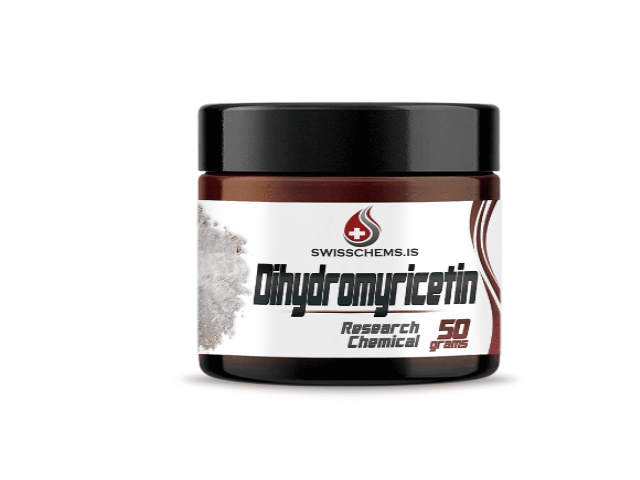
Dihydromyricetin (DHM) – Powder, 50 grams by SwissChem
Shop Now →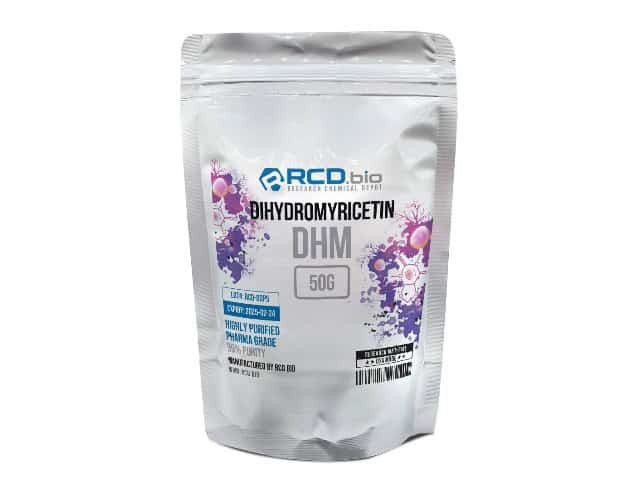
Dihydromyricetin Product from Research Chemical Depot
Shop Now →Disclosure: These are affiliate links. I earn a small commission if you purchase — at no extra cost to you. I only recommend products I personally use or have thoroughly researched.
Research & Studies
This section includes 35 peer-reviewed studies referenced in our analysis.
Expression and purification of recombinant N-ethylmaleimide-sensitive fusion protein from Escherichia coli.
Some observations about psychiatric services in the U.S.S.R.
Dihydromyricetin as a novel anti-alcohol intoxication medication.
Dihydromyricetin suppresses the proliferation of hepatocellular carcinoma cells by inducing G2/M arrest through the Chk1/Chk2/Cdc25C pathway.
Dihydromyricetin improves physical performance under simulated high altitude.
Dihydromyricetin prevents fetal alcohol exposure-induced behavioral and physiological deficits: the roles of GABAA receptors in adolescence.
Dihydromyricetin ameliorates behavioral deficits and reverses neuropathology of transgenic mouse models of Alzheimer's disease.
Dihydromyricetin induces apoptosis and inhibits proliferation in hepatocellular carcinoma cells.
Dihydromyricetin ameliorates the oxidative stress response induced by methylglyoxal via the AMPK/GLUT4 signaling pathway in PC12 cells.
Dihydromyricetin improves skeletal muscle insulin sensitivity by inducing autophagy via the AMPK-PGC-1α-Sirt3 signaling pathway.
Showing 10 of 35 studies. View all →