
- May support focus and mental clarity
- Supports cell membrane integrity
- Antioxidant and anti-inflammatory activity
- May improve mood and sense of wellbeing
- Topical skin anti-aging benefits
I’ll be honest — DMAE is one of the most frustrating nootropics I’ve ever researched. On paper, it sounds perfect: a natural compound found in fish that crosses the blood-brain barrier and boosts acetylcholine production. The internet is full of glowing reports about razor-sharp focus and “limitless” mental clarity. There’s just one problem. The science behind that neat little story? It’s mostly wrong.
That doesn’t mean DMAE is useless. But it does mean you need to understand what it actually does — and what it doesn’t — before you spend your money on it.
The Short Version: DMAE is a cholinergic compound found naturally in sardines and anchovies, once sold as a prescription drug for ADHD. Despite decades of marketing, it does NOT directly increase acetylcholine in the brain. It may still support cognition through membrane stabilization and antioxidant effects, but the evidence is modest, tolerance develops quickly, and cycling is essential. For most people, Alpha-GPC or CDP-Choline are better first choices for cholinergic support.
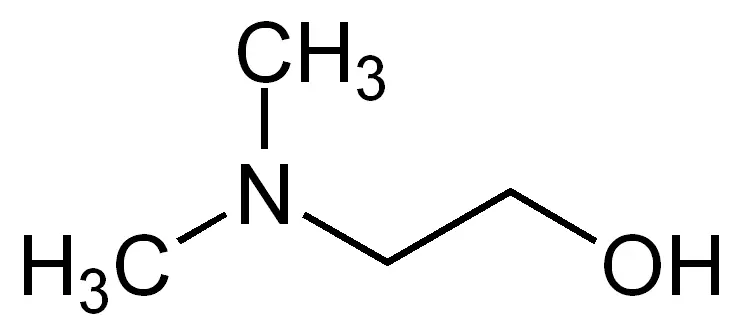
What Is Dimethylaminoethanol?
Dimethylaminoethanol — mercifully shortened to DMAE — is an organic compound your body actually produces in small amounts. You’ll also find it in fatty fish, especially anchovies and sardines. Chemically, it’s closely related to choline, the nutrient your brain uses to make the neurotransmitter acetylcholine. That family resemblance is basically the entire reason DMAE became a nootropic in the first place.
Here’s the interesting backstory. In the 1950s and 60s, Riker Laboratories developed DMAE into a prescription drug called Deaner for managing hyperactivity and learning problems in children — essentially what we’d now call ADHD. Multiple double-blind studies showed it worked, though not as well as methylphenidate (Ritalin). The FDA classified it as “possibly effective.”
Then in 1983, Deaner quietly disappeared from pharmacies. Not because it was dangerous — Riker simply decided the cost of running the additional clinical trials the FDA wanted exceeded the projected revenue. A business decision, not a safety one. DMAE reinvented itself as a dietary supplement, and the rest is nootropics history.
Reality Check: The fact that DMAE was once a prescription drug doesn’t automatically mean it’s effective for cognitive enhancement. It means a pharmaceutical company thought it was profitable enough to develop — until the math stopped working out. That’s a very different thing.
How Does Dimethylaminoethanol Work?
This is where things get interesting — and where most DMAE articles on the internet get it completely wrong.
The story you’ll read everywhere goes like this: DMAE crosses the blood-brain barrier, gets converted to choline, choline becomes acetylcholine, and your brain works better. Clean, simple, makes total sense.
Except landmark research by Jope and Jenden back in 1979 blew that story apart. They demonstrated conclusively that DMAE is not methylated into choline in brain tissue, and that neither acute nor chronic DMAE treatment altered brain acetylcholine levels. At all.
So what is DMAE actually doing up there?
It changes your cell membranes. Instead of becoming acetylcholine, DMAE gets incorporated into cell membranes as phosphatidyldimethylethanolamine (PDME). Think of your brain cells like water balloons — DMAE changes the material of the balloon itself, making it more fluid and permeable. This could explain the subjective cognitive effects people report without relying on the debunked acetylcholine story.
It may spare choline indirectly. DMAE appears to prevent peripheral tissues from consuming choline, effectively making more blood choline available to the brain. It’s an indirect route — like reducing a city’s water usage so there’s more pressure in the pipes — but it’s a plausible mechanism.
It’s a legitimate antioxidant. EPR spectroscopy studies confirm DMAE scavenges hydroxyl radicals and lipid radicals. It also inhibits inflammatory cytokines IL-2 and IL-6. This isn’t dramatic, but chronic low-grade inflammation is a real enemy of cognitive performance.
The lipofuscin connection. Research on centrophenoxine — a DMAE derivative — showed aged rats experienced a 28–42% reduction in brain lipofuscin (the cellular “aging pigment” that accumulates over a lifetime) after 8 weeks of treatment. But I want to be careful here: that evidence is for centrophenoxine specifically, not DMAE alone.
Benefits of Dimethylaminoethanol
Let me be straight with you about the evidence, because this is a compound where the gap between marketing claims and actual research is wider than average.
Topical skin anti-aging — this is actually the strongest evidence. A randomized clinical study found that 3% DMAE gel applied daily for 16 weeks significantly reduced forehead lines, periorbital wrinkles, and improved lip fullness compared to placebo. It was well-tolerated for up to a year. If you’re here for skin benefits, the science is actually reasonably solid.
Focus and attention — moderate but dated evidence. Multiple double-blind studies from the 1960s and 70s showed DMAE at 500+ mg/day improved hyperactivity and attention in children. The best study was a three-arm trial comparing DMAE (500mg), methylphenidate (40mg), and placebo — both active treatments outperformed placebo, though DMAE was less effective than the stimulant. These studies wouldn’t meet modern trial standards, but they’re not nothing.
EEG brain wave changes — intriguing but confounded. A double-blind trial showed DMAE (combined with vitamins and minerals) for three months reduced theta and alpha brain waves, with subjects reporting feeling more alert and active. The problem? You can’t isolate DMAE’s contribution because it was bundled with other nutrients.
Mood — weak and contradictory. A small study of 14 elderly patients using 1,800 mg/day for four weeks found reduced depression and anxiety. But — and this is a big but — DMAE can also worsen depression and trigger mania in some individuals. This is not a reliable mood compound.
Longevity — forget about it. One mouse study from 1973 claimed a 50% lifespan extension. A Japanese quail study showed shorter lifespan. A lifetime mouse study showed no difference. The longevity evidence is a mess.
Reality Check: A 2010s randomized controlled trial of 242 patients with mild cognitive impairment found no significant difference in memory, executive function, or attention versus placebo after 24 weeks. That’s a well-powered, modern study showing nothing. Keep that in perspective when you read breathless claims about DMAE elsewhere.
How to Take Dimethylaminoethanol
Here’s the most important thing most people miss: DMAE bitartrate is only 37% actual DMAE. That 350mg capsule on your shelf? It’s delivering roughly 130mg of the active compound. Always check whether labels refer to bitartrate or free-base amounts.
Dosage ranges:
- Starting dose: 50mg actual DMAE per day
- General cognitive support: 100–300mg actual DMAE per day
- Historical clinical range: 500–1,800mg (used in ADHD and mood studies — don’t jump here)
Timing matters. Take DMAE in the morning or early afternoon. This compound is stimulating, and I’ve seen enough reports of insomnia from evening dosing to take that seriously. Some people prefer an empty stomach for faster onset; others take it with breakfast to avoid stomach discomfort.
Titrate slowly. Start at 50mg for a week, move to 100mg the next week, and work up from there. DMAE is one of those compounds where more is definitely not better — muscle tension and headaches increase predictably with dose.
Pro Tip: Cycling is non-negotiable with DMAE. Tolerance develops fast, and the users who report the most consistent benefits are the ones who take breaks. Try 5 days on / 2 days off, or 3 weeks on / 1 week off. The “take it every day forever” approach is how you end up wondering why it stopped working.
Forms available:
- DMAE Bitartrate (capsules/powder): Most common and stable. This is what you’ll find from most supplement companies.
- Liquid tinctures (1–2ml/day): Possibly faster absorption, especially sublingual.
- Free-base DMAE: Less stable, less commonly available, rarely worth seeking out.
Side Effects and Safety
DMAE’s side effect profile is real, and some of the risks are serious enough that I want to make sure you don’t skim this section.
Common side effects (dose-dependent — lower doses reduce risk):
- Headaches
- Muscle tension, especially in the jaw, neck, and shoulders — this is related to cholinergic stimulation and is the most frequently reported complaint
- Insomnia with late dosing
- GI discomfort
- Elevated blood pressure
- Paradoxical drowsiness in some users
Who should NOT take DMAE:
Important: DMAE is contraindicated in pregnancy. Animal studies show it disrupts choline metabolism during neurulation, causing neural tube defects similar to spina bifida. This is not a theoretical risk — it’s mechanistically understood. If you are pregnant, nursing, or planning to become pregnant, do not take DMAE.
- Epilepsy or seizure disorders — DMAE may lower the seizure threshold
- Bipolar disorder — documented risk of triggering mania
- Schizophrenia — may worsen symptoms
- Severe liver or kidney disease
Drug interactions to watch:
- Anticholinergics (atropine, certain antihistamines, some antidepressants): Directly opposes DMAE’s mechanism. Don’t combine.
- Cholinesterase inhibitors (donepezil, rivastigmine): Reduces effectiveness and increases adverse effects. Don’t combine.
- Stimulants: Use caution — additive stimulating effects.
The long-term concern nobody talks about. DMAE competes with choline for cellular uptake. Chronic use may actually deplete phosphatidylcholine — the very membrane component your brain needs. If you’re using DMAE long-term, pair it with a choline source like Alpha-GPC or CDP-Choline and consider adding Omega-3s for additional membrane support. This isn’t optional — it’s risk mitigation.
Stacking Dimethylaminoethanol
DMAE’s best role in a nootropic regimen is probably as a supporting player, not the star. Here’s how to combine it intelligently.
Pairs well with:
- Racetams (Piracetam, Aniracetam) — Racetams increase acetylcholine utilization, and DMAE supports choline availability through its sparing effect. This is actually one of the oldest nootropic stacks in the book.
- Huperzine A — Inhibits acetylcholinesterase (the enzyme that breaks down acetylcholine), so it complements DMAE’s indirect choline support through a completely different pathway.
- Alpha-GPC or CDP-Choline — This might seem redundant, but adding a direct choline source offsets DMAE’s phospholipid depletion risk. Think of it as insurance.
- B-Complex vitamins — Support the methylation pathways involved in choline and neurotransmitter metabolism.
- Bacopa Monnieri — Complementary cognitive support through entirely different mechanisms (dendritic branching, serotonergic activity).
Example stacks:
- Basic focus: DMAE (150mg) + Huperzine A (100mcg) + Alpha-GPC (300mg)
- Racetam support: DMAE (200mg) + Piracetam (2,400mg) + Alpha-GPC (300mg)
- Comprehensive foundation: DMAE (150mg) + CDP-Choline (250mg) + ALCAR (500mg) + B-Complex + Magnesium L-Threonate (144mg elemental Mg)
Do not combine with: Anticholinergic medications, cholinesterase inhibitors, or high doses of other cholinergics. Stacking multiple cholinergic compounds aggressively is how you end up with the jaw-clenching, neck-tightening side effects that make people swear off the whole category.
My Take
Here’s my honest assessment: DMAE is a fascinating historical compound with a compelling backstory and a disappointing evidence base. The fact that its primary mechanism — the acetylcholine precursor story — has been debunked doesn’t mean it’s worthless, but it does mean we need to recalibrate our expectations significantly.
The people who seem to benefit most from DMAE are those who use it intermittently and at moderate doses as part of a broader stack. The “take 500mg every day” crowd almost universally reports diminishing returns within weeks. That tolerance pattern is consistent enough across user reports that I’d call it a defining characteristic of the compound.
If you’re looking for cholinergic support as your primary goal, Alpha-GPC and CDP-Choline are objectively better choices — stronger evidence, clearer mechanisms, fewer safety concerns. If you want the benefits DMAE supposedly provides but with better delivery, Centrophenoxine is essentially DMAE 2.0 with superior bioavailability.
Where DMAE might still have a role: as a secondary component in a well-designed stack, cycled carefully, for people who’ve already dialed in their foundations — sleep, nutrition, gut health, stress management — and are looking to fine-tune. It’s not a first-line supplement. It’s not a standalone cognitive enhancer. But some people genuinely respond well to it subjectively, and individual biochemistry matters.
If you want to try it, start low (50–100mg actual DMAE), cycle religiously, pair it with a choline source, and give yourself an honest four-week trial. If you don’t notice anything meaningful by then, move on. There are better tools in the toolbox.
Recommended DMAE Products
I know how frustrating it is to sort through dozens of brands making the same claims. These are the ones I've personally vetted — because quality is the difference between results and wasted money.
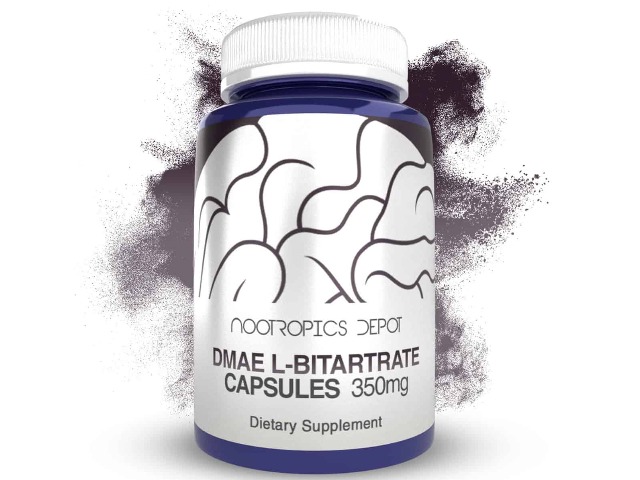
DMAE Powder by Nootropics Depot
Shop Now →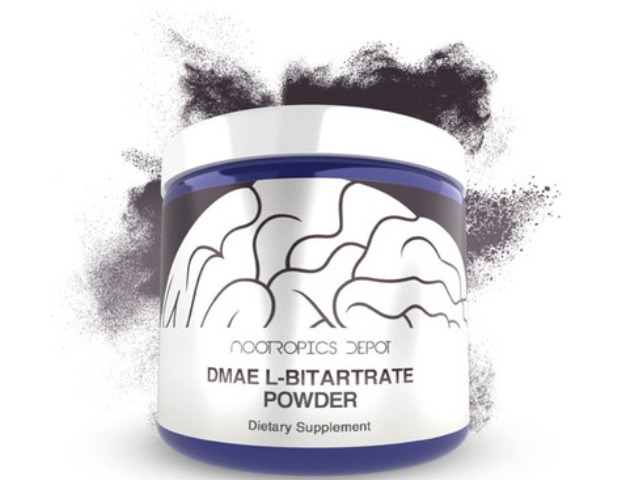
Nootropics Depot Buy Dmae L-Bitartrate Powder
Shop Now →Disclosure: These are affiliate links. I earn a small commission if you purchase — at no extra cost to you. I only recommend products I personally use or have thoroughly researched.