
- Enhanced focus and mental clarity
- Improved motivation and drive
- Physical endurance and cold tolerance
- Neuroprotection and anti-inflammatory effects
- Reduced mental fatigue and asthenia
I’ll be honest — the first time I tried fonturacetam, I thought my nootropic stack was broken. Not because it didn’t work, but because nothing else I’d taken had ever hit like that. Forty-five minutes in, I was three hours deep into a research project I’d been procrastinating on for weeks. My brain felt like it had shifted into a gear I didn’t know existed.
Then I took it the next day. And the day after that. By day four, that electric clarity had faded to a gentle hum. Classic beginner mistake — and one I’m going to help you avoid.
Fonturacetam is one of the most fascinating compounds in the racetam family, and its history alone is worth the read. But it comes with a catch that most nootropic sites gloss over: if you don’t use it strategically, you’ll burn through its magic in a week.
The Short Version: Fonturacetam (phenylpiracetam) is a powerful racetam nootropic developed for Soviet cosmonauts that delivers clean stimulation and cognitive enhancement through dopamine reuptake inhibition. It’s best suited for occasional, high-demand use — think exam days, big presentations, or intense creative sessions — rather than daily supplementation. The key to getting consistent results is cycling.
What Is Fonturacetam?
Fonturacetam is the official international nonproprietary name (INN) for the compound most people know as phenylpiracetam. Chemically, it’s exactly what that name suggests — piracetam with a phenyl group bolted onto its pyrrolidone ring. That one structural addition makes it roughly 30–60x more potent than its parent compound.
The history behind this one is genuinely wild. It was developed in 1983 at the Russian Academy of Sciences by psychopharmacologist Valentina Ivanovna Akhapkina — not for students or biohackers, but for Soviet cosmonauts. The goal was to help them handle the extreme physical and psychological stress of extended space missions. Pilot-cosmonaut Aleksandr Serebrov used it during his 197-day stint on the Mir space station, and it was included in the Soyuz spacecraft’s standard emergency medical kit.
It was approved as a prescription drug in Russia in 2003 under the brand name Phenotropil, and it’s currently marketed there as Actitropil. In the West, it lives in a legal gray area — unscheduled, but also unapproved as a pharmaceutical or dietary supplement. One thing that isn’t ambiguous: the World Anti-Doping Agency (WADA) has banned it since 1998 as a non-specified stimulant. It was the first nootropic ever prohibited in competitive sport. That tells you something about how real its performance-enhancing effects are.
How Does Fonturacetam Work?
Here’s where fonturacetam gets really interesting — and where it separates itself from every other racetam in the family.
Most racetams are subtle. They modulate acetylcholine, tweak glutamate receptors, and produce effects that are real but gentle. Fonturacetam does all of that and directly inhibits dopamine reuptake. That’s the mechanism behind its motivating, stimulant-like quality — and it’s why the experience feels categorically different from taking piracetam or aniracetam.
Research published in Basic & Clinical Pharmacology & Toxicology identified that fonturacetam’s (R)-enantiomer is a selective atypical dopamine reuptake inhibitor, with an IC₅₀ of 14.5 μM at the dopamine transporter. It also hits the norepinephrine transporter, making it a dual norepinephrine-dopamine reuptake inhibitor (NDRI). The (R)-enantiomer is the one responsible for the locomotor stimulation, antidepressant effects, and — critically — the memory enhancement. Memory improvement is exclusively tied to the R-form.
The (S)-enantiomer tells a completely different story. It selectively inhibits dopamine reuptake without the stimulant properties, and in animal models it reduces body weight gain and improves glucose tolerance. Researchers have flagged it as a potential candidate for metabolic syndrome treatment.
In plain English: fonturacetam isn’t just one drug doing one thing. It’s two mirror-image molecules with distinct pharmacological profiles, packaged together in the standard racemic form you’ll find on the market. The stimulating, focus-enhancing effects come from one half. The metabolic benefits come from the other.
Beyond the dopamine story, fonturacetam also interacts with nicotinic acetylcholine receptors, shows mitoprotective activity comparable to citicoline in preserving mitochondrial function, and demonstrates anti-inflammatory effects — the (R)-enantiomer attenuates LPS-induced expression of inflammatory markers like TNF-α and IL-1β. A 2024 comprehensive review confirmed its broad pharmacological profile spanning nootropic, anxiolytic, antiasthenic, antidepressant, anti-inflammatory, and anticonvulsant properties.
Reality Check: Despite that impressive pharmacological profile, most of what we know comes from animal studies and Russian-language clinical literature with limited international peer review. The mechanisms are well-characterized in rats and mice. Human data is thinner — solid for fatigue reduction, but still building for everything else.
Benefits of Fonturacetam
Fatigue and Asthenia — The Strongest Evidence
The most robust clinical evidence for fonturacetam comes from a 2025 systematic review and meta-analysis that pooled 11 studies with 549 patients. At 200 mg per day, fonturacetam significantly reduced asthenia (chronic fatigue) scores by an average of 16.3 points on the MFI-20 scale after just one month. The review also noted improvements in emotional state, sleep quality, cognitive function, and overall quality of life. Side effects were reported in only 5.5% of patients and resolved within a week.
That’s meaningful. Not “cured cancer” meaningful, but “replicated across 11 studies with consistent effect sizes” meaningful. If chronic mental fatigue is your primary complaint, this is the indication where fonturacetam has the strongest leg to stand on.
Cognitive Enhancement
Animal studies consistently show that the (R)-enantiomer improves passive avoidance memory at doses as low as 1 mg/kg. A 2024 pharmacological review confirmed broad nootropic effects with clinical potential for cerebral ischemia and neurodegenerative pathologies. Human evidence for pure cognitive enhancement is more limited — largely confined to the asthenia studies, where cognitive improvement was a secondary outcome.
Neuroprotection and Anti-Inflammatory Activity
R-phenylpiracetam reaches brain tissue within 15 minutes of administration in mice and dose-dependently reduces inflammatory markers. It also preserves mitochondrial membrane potential under stress conditions — comparable to citicoline in this regard. These are promising preclinical findings, but translating rodent neuroprotection data to human brain health is a long road.
Physical Performance
The WADA ban isn’t arbitrary. Users consistently report enhanced physical endurance, increased cold tolerance, and greater work output. Cosmonaut Aleksandr Serebrov specifically credited it with helping him manage the physical demands of extended spaceflight. The physical performance enhancement is real enough that professional athletes have been caught and sanctioned for using it.
Insider Tip: The cognitive and physical benefits of fonturacetam are most pronounced when you’re under-recovered, sleep-deprived, or facing unusual physical stress. Think of it less as a daily performance booster and more as a “bad day insurance policy” for your brain and body.
How to Take Fonturacetam
Dosage
The clinical evidence base uses 200 mg per day, split into two 100 mg doses — morning and early afternoon. This is the sweet spot for most people.
- Starting dose: 100 mg once in the morning
- Standard dose: 100–200 mg per day in 1–2 divided doses
- Upper range: Some users go up to 300 mg/day, but diminishing returns set in fast
- Russian prescribing maximum: 600–750 mg/day, though I’d strongly recommend staying at or below 300 mg
Timing
Take your first dose in the morning. If you’re splitting doses, take the second no later than early afternoon — 1 or 2 PM at the latest. The stimulant effects last 4–6 hours, and dosing too late will wreck your sleep. I learned this the hard way with a 4 PM “just one more dose” that had me staring at the ceiling until 2 AM.
Take it with a light meal. An empty stomach hits harder but increases the chance of nausea. A small snack — handful of nuts, piece of toast — is the right balance.
Cycling — This Is Non-Negotiable
Here’s the single most important piece of advice in this entire article: you must cycle fonturacetam. Tolerance develops faster with this compound than with almost any other racetam. Some users report diminished effects within 2–3 days of consecutive use.
Recommended cycling protocols:
- As-needed use (my recommendation): Reserve it for high-demand days — exams, deadlines, presentations. This is how the cosmonauts used it, and it’s how you’ll get the most consistent results.
- 1–2 weeks on / 1–2 weeks off: A structured approach if you need it for a defined period.
- Weekdays on / weekends off: Works for some, but tolerance can still creep in.
One interesting data point: some experienced users report that effects remain at 70–80% efficacy even after months of use, and that the perceived “tolerance” is partly a novelty bias — the first few uses feel dramatically more potent than they objectively are. There might be truth to that. But the safe bet is to cycle regardless.
Pro Tip: Keep a simple log when you use fonturacetam — date, dose, what you were doing, and how you felt on a 1–10 scale. After a few months, you’ll have personalized data on your optimal cycling pattern. Most people find their sweet spot within 6–8 uses.
Side Effects and Safety
The good news: fonturacetam has a relatively clean safety profile. In the 2025 meta-analysis, side effects occurred in only 5.5% of patients and were transient — typically resolving within the first week.
Common side effects:
- Insomnia (the most frequently reported — manage with morning-only dosing)
- Headache (often a sign you need a choline source — more on that below)
- Nervousness or overstimulation at higher doses
- Nausea (mitigate by taking with food)
- Dizziness (may indicate the dose is too high for you)
Who should avoid fonturacetam:
- Pregnant or breastfeeding women (no human safety data)
- Anyone with severe psychiatric disorders
- People taking antipsychotics (fonturacetam antagonizes their action)
- Athletes subject to anti-doping testing (it’s a banned substance under WADA)
Important: If you’re taking any dopaminergic medications — including certain antidepressants, ADHD medications, or Parkinson’s drugs — talk to your doctor before adding fonturacetam. Stacking multiple dopamine-active compounds without supervision is asking for trouble. Also use caution with MAOIs.
Drug interactions to know about:
- May amplify the effects of CNS stimulants and antidepressants
- Antagonizes neuroleptics and antipsychotics
- Reduces the sedative effects of alcohol and barbiturates
- Can blunt the effects of benzodiazepines and other sedatives
Stacking Fonturacetam
The Foundation Stack
Every racetam pairs with a choline source. This isn’t optional — it’s foundational. Fonturacetam increases acetylcholine turnover, and without adequate choline supply, you’re likely to get headaches and diminished effects.
- Alpha-GPC (300 mg) — The go-to choline source. Crosses the blood-brain barrier efficiently. This is the pairing I recommend for most people.
- Citicoline (250 mg) — An alternative that adds its own neuroprotective benefits. Given that both compounds show mitoprotective activity, there may be a synergistic angle here.
Advanced Stacks
| Stack Partner | Dose | Why It Works |
|---|---|---|
| N-Acetyl L-Tyrosine | 300–500 mg | Replenishes dopamine precursors. May help sustain fonturacetam’s effects and slow tolerance development. |
| Sulbutiamine | 200 mg | Enhances mental and physical energy through thiamine pathways. Complementary stimulation without redundant mechanisms. |
| Noopept | 10–20 mg | Similar nootropic profile working through BDNF/NGF modulation. Use reduced doses of both when combining. |
What NOT to Stack
- High-dose caffeine or other stimulants — fonturacetam already provides significant stimulation. Adding more is a recipe for anxiety, jitters, and that awful wired-but-unproductive feeling. A small cup of coffee is fine. A triple espresso on top of 200 mg of fonturacetam is not.
- Benzodiazepines or sedatives — counteracts the cognitive benefits of both compounds. Pick a lane.
- Other dopamine reuptake inhibitors — risk of excessive dopaminergic activity. Don’t stack fonturacetam with modafinil or similar compounds without medical guidance.
- Antipsychotics — fonturacetam directly antagonizes their mechanism. This is a hard no.
My Take
Fonturacetam occupies a unique spot in the nootropic world. It’s one of the very few compounds that delivers both genuine cognitive enhancement and noticeable physical performance benefits — and the WADA ban is proof that the performance effects aren’t just placebo.
That said, I think most people use it wrong. They buy a tub of powder, take it every day for a week, marvel at the first two days, wonder why it stopped working by day five, and write it off as “overrated.” The compound isn’t the problem. The approach is.
Here’s who I think fonturacetam is best for:
- Knowledge workers facing periodic high-demand days — presentations, deadlines, complex problem-solving sessions
- Students during exam periods — but cycle it, don’t take it daily for three weeks straight
- Anyone dealing with chronic mental fatigue or asthenia — this is where the clinical evidence is strongest
- People who’ve tried other racetams and found them too subtle — fonturacetam delivers a more tangible, in-the-moment experience
Who should probably look elsewhere:
- If you need daily cognitive support, bacopa monnieri or lion’s mane will serve you better over the long haul
- If you’re sensitive to stimulants or prone to anxiety, the dopaminergic effects may be too activating — consider aniracetam instead
- If you’re a competitive athlete subject to drug testing, this one’s off the table entirely
The global supply situation has made fonturacetam harder to source and more expensive than it used to be. If you do find it, insist on third-party testing with a Certificate of Analysis. This is not a compound where you want to gamble on purity.
Used strategically — cycled properly, stacked with a choline source, reserved for when you actually need it — fonturacetam is one of the most effective tools in the nootropic toolkit. Just don’t make my mistake and try to use it every day. Treat it like a precision instrument, not a daily multivitamin.
Recommended Fonturacetam Products
I know how frustrating it is to sort through dozens of brands making the same claims. These are the ones I've personally vetted — because quality is the difference between results and wasted money.
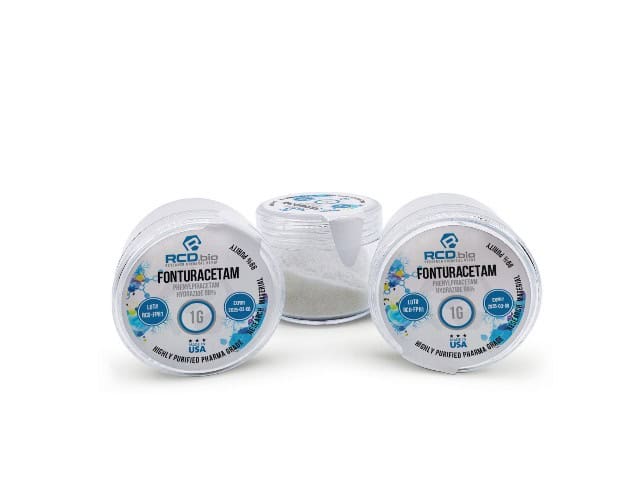
Fonturacetam Phenylpiracetam Hydrazide 98% from Research Chemical Depot
Shop Now →
Phenylpiracetam by Cosmic Nootropics
Shop Now →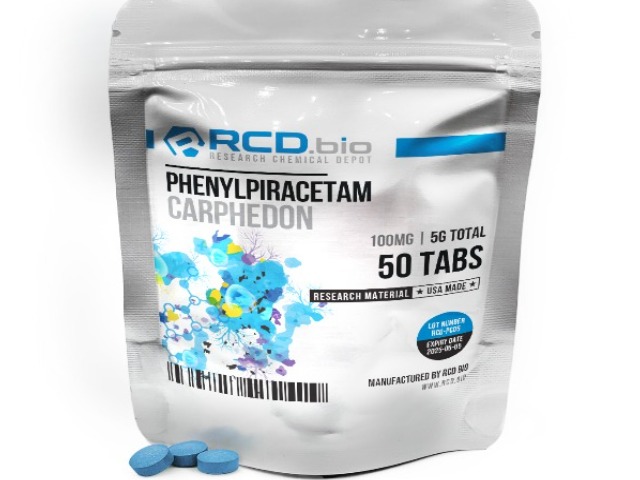
Phenylpiracetam Carphedon by Research Chemical Depot
Shop Now →Disclosure: These are affiliate links. I earn a small commission if you purchase — at no extra cost to you. I only recommend products I personally use or have thoroughly researched.
Research & Studies
This section includes 1 peer-reviewed study referenced in our analysis.