
- Enhanced brain magnesium levels
- Neuroprotection and synaptic plasticity
- Relaxation and stress reduction
- Sleep quality improvement
- PMS symptom relief
I used to think all magnesium was the same. Oxide, citrate, glycinate — just pick the cheapest one and call it a day, right? That attitude cost me about two years of subpar results and more trips to the bathroom than I’d like to admit.
Then I stumbled across a form of magnesium I’d never heard of — one designed by a French neuroscientist specifically to get magnesium into the brain. Not the gut. Not the muscles. The brain. And when I dug into the research, what I found genuinely surprised me.
Magnesium Acetyl L-Taurate isn’t the most popular magnesium supplement on the shelf. It’s not even the easiest to find. But if your goal is neuroprotection, better sleep, or calming an overactive nervous system, the preclinical data makes a compelling case that this might be the most interesting magnesium form most people have never heard of.
The Short Version: Magnesium Acetyl L-Taurate (MgAT) is a specialized chelated magnesium form that achieves the highest brain magnesium levels of any form tested in animal research. It’s best suited for relaxation, sleep quality, neuroprotection, and PMS relief — not stimulant-like focus. The catch: it only provides ~48 mg of elemental magnesium per standard dose, so you’ll need a second magnesium source to meet your daily needs.
What Is Magnesium Acetyl L-Taurate?
Magnesium Acetyl L-Taurate (MgAT) is a chelated compound where magnesium is bound to acetyl-taurine — a modified version of the amino acid taurine with an acetyl group attached. It was invented by Professor Jean Durlach, a pioneering French magnesium researcher, and patented by Synapharm S.A. in Belgium.
Here’s the thing that makes MgAT unusual: by weight, it’s only about 6% elemental magnesium and 93% acetyl-taurine. That might sound like a bad deal until you understand the design philosophy. Durlach wasn’t trying to create a magnesium supplement that floods your body with raw magnesium. He was engineering a delivery vehicle — one that carries magnesium past the blood-brain barrier while simultaneously delivering acetyl-taurine, which has its own neuroprotective properties.
Think of it like the difference between dumping water on a garden from a bucket versus using a drip irrigation system that delivers water exactly where the roots need it. MgAT is the drip system for your brain.
This “foundations first” caveat is important here: if you’re among the roughly 50% of Americans not meeting your daily magnesium needs, MgAT alone won’t fix that. At ~48 mg of elemental magnesium per standard dose, you’re getting a fraction of the 400–420 mg men need or 310–320 mg women need daily. You’ll want to pair MgAT with another magnesium form — like magnesium glycinate or magnesium malate — for whole-body coverage, while letting MgAT handle the brain-specific work.
How Does Magnesium Acetyl L-Taurate Actually Gets Into Your Brain
Most magnesium supplements are lousy at getting magnesium where it matters most — into your neurons. Magnesium oxide? About 4% bioavailability, and most of that stays in the gut. Even well-absorbed forms like magnesium citrate raise blood serum levels effectively but don’t preferentially cross the blood-brain barrier.
MgAT takes a different route. The acetyl-taurine acts like a molecular escort, helping magnesium cross the blood-brain barrier more efficiently than other chelated forms. In preclinical studies, MgAT achieved the highest brain magnesium concentrations compared to ten other magnesium forms tested — including magnesium chloride, magnesium glycinate, and magnesium L-threonate.
Once in the brain, the magnesium and acetyl-taurine both go to work through overlapping but distinct mechanisms:
- Magnesium blocks excessive NMDA receptor activation, which reduces excitotoxicity — the kind of neural overactivity that damages brain cells during stress, injury, or chronic inflammation
- Magnesium upregulates NR2B-containing NMDA receptors, which are critical for synaptic plasticity and long-term potentiation (the cellular basis of learning and memory)
- Acetyl-taurine acts as a GABA receptor modulator, enhancing inhibitory signaling that promotes calm and relaxation
- Acetyl-taurine provides antioxidant protection against oxidative stress in neural tissue
In plain English: MgAT simultaneously turns down the “alarm” signals in your brain (excitotoxicity, oxidative stress) while turning up the “build and repair” signals (synaptic plasticity, GABA activity). It’s a two-for-one deal — the magnesium handles the structural repair work while the acetyl-taurine takes care of calming the nervous system.
Pro Tip: The dual mechanism of MgAT is why many users report both cognitive clarity and relaxation — rather than the sedation-only effect you might get from something like GABA supplements or the pure focus-enhancement from a stimulant. It threads the needle between calm and sharp.
The Benefits — And How Honest the Evidence Actually Is
Let me be upfront: the preclinical data for MgAT is genuinely impressive. The human data is not. Being honest about that distinction is how you make smart supplement decisions instead of expensive mistakes.
| Benefit | Evidence Level | Key Findings |
|---|---|---|
| Brain magnesium delivery | Strong (animal studies) | Highest brain Mg levels of all forms tested |
| Neuroprotection (TBI) | Moderate (animal studies) | Significant protection in traumatic brain injury models |
| Synaptic plasticity | Moderate (animal studies) | NR2B receptor upregulation, enhanced long-term potentiation |
| PMS symptom relief | Weak (one small human trial) | Improvement in n=19 trial, but no placebo control |
| Migraine reduction | Very weak (case report) | Single published case report |
| Cognitive enhancement | Preliminary (preclinical only) | No human RCTs for cognition |
Neuroprotection and Brain Health
The strongest evidence for MgAT comes from animal models of traumatic brain injury (TBI). In these studies, MgAT demonstrated significant neuroprotective effects — reducing neural damage and preserving cognitive function after injury. The mechanism appears to be MgAT’s ability to rapidly restore brain magnesium levels, which buffers against the cascade of excitotoxicity that follows brain trauma.
This isn’t just academic. If you’re interested in long-term brain health — especially if you have a history of concussions or engage in contact sports — the neuroprotection angle is meaningful, even though it hasn’t been confirmed in human trials yet.
Synaptic Plasticity and Learning
MgAT’s upregulation of NR2B-containing NMDA receptors is particularly interesting. These receptors are sometimes called “juvenile” NMDA receptors because they’re more prevalent in younger brains and are strongly linked to the brain’s ability to form new connections. Enhancing NR2B activity is essentially making your synapses behave more like a younger brain’s synapses.
That said — this is animal data. We don’t yet have human RCTs confirming cognitive enhancement from MgAT.
Relaxation, Sleep, and Calming Effects
The acetyl-taurine component gives MgAT a relaxation profile that most magnesium forms can’t match. Taurine itself is one of the most abundant amino acids in the brain and acts as a calming neuromodulator. The acetylated form appears to cross the blood-brain barrier more readily, which likely contributes to user reports of noticeable calming effects within 30–60 minutes of taking MgAT.
Many users take MgAT specifically for sleep quality — not as a sedative, but as a way to quiet the mental chatter that keeps you staring at the ceiling at 1 AM.
PMS Symptom Relief
A small trial (n=19) found MgAT helpful for reducing PMS symptoms. While the results were positive, the sample size was tiny and lacked a robust placebo control. It’s encouraging but far from conclusive.
Reality Check: MgAT has some of the most exciting preclinical neuroprotection data of any magnesium form. But “exciting preclinical data” and “proven in humans” are very different things. If you need human RCT evidence for cognitive enhancement, Magnesium L-Threonate currently has a stronger published track record. If you’re drawn to MgAT’s neuroprotective and calming profile based on the available evidence, that’s a reasonable bet — just go in with realistic expectations.
How to Take Magnesium Acetyl L-Taurate Without Wasting Your Money
Dosage
The standard dose used in research and recommended by most manufacturers is 700–800 mg of MgAT per day, which provides approximately 48 mg of elemental magnesium.
| Goal | Daily MgAT Dose | Elemental Mg | Timing | Notes |
|---|---|---|---|---|
| General brain support | 700 mg | ~48 mg | Evening | Good starting point |
| Relaxation & sleep | 700–800 mg | ~48 mg | 30–60 min before bed | Most common use case |
| Neuroprotection | 800 mg | ~48 mg | Split AM/PM | Based on preclinical dosing ratios |
| PMS support | 700 mg | ~48 mg | Daily, through full cycle | Based on limited trial data |
Practical Guidelines
- Start at 350–400 mg for the first week to assess tolerance, then increase to the full dose
- Take with or without food — MgAT is well-absorbed either way, unlike some magnesium forms that need food to avoid GI distress
- Evening dosing works best for most people due to the calming effects, but morning dosing is fine if you’re taking it purely for neuroprotection
- Split dosing (half in the morning, half in the evening) can smooth out effects throughout the day
- Give it 2–4 weeks of consistent daily use before assessing results — the neuroprotective benefits are cumulative
Insider Tip: Because MgAT only delivers ~48 mg of elemental magnesium, you almost certainly need a second magnesium source to meet your daily requirements. My suggestion: pair MgAT (for the brain) with magnesium glycinate (for muscle relaxation and general magnesium repletion). This gives you the best of both worlds without the GI issues that come with cheaper forms like magnesium oxide or citrate.
What About Magnesium L-Threonate?
This is the comparison everyone asks about. Both MgAT and Magnesium L-Threonate (Magtein) are designed to raise brain magnesium. Here’s how they differ:
| Feature | MgAT | Mg L-Threonate |
|---|---|---|
| Brain Mg delivery | Highest in animal studies | Well-demonstrated in animals and humans |
| Human RCTs for cognition | None published | Yes — multiple published trials |
| Onset | Faster — noticeable calming within 30–60 min | Slower — benefits typically emerge over weeks |
| Additional active component | Acetyl-taurine (GABAergic calming) | L-Threonic acid (less independently studied) |
| Neuroprotection data | Strong preclinical | Moderate preclinical |
| Best for | Relaxation, sleep, neuroprotection | Cognitive enhancement, memory |
| Elemental Mg per dose | ~48 mg | ~144 mg (at standard 2g dose) |
Neither is objectively “better.” They serve different primary use cases. Some people stack both.
Side Effects Nobody Warns You About (Because There Aren’t Many)
This is one of MgAT’s genuine advantages. It is remarkably well tolerated — specifically because the acetyl-taurine chelation bypasses the GI irritation that plagues other magnesium forms.
What you might experience:
- Mild drowsiness — especially when first starting or at higher doses. This is the GABA-modulating effect doing its job, and it’s actually desirable if you’re taking it for sleep
- Vivid dreams — some users report this, likely related to improved sleep architecture. Not harmful, but worth noting
- Mild headache — rare, usually resolves within the first few days
What you probably won’t experience (unlike other Mg forms):
- Loose stools or diarrhea (the bane of magnesium citrate and oxide users)
- GI cramping
- Nausea
Who should be cautious:
- People on antibiotics (tetracyclines, fluoroquinolones) — magnesium can reduce absorption. Space doses by at least 2 hours
- People on blood pressure medications — magnesium can have additive hypotensive effects
- People on bisphosphonates (osteoporosis drugs) — magnesium interferes with absorption
- People with kidney disease — impaired magnesium excretion can lead to accumulation. Consult your doctor
- Pregnant or nursing women — insufficient safety data specific to MgAT. Stick with better-studied forms like magnesium glycinate under medical guidance
Important: While MgAT is very well tolerated, it’s still a bioactive compound that affects GABA receptors and NMDA signaling. If you’re taking benzodiazepines, sleep medications, or anti-seizure drugs, talk to your doctor before adding MgAT — the GABAergic effects could be additive.
Stacking Magnesium Acetyl L-Taurate
MgAT plays well with others. Its calming, neuroprotective profile makes it a solid base layer in several stack configurations.
Synergistic Combinations
- MgAT + L-Theanine (200 mg) — The “calm focus” stack. Both modulate GABA and glutamate signaling through different mechanisms, producing a relaxed-but-alert state. Excellent for evening wind-down or anxious overachievers
- MgAT + Lion’s Mane (500–1,000 mg) — Neuroprotection meets neurogenesis. MgAT protects existing neurons while Lion’s Mane promotes NGF and new neural connections. A long-game brain health stack
- MgAT + Magnesium Glycinate (400 mg) — The “full-spectrum magnesium” approach. MgAT for the brain, glycinate for muscles and general repletion. Covers your bases without GI distress
- MgAT + Bacopa Monnieri (300 mg bacosides) — Both require consistent daily use and shine over weeks, not hours. The neuroprotective effects of MgAT complement Bacopa’s memory-enhancing properties
- MgAT + Apigenin (50 mg) — A popular sleep stack. Both promote GABAergic calming without the grogginess of pharmaceutical sleep aids
What to Avoid Combining
- MgAT + high-dose GABA supplements — Redundant GABAergic activity. Can cause excessive sedation
- MgAT + high-dose zinc (>40 mg) — Zinc and magnesium compete for absorption. If you take both, space them at least 2 hours apart
- MgAT + stimulants at the same time — They’ll partially cancel each other out. If you use both, take stimulants in the morning and MgAT in the evening
My Take
I’ll be straight with you: MgAT isn’t my primary magnesium supplement. I use magnesium glycinate for general magnesium repletion because I need more than 48 mg of elemental magnesium per day, and so do you.
But as a targeted brain support tool? MgAT has earned a place in my evening routine. The calming effects are noticeable — not sedating, but that quieting of mental noise that lets you actually relax instead of running through tomorrow’s to-do list for the fifth time. For sleep quality specifically, adding MgAT was one of the more noticeable single-supplement changes I’ve made in the past year.
Here’s who I think MgAT is best for:
- The overthinker who can’t shut their brain off at night — the GABAergic calming effect is genuinely helpful
- The long-game neuroprotection investor — if you care about brain health over decades, the preclinical neuroprotection data is compelling
- The sensitive stomach — if other magnesium forms give you GI problems, MgAT is a welcome relief
- The PMS sufferer — limited evidence, but the existing data plus the calming profile makes it worth trying
Who should probably look elsewhere:
- If you want proven cognitive enhancement with human RCTs — Magnesium L-Threonate has you covered
- If you need a standalone magnesium supplement — 48 mg of elemental Mg isn’t enough. Start with glycinate or malate
- If you want immediate, stimulant-like focus — that’s not what MgAT does. Look at modafinil alternatives or a solid racetam
The honest bottom line: MgAT is a well-designed compound with impressive preclinical science and a very favorable side effect profile. The human evidence needs to catch up to the animal data — but for those of us willing to act on strong preclinical signals (and I count myself in that group), it’s one of the more interesting magnesium forms available. Just don’t make the mistake I made early on and treat it as your only magnesium source. Pair it with a workhorse form, and let MgAT do what it was designed to do — get magnesium where your brain actually needs it.
Recommended Magnesium Acetyl L-Taurate Products
I know how frustrating it is to sort through dozens of brands making the same claims. These are the ones I've personally vetted — because quality is the difference between results and wasted money.
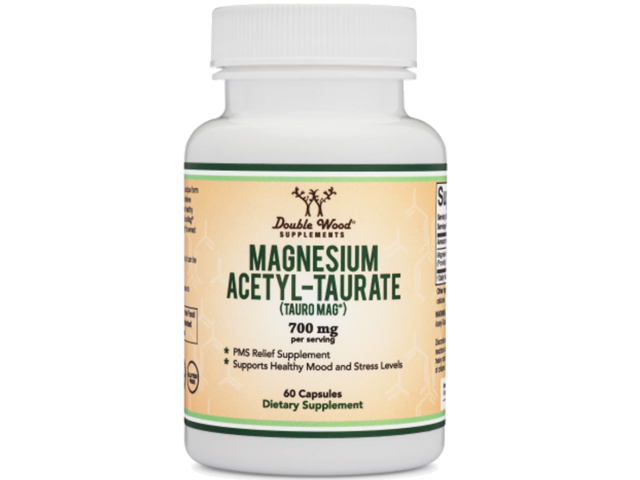
Disclosure: These are affiliate links. I earn a small commission if you purchase — at no extra cost to you. I only recommend products I personally use or have thoroughly researched.
Research & Studies
This section includes 2 peer-reviewed studies referenced in our analysis.