

- Enhanced cerebral blood flow
- Improved focus and attention
- Neuroprotection against oxidative stress
- Cognitive support during aging
I’ll admit it: when I first heard about Vinpocetine, I dismissed it as just another overhyped supplement riding the nootropics wave. A synthetic compound derived from a plant extract? Sounded gimmicky. But after digging into the research — and eventually trying it myself — I realized I’d been sleeping on one of the more interesting cerebral vasodilators out there.
Here’s what caught my attention: Vinpocetine doesn’t just flood your brain with stimulation like caffeine. Instead, it improves the infrastructure — enhancing blood flow, oxygen delivery, and glucose metabolism. Think of it as upgrading your brain’s plumbing rather than just turning up the water pressure.
If you’ve been struggling with focus, mental fatigue, or the foggy feeling that comes with aging, this guide will break down what Vinpocetine actually does, how to use it effectively, and whether it’s worth adding to your stack.
The Short Version: Vinpocetine is a synthetic nootropic that enhances cerebral blood flow and metabolism through PDE1 inhibition and anti-inflammatory mechanisms. Most people take 10-30mg daily with food for improved focus and neuroprotection. The effects are subtle but cumulative — expect 2-4 weeks before noticing consistent benefits.
What Is Vinpocetine?
Vinpocetine is a semi-synthetic derivative of vincamine, an alkaloid extracted from the periwinkle plant (Vinca minor). It was first synthesized in Hungary in the 1960s by chemist Csaba Szántay and has since been used extensively in Europe and Japan as a prescription medication for cerebrovascular disorders and age-related cognitive decline.
In the United States, Vinpocetine is sold as a dietary supplement, though the FDA has recently raised questions about its regulatory status (more on that in the safety section). Despite the regulatory ambiguity, it remains one of the most researched nootropics for cerebral circulation and has a solid track record spanning over 50 years of clinical use.
People primarily use Vinpocetine for cognitive enhancement — particularly for improving focus, processing speed, and memory retention. It’s also popular among older adults looking to support brain health during aging, and among biohackers seeking neuroprotective compounds that work through metabolic rather than purely neurochemical pathways.
Reality Check: Vinpocetine isn’t a stimulant. You won’t feel a noticeable “kick” like you would from caffeine or modafinil. The benefits are more subtle and build over time through improved cerebral metabolism and neuroprotection.
How Does Vinpocetine Work? (The Mechanisms That Actually Matter)
Here’s where things get interesting. Vinpocetine works through several distinct mechanisms, and understanding them helps explain why the effects feel different from traditional stimulant-based nootropics.
Cerebral Blood Flow Enhancement
The most well-established mechanism is vasodilation — Vinpocetine relaxes the smooth muscle in blood vessel walls, particularly in the brain. This increases cerebral blood flow, delivering more oxygen and glucose to neurons. A 2005 PET scan study published by Szilágyi and colleagues demonstrated that chronic ischemic stroke patients taking Vinpocetine showed significant redistribution of cerebral blood flow and improved glucose metabolism in affected brain regions.
Translation: your brain gets better fuel delivery. This is especially relevant if you’re dealing with age-related cognitive decline, chronic stress, or anything that compromises vascular health.
PDE1 Inhibition and Dopaminergic Modulation
Vinpocetine selectively inhibits phosphodiesterase type 1 (PDE1), an enzyme that breaks down cyclic nucleotides like cGMP and cAMP. By inhibiting PDE1, Vinpocetine increases the availability of these secondary messengers, which play critical roles in neuronal signaling, synaptic plasticity, and long-term potentiation — the cellular basis of learning and memory.
Additionally, Vinpocetine modulates dopaminergic neurotransmission through selective inhibition of voltage-sensitive sodium channels (VSSC) in presynaptic neurons. This affects transporter-mediated dopamine release while leaving baseline and exocytotic dopamine release unchanged. Research shows this leads to increased extracellular concentrations of DOPAC, a dopamine metabolite, suggesting enhanced dopamine turnover without overstimulation.
In plain English: Vinpocetine fine-tunes dopamine signaling rather than flooding your system with it. This is why it supports focus and attention without the jittery overstimulation you’d get from something like DMAA.
Anti-Inflammatory and Antioxidant Effects
Vinpocetine demonstrates potent anti-inflammatory properties through inhibition of NF-κB signaling pathways, which are central to the inflammatory cascade in brain tissue. This helps reduce production of pro-inflammatory cytokines that can damage neurons and impair cognitive function.
It also exhibits significant antioxidant activity, protecting neurons from reactive oxygen species (ROS) and free radical damage. This dual action — improved circulation + reduced oxidative stress — creates a synergistic neuroprotective effect. A 2018 review in European Journal of Pharmacology highlighted these mechanisms as particularly relevant for conditions involving cerebral ischemia, stroke, and neurodegenerative diseases.
Insider Tip: The anti-inflammatory and antioxidant benefits are cumulative. If you’re only taking Vinpocetine occasionally, you’re missing out on the long-term neuroprotective advantages. Consistency matters more than dose size here.
Benefits of Vinpocetine (What the Research Actually Shows)
Let’s be honest about the evidence. Vinpocetine isn’t a miracle drug, but the research supporting its cognitive benefits is more robust than many popular nootropics.
Focus & Attention (Moderate Evidence)
Multiple studies have shown that Vinpocetine improves focus and attention, particularly in populations with age-related cognitive decline or cerebrovascular impairment. The mechanism here is straightforward: better cerebral blood flow and glucose metabolism means neurons have the energy they need to sustain attention over longer periods.
A 2003 review by McDaniel, Maier, and Einstein in Nutrition examined “brain-specific” nutrients and concluded that while many memory-enhancing supplements are overhyped, Vinpocetine showed consistent, albeit modest, improvements in cognitive performance across multiple trials.
Anecdotally, most users report that Vinpocetine provides a subtle but reliable improvement in mental clarity and the ability to sustain focus during demanding cognitive work. It’s not as dramatic as a stimulant, but it’s also not accompanied by the crash or tolerance buildup.
Memory & Learning Support (Preliminary Evidence)
The evidence for memory enhancement is less definitive but still promising. By increasing cGMP and cAMP through PDE1 inhibition, Vinpocetine supports synaptic plasticity — the brain’s ability to form and strengthen connections between neurons. This is theoretically beneficial for memory consolidation, though human trials specifically measuring memory improvements are limited and often conducted in populations with existing cognitive impairment.
In healthy, younger populations, the memory benefits are likely modest. If you’re looking for dramatic memory enhancement, compounds like Bacopa Monnieri or Lion’s Mane have stronger evidence.
Neuroprotection & Aging (Moderate-to-Strong Evidence)
This is where Vinpocetine really shines. The combination of improved cerebral circulation, anti-inflammatory effects, and antioxidant activity makes it a compelling neuroprotective agent. A 2011 review in Pharmacological Reports by Patyar and colleagues noted that Vinpocetine’s role in cerebrovascular diseases is well-supported, particularly for reducing damage from ischemic events and supporting cognitive function in aging populations.
If you’re in your 40s or older and interested in long-term brain health, Vinpocetine is one of the more evidence-backed options available.
| Benefit | Evidence Level | Key Research |
|---|---|---|
| Focus & Attention | Moderate (human trials) | McDaniel et al. 2003 |
| Memory Enhancement | Preliminary (mixed results) | Limited human data |
| Neuroprotection | Moderate-to-Strong (RCTs) | Patyar et al. 2011, Zhang et al. 2018 |
| Cerebral Blood Flow | Strong (imaging studies) | Szilágyi et al. 2005 (PET study) |
Reality Check: If you’re a healthy 25-year-old looking for a dramatic cognitive boost, Vinpocetine probably isn’t your best option. This shines most for people dealing with age-related decline, chronic stress, or conditions that impair cerebral circulation.
How to Take Vinpocetine (Without Wasting Your Money)
Dosing Vinpocetine correctly makes a massive difference in whether you actually get results or just burn through your supplement budget.
Dosage
The typical range is 5-15mg taken 2-3 times daily, for a total daily dose of 10-45mg. Most users find 20-30mg daily to be the sweet spot — enough to notice benefits without overshooting into diminishing returns.
Starting protocol: Begin with 10mg once daily with a meal. Assess for 2-4 weeks. If you’re not noticing improvements, increase to 10mg twice daily (20mg total). You can go up to 15mg three times daily (45mg total) if needed, but most people don’t require doses that high.
| Use Case | Dosage | Timing | Notes |
|---|---|---|---|
| General cognitive support | 10-20mg | Morning or split dose | Start here for most users |
| Enhanced focus (biohacking) | 20-30mg | Morning + afternoon | Split into 2 doses |
| Neuroprotection (aging) | 30-45mg | 3x daily with meals | Higher end for therapeutic use |
Timing & Bioavailability
Here’s a critical detail that most guides skip: bioavailability matters enormously with Vinpocetine. Taken on an empty stomach, bioavailability is only around 7%. Taken with food — particularly a meal containing fat — bioavailability jumps to 60-100%.
That’s not a typo. You’re potentially wasting 90% of your dose if you take it without food.
Pro tip: Take Vinpocetine with breakfast and lunch (or dinner if you’re doing an evening dose). Pair it with meals that contain some fat — eggs, avocado, nuts, olive oil — to maximize absorption.
Forms Available
Most supplements use standard Vinpocetine powder in capsule form, typically 5mg or 10mg per capsule. There are no meaningfully different “enhanced” forms on the market, though some brands add phosphatidylserine or ginkgo biloba to create combination formulas.
Stick with pure Vinpocetine from a reputable brand with third-party testing. This isn’t a compound where novel delivery systems have proven superior to the standard form.
Cycling
Vinpocetine doesn’t require cycling in the traditional sense — it doesn’t cause receptor downregulation or tolerance buildup like stimulants. That said, the neuroprotective and anti-inflammatory benefits are cumulative, so consistent daily use is preferable to sporadic dosing.
If you’re using it specifically for cognitive enhancement during demanding work periods, you can cycle it (e.g., 8 weeks on, 2 weeks off), but there’s no pharmacological necessity to do so.
Insider Tip: The benefits of Vinpocetine build over time. Don’t expect immediate results after your first dose. Give it at least 2-4 weeks of consistent use before deciding whether it’s working for you.
Side Effects & Safety (What Could Go Wrong)
Vinpocetine has a strong safety profile based on decades of clinical use, but there are important considerations.
Common Side Effects
Most users tolerate Vinpocetine well. The most commonly reported side effects are mild and include:
- Digestive upset (nausea, stomach discomfort) — usually resolved by taking with food
- Headaches — typically mild and transient
- Dizziness — more common at higher doses (30mg+)
These side effects are infrequent and generally resolve with continued use or dosage adjustment.
Who Should Avoid Vinpocetine
Bleeding disorders or blood-thinning medications: Vinpocetine has mild anticoagulant properties. If you’re taking warfarin, aspirin, or other blood thinners, consult a physician before using Vinpocetine.
Pregnancy and nursing: The FDA has issued warnings about Vinpocetine use during pregnancy due to concerns about uterine blood flow. Avoid if pregnant or nursing.
Low blood pressure: Because Vinpocetine dilates blood vessels, it can lower blood pressure. If you already have hypotension, use with caution.
Drug Interactions
| Medication/Substance | Interaction Type | Risk Level | Notes |
|---|---|---|---|
| Blood thinners (warfarin, aspirin) | Anticoagulant potentiation | Moderate-High | May increase bleeding risk; consult physician |
| Antihypertensives | Additive hypotension | Moderate | May lower blood pressure excessively |
| Ginkgo Biloba | Additive anticoagulant | Low-Moderate | Monitor if combining |
| Immunosuppressants | Potential interference | Low | Limited data; use caution |
Regulatory Status & FDA Concerns
In 2019, the FDA issued draft guidance stating that Vinpocetine does not meet the legal definition of a dietary supplement because it was investigated as a drug before being marketed as a supplement. As of 2026, Vinpocetine remains available for sale in the U.S., but its regulatory future is uncertain. This doesn’t mean it’s unsafe — it’s widely used in Europe as a prescription medication — but it does mean regulatory changes could affect availability.
Important: If you’re on blood-thinning medications or have any cardiovascular conditions, consult a healthcare provider before using Vinpocetine. The vasodilatory and anticoagulant effects, while mild, are real.
Stacking Vinpocetine (The Combinations That Actually Work)
Vinpocetine stacks well with other nootropics, particularly those that work through complementary mechanisms. Here are goal-specific combinations:
For Focus & Productivity
The Cerebral Circulation Stack:
- 10mg Vinpocetine + 300mg Alpha-GPC + 200mg L-Theanine + 100mg Caffeine
- Take in the morning with breakfast
- Vinpocetine enhances blood flow, Alpha-GPC provides acetylcholine for focus, L-Theanine smooths out caffeine’s edge
This stack combines vascular support (Vinpocetine) with cholinergic enhancement (Alpha-GPC) and balanced stimulation (caffeine + theanine). It’s excellent for sustained focus during deep work sessions.
For Memory & Learning
The Cognitive Enhancement Stack:
- 15mg Vinpocetine + 600mg Bacopa Monnieri + 500mg Lion’s Mane
- Split dose: Vinpocetine morning and afternoon, Bacopa and Lion’s Mane with breakfast
- Synergistic mechanisms: Vinpocetine (circulation + PDE1 inhibition), Bacopa (dendritic branching), Lion’s Mane (NGF stimulation)
This is a long-term stack designed for cumulative cognitive benefits. Don’t expect immediate results — give it 8-12 weeks.
For Neuroprotection & Aging
The Brain Longevity Stack:
- 15mg Vinpocetine (2x daily) + 200mg Phosphatidylserine + 500mg Acetyl-L-Carnitine + 300mg Uridine Monophosphate
- Take with meals containing healthy fats
- Targets multiple aging mechanisms: circulation (Vinpocetine), membrane integrity (PS), mitochondrial function (ALCAR), synaptic maintenance (Uridine)
| Stack Goal | Key Compounds | Timing | Expected Timeline |
|---|---|---|---|
| Focus/Productivity | Vinpocetine + Alpha-GPC + Caffeine/Theanine | Morning | 1-2 weeks |
| Memory/Learning | Vinpocetine + Bacopa + Lion’s Mane | Morning + split | 8-12 weeks |
| Neuroprotection | Vinpocetine + PS + ALCAR + Uridine | With meals | 4-12 weeks |
What NOT to Combine
Avoid stacking with:
- High-dose Ginkgo Biloba (both have anticoagulant properties; combining increases bleeding risk)
- Excessive stimulants (Vinpocetine doesn’t pair well with high-dose DMAA or other harsh stimulants)
- Multiple vasodilators (e.g., combining Vinpocetine with high-dose Niacin may cause excessive vasodilation and discomfort)
Pro Tip: Vinpocetine works best as a foundational compound in your stack rather than as a standalone acute cognitive enhancer. Pair it with cholinergics for focus or neuroplasticity-promoting compounds for long-term cognitive health.
My Take
I slept on Vinpocetine for years because it didn’t fit the “biohacker” narrative I was chasing — I wanted dramatic, feel-it-immediately compounds. That was a mistake.
After using it consistently for three months (20mg daily, split into two 10mg doses with meals), I noticed something subtle but valuable: my mental endurance improved. I could sustain focus through longer work sessions without that mid-afternoon brain fog creeping in. It wasn’t the dramatic clarity you get from modafinil, but it was reliable, consistent, and didn’t come with side effects or tolerance buildup.
Who this is best for:
- People in their 40s+ looking for evidence-based neuroprotection
- Anyone dealing with age-related cognitive decline or cerebrovascular issues
- Biohackers who want metabolic support rather than stimulant-based performance enhancement
- Students or professionals who need sustained mental endurance without stimulant crashes
Who should probably try something else:
- Younger users (under 30) looking for immediate, dramatic cognitive enhancement — try Alpha-GPC + caffeine + L-Theanine instead
- Anyone on blood thinners or with bleeding disorders
- People who want noticeable effects after a single dose — Phenylpiracetam or Modafinil are better for acute performance
Is it worth trying?
If you’re willing to commit to 4-8 weeks of consistent use and you’re interested in long-term brain health rather than short-term performance hacks, yes. Vinpocetine is one of the few nootropics with decades of research backing its safety and efficacy. It’s not flashy, but it works.
Just remember: take it with food, be patient with the timeline, and don’t expect miracles. It’s infrastructure improvement, not rocket fuel.
Recommended Vinpocetine Products
I know how frustrating it is to sort through dozens of brands making the same claims. These are the ones I've personally vetted — because quality is the difference between results and wasted money.
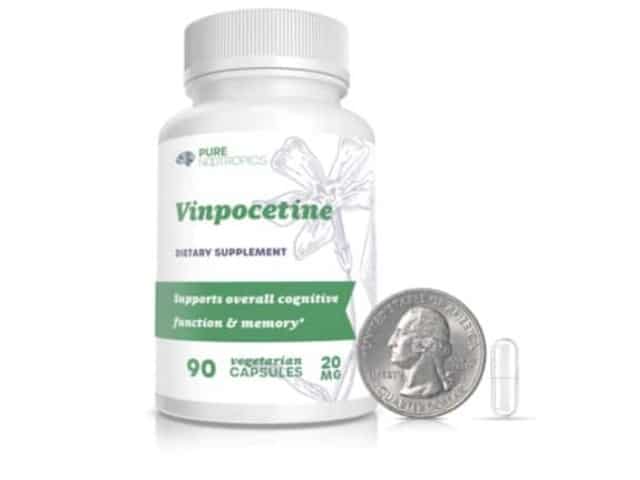
Disclosure: These are affiliate links. I earn a small commission if you purchase — at no extra cost to you. I only recommend products I personally use or have thoroughly researched.
Research & Studies
This section includes 5 peer-reviewed studies referenced in our analysis.