As a child of the 80s, I remember when tofu first started appearing on American dinner tables as the supposed “health food” of the future. Fast forward a few decades, and it’s still riding that same health halo — positioned as a virtuous, high-protein alternative to meat that’s better for you and better for the planet.
But after years of studying functional nutrition and working with clients to optimize their diets for both physical and cognitive performance, I’ve come to a more nuanced view. Tofu isn’t the nutritional villain that some paleo advocates claim, but it’s also far from the protein powerhouse it’s marketed as. It’s a textbook example of a “health halo” food — one that seems virtuous on the surface but carries some sneaky downsides that most people don’t know about.
The Short Version: Tofu is a complete protein but comes loaded with antinutrients (phytates, trypsin inhibitors) that impair protein digestion and mineral absorption, plus phytoestrogens that can disrupt hormonal balance. Unless you’re buying organic and non-GMO, you’re also getting pesticide and hexane residues. Better protein options include grass-fed animal products, properly prepared legumes, nuts, seeds, and collagen. For brain-specific nutrition, prioritize protein sources that support dopamine synthesis (tyrosine-rich foods) and gut health (bone broth, fermented foods).
What’s Actually Wrong with Tofu
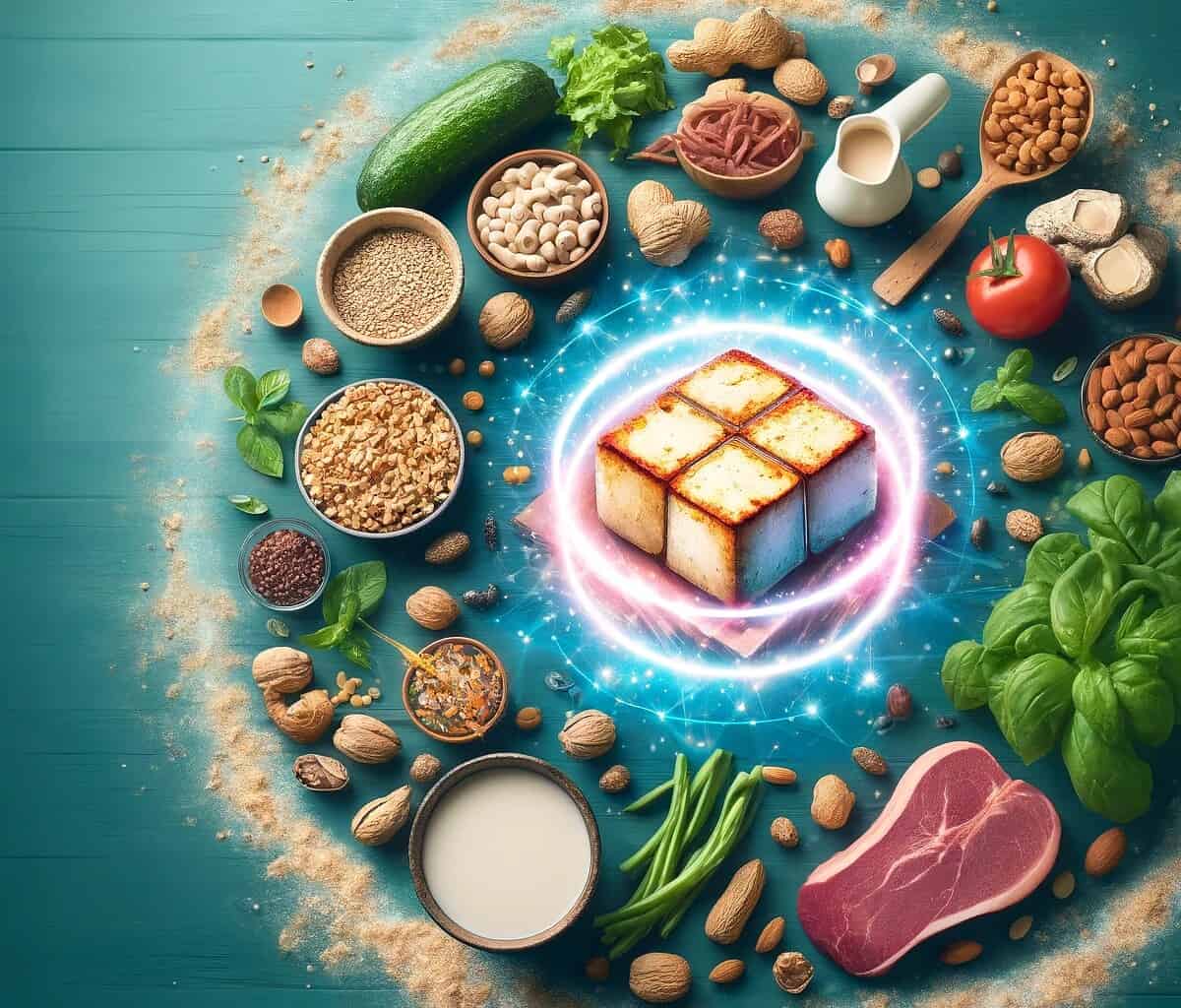
Tofu, made from coagulated soy milk, does contain all nine essential amino acids — making it technically a complete protein. That’s the part the marketing gets right. But there’s more to protein quality than amino acid completeness.
Antinutrients Impair Absorption
Soy is rife with antinutrients, particularly phytates and trypsin inhibitors. Phytates bind to minerals like zinc, iron, calcium, and magnesium, preventing your body from absorbing them. Trypsin inhibitors interfere with protein digestion itself, meaning you’re not getting the full benefit of the protein content listed on the label.
This is why many people report digestive issues — bloating, gas, discomfort — after eating soy products. Your body is literally struggling to break down and absorb what you’ve given it. A 2024 study published in Food Research International using the INFOGEST in vitro digestion model measured the Digestible Indispensable Amino Acid Score (DIAAS) of Swiss soybean cultivars and found that while processing into tofu modestly improved DIAAS (79-91, classified as “good” quality), raw cooked soybeans scored below 60 (“low” quality) — confirming that soy’s antinutrient burden meaningfully reduces protein utilization before processing.
Phytoestrogen Concerns
Soy contains isoflavones, a class of phytoestrogens that can bind to estrogen receptors in the body. The clinical significance of this is debated, but research suggests that high soy consumption may disrupt hormonal balance, particularly in men. The effects appear dose-dependent, and occasional tofu consumption is unlikely to cause problems, but making it a dietary staple is a different story. A 2024 comprehensive review in Frontiers in Pharmacology noted that soybean protease inhibitors are drawing renewed research interest for possible anticancer properties, but simultaneously confirmed that these same compounds interfere with protein breakdown and are only partially inactivated during standard tofu manufacturing. The review also found that tofu contained the highest isoflavone concentrations among all soy products tested. On the reassuring side, multiple clinical studies reviewed found that neither soy nor isoflavone intake significantly altered endogenous hormone levels in men at typical dietary consumption levels.
Processing and Contamination
Unless you’re specifically seeking out organic, non-GMO tofu, you’re likely consuming soy that has been:
- Genetically modified: Over 90% of US soybeans are GMO
- Processed with hexane: A chemical solvent used to extract soy protein from the bean
- Exposed to pesticide residues: Conventional soybeans are heavily sprayed
This doesn’t mean that a serving of tofu is going to poison you. But when we’re evaluating protein sources for long-term health optimization, cumulative exposure to these processing byproducts matters.
Better Protein Sources for Body and Brain
As a functional nutritionist, I always advocate for a bio-individual approach to diet. What works for one person may not work for another. But across the board, here are protein sources I recommend over tofu for both physical performance and cognitive optimization:
Grass-Fed and Pasture-Raised Animal Products
Grass-fed beef, pasture-raised poultry, and wild-caught fish provide highly bioavailable protein along with crucial brain nutrients: omega-3 fatty acids, B12, iron, zinc, and creatine. Compared to conventional equivalents, grass-fed options contain more anti-inflammatory omega-3s, conjugated linoleic acid (CLA), and vitamins A and E.
Animal protein is also rich in L-tyrosine, the amino acid precursor to dopamine. If you’re working on dopamine optimization, quality animal protein is one of the most direct dietary approaches.
Properly Prepared Legumes
Traditional cultures didn’t just eat beans straight from the can. They used soaking, sprouting, and fermenting techniques to neutralize the antinutrients that impair digestion and mineral absorption. When properly prepared, lentils, chickpeas, and black beans are excellent protein sources with the added benefit of prebiotic fiber that supports gut health.
The key difference between well-prepared legumes and tofu: the traditional preparation methods actually address the antinutrient problem, while standard tofu processing does not fully eliminate phytates and trypsin inhibitors. A 2024 quantitative review in Frontiers in Nutrition examining protein quality across soy product types reinforced this point: for all soy products combined, mean DIAAS was 84.5 — classified as “good” but notably lower than animal proteins (typically 100+). More importantly, high phytic acid-to-mineral ratios (PA/Fe > 8 and PA/Zn > 15) in minimally processed soy indicate strong inhibition of iron and zinc bioavailability, minerals critical for neurotransmitter synthesis and cognitive function.
Collagen and Bone Broth
Collagen is a protein type that most people under-consume. It supports gut lining integrity, joint function, and even skin health. Bone broth is one of the best natural collagen sources, along with grass-fed collagen peptide supplements.
For anyone working on gut healing, collagen and bone broth are invaluable. A healthy gut is foundational to brain health — your gut produces neurotransmitters, modulates inflammation, and communicates directly with your brain via the vagus nerve.
Nuts, Seeds, and Their Butters
Almonds, walnuts, hemp seeds, pumpkin seeds, and their butters provide protein alongside healthy fats, minerals, and antioxidants. Walnuts are particularly notable for their omega-3 content. Opt for raw or dry-roasted varieties to avoid inflammatory seed oils used in many processed nut products.
Fermented Soy: The Exception
Here’s where I’ll give soy partial credit: traditionally fermented soy products like natto, tempeh, and miso are genuinely different from tofu. The fermentation process substantially reduces antinutrient content, increases bioavailability of nutrients, and adds beneficial probiotics. If you want soy in your diet, fermented versions are the way to go.
Optimizing Gut Health for Protein Absorption
Even the highest-quality protein won’t serve you well if your digestive system is compromised. The gut-brain connection is one of the most important relationships in cognitive optimization, and protein absorption is a major part of that equation.
Fix the Foundation First
- Eliminate gut irritants: Refined sugars, industrial seed oils, and artificial additives damage the gut lining. Some people may also need to temporarily remove grains, dairy, or — yes — soy products.
- Incorporate fermented foods: Sauerkraut, kimchi, kefir, and yogurt provide beneficial bacteria that support the microbiome. The gut-brain axis depends on a diverse, healthy microbial community.
- Consider digestive enzymes: As we age, natural enzyme production declines. Supplemental enzymes with protein-rich meals can improve breakdown and absorption.
- Support gut lining repair: L-glutamine, zinc carnosine, and collagen all support intestinal barrier integrity.
The Holistic Protein Equation
Protein utilization isn’t just about what you eat — it’s about the entire metabolic context.
Blood Sugar Stability
When you eat protein with healthy fats and fiber, digestion slows and blood sugar remains stable. This matters enormously for brain function: glucose spikes and crashes directly impair cognitive performance. If you struggle with energy crashes after meals, consider whether your protein choices and meal composition need adjustment. See our guide to natural metformin alternatives for more on blood sugar optimization.
Exercise and Protein Synthesis
Resistance training and high-intensity interval training are the strongest stimuli for muscle protein synthesis. Exercise also promotes BDNF (brain-derived neurotrophic factor) release, which supports neuroplasticity and cognitive resilience. The combination of quality protein intake and regular intense exercise creates a positive feedback loop for both physical and mental performance.
Stress and Digestion
Chronic stress activates the sympathetic nervous system and diverts resources away from digestion. You could be eating the perfect diet, but if you’re chronically stressed, your body can’t properly break down and absorb nutrients. Stress management through meditation, adaptogenic herbs like ashwagandha and Lion’s Mane, and regular relaxation practices directly supports protein utilization.
Frequently Asked Questions
Is tofu a complete protein?
Yes, tofu contains all nine essential amino acids. However, protein completeness isn’t the same as protein quality. The antinutrients in soy reduce actual digestibility and mineral absorption, meaning the effective protein value is lower than the label suggests.
Can tofu be part of a healthy diet?
In moderation, especially organic and non-GMO varieties, tofu can be included in a balanced diet. But I wouldn’t recommend making it a daily protein staple. Fermented soy products (tempeh, natto, miso) are a better choice if you want soy in your rotation.
What are the best plant-based protein options?
Properly prepared legumes (soaked, sprouted, or fermented), hemp seeds, quinoa, amaranth, and spirulina are all strong plant-based protein sources. Combining different types ensures a full amino acid spectrum. For cognitive optimization specifically, look for protein sources rich in tyrosine and tryptophan.
How does protein quality affect brain function?
Your brain needs amino acids to produce neurotransmitters. L-tyrosine becomes dopamine. Tryptophan becomes serotonin. Histidine becomes histamine. When protein digestion and absorption are impaired — as can happen with antinutrient-heavy foods — neurotransmitter production suffers, and cognitive performance follows.
The Bottom Line
Tofu’s health halo persists because it tells a simple, appealing story: plant-based, complete protein, low in fat. But nutrition science is rarely that simple. The antinutrients, phytoestrogens, processing concerns, and inferior bioavailability compared to other protein sources mean that tofu doesn’t deserve its pedestal.
The best approach to protein — like everything I advocate on this site — is informed diversity. Prioritize quality, variety, and proper preparation. Support your gut health. And choose protein sources that serve both your physical performance and your cognitive goals. Your brain runs on the nutrients you absorb, not just the ones you eat.