

- Supports relaxation without sedation
- May improve cerebral blood flow
- Helps with stress response modulation
I wasted six months searching for the “perfect” anti-anxiety nootropic before I understood what Picamilon actually does. I thought it was just another GABA supplement — turns out I was half-right, and the other half changes everything.
Picamilon is one of those compounds that sounds too good to be true: a Russian-developed molecule that delivers GABA directly to your brain by smuggling it across the blood-brain barrier. The catch? It’s been banned as a dietary supplement in the U.S. since 2015, even though it’s still widely available and used throughout Russia and Eastern Europe.
The Short Version: Picamilon is a synthetic compound combining GABA and niacin that crosses the blood-brain barrier to deliver calming GABAergic effects along with improved cerebral circulation. Typical doses range from 50-300mg daily. It’s not magic, but it’s one of the more interesting approaches to GABA supplementation — if you can source it legally.
What Is Picamilon? (The Soviet Solution to GABA’s Biggest Problem)
Picamilon was developed in the Soviet Union in 1969 by researchers at the All-Union Vitamin Research Institute. The problem they were trying to solve: GABA supplements don’t work because GABA can’t cross the blood-brain barrier.
Their solution was elegant — bond GABA to niacin (vitamin B3), creating a new molecule that could cross into the brain. Once inside, enzymes break the bond, releasing both GABA and niacin to do their respective jobs.
In Russia, Picamilon has been used clinically for decades to treat anxiety, depression, migraine, and cerebrovascular disorders. In the U.S., it was sold as a dietary supplement until the FDA declared it an unapproved drug in 2015 — not because of safety concerns, but because it doesn’t fit the definition of a dietary ingredient (it’s a synthetic compound, not a botanical or nutrient).
Here’s the foundations-first reality: If you’re dealing with chronic stress or anxiety, Picamilon isn’t a substitute for fixing your sleep, gut health, or lifestyle. It’s a tool that works on top of a solid foundation. If your cortisol is through the roof because you’re getting five hours of sleep and living on coffee, no nootropic is going to save you.
That said, for people who’ve already dialed in the basics and are looking for targeted support for focus under pressure or relaxation without sedation, Picamilon offers a unique mechanism.
How Does Picamilon Work? (The Two-Part Delivery System)
Most GABA supplements are essentially expensive placebos because GABA molecules are too large and polar to cross the blood-brain barrier. Some people report feeling effects from GABA supplements, but that’s likely due to peripheral effects or placebo — the GABA itself isn’t reaching your brain in meaningful amounts.
Picamilon solves this with a molecular trojan horse strategy. By bonding GABA to niacin, the compound becomes lipophilic enough to cross the blood-brain barrier. Once it’s in the central nervous system, esterases cleave the bond, releasing free GABA and free niacin.
Here’s what happens next:
The GABA component binds to GABA-A receptors, producing calming, anxiolytic effects without the sedation you’d get from benzodiazepines or Phenibut. GABA is your brain’s primary inhibitory neurotransmitter — it puts the brakes on overactive neural circuits, which is why it’s associated with relaxation and reduced anxiety.
The niacin component acts as a vasodilator, improving cerebral blood flow. Better blood flow means better oxygen and nutrient delivery to brain cells, which can enhance cognitive function and potentially reduce oxidative stress under hypoxic conditions.
Reality Check: A 2023 study published in Basic & Clinical Pharmacology & Toxicology tested Picamilon against 50 biological targets and found it was largely inactive in receptor assays. This doesn’t mean it doesn’t work — it just means its effects are likely subtle, indirect, or dependent on metabolism in living systems rather than direct receptor binding.
In plain English: Picamilon’s mechanism is theoretically sound, but the clinical evidence is modest. Most of the research comes from Russian sources, and there’s a lack of large-scale, well-controlled Western trials. That doesn’t make it useless, but it does mean you should temper your expectations.
Benefits of Picamilon (What the Research Actually Shows)
The research on Picamilon is concentrated in Russian medical literature, with limited Western validation. Here’s what we know:
Anxiety and Stress Modulation (Moderate Evidence)
Animal studies and Russian clinical trials suggest Picamilon reduces anxiety without significant sedation. A 2006 study in Experimental and Clinical Pharmacology found that Picamilon influenced central GABA-A receptor complexes in rats subjected to hypokinesia-induced depression, suggesting it may help modulate stress responses.
A 2024 observational study in the Journal of Neurology and Psychiatry assessed outpatient use of Picamilon and reported improvements in anxiety and asthenia (weakness/fatigue) with a favorable safety profile. However, the study design was not a randomized controlled trial, so evidence quality is moderate at best.
Cerebrovascular Support (Moderate Evidence)
Picamilon has been studied for chronic cerebral ischemia — reduced blood flow to the brain. A 2024 study in the Journal of Neurology and Psychiatry evaluated Picamilon in patients with progressive chronic cerebral ischemia and found improvements in cognitive function and symptom relief. This aligns with the niacin component’s vasodilatory effects.
Translation: if poor cerebral circulation is contributing to brain fog or cognitive decline, Picamilon’s ability to improve blood flow may offer real benefits. But this isn’t a first-line intervention for healthy adults looking for a productivity boost.
Neuroprotection and Antioxidant Effects (Preliminary Evidence)
Animal studies suggest Picamilon may reduce oxidative stress by improving oxygen delivery and cellular energy metabolism. The antihypoxic effects observed in preclinical models indicate it might protect neurons during periods of reduced oxygen availability.
This is interesting for long-term brain health, but human evidence is limited.
| Benefit | Evidence Level | Key Study |
|---|---|---|
| Anxiety reduction | Moderate | Russian clinical trials, 2024 observational study |
| Cerebrovascular support | Moderate | 2024 chronic ischemia trial |
| Cognitive function | Preliminary | Observational data only |
| Neuroprotection | Preliminary | Animal studies |
Insider Tip: If you’re expecting Picamilon to work like Modafinil or Phenylpiracetam, you’ll be disappointed. The effects are subtle — think “calm focus” rather than “rocket fuel.”
How to Take Picamilon (Without Wasting Your Money)
Picamilon dosing in Russian clinical practice typically ranges from 50mg to 300mg per day, divided into 2-3 doses.
| Use Case | Dosage | Timing | Notes |
|---|---|---|---|
| General cognitive support | 50-100mg | 2x daily (morning + afternoon) | Start here to assess tolerance |
| Anxiety/stress modulation | 150-200mg | 2-3x daily | Split doses throughout the day |
| Cerebrovascular support | 200-300mg | 2-3x daily | Under medical guidance for clinical conditions |
Starting Protocol:
- Start with 50mg twice daily (morning and early afternoon)
- Take with food to enhance absorption and reduce potential GI upset
- Assess effects over 7-10 days before increasing dose
- If well-tolerated and you’re not getting desired effects, increase to 100mg 2x daily
- Maximum dose in most clinical contexts is 300mg daily
Cycling: Picamilon doesn’t appear to require cycling in the same way that Phenibut does (Phenibut has significant tolerance and dependence issues). However, taking occasional breaks (e.g., 5 days on, 2 days off) can help you assess whether it’s still providing benefits or if effects have diminished.
Pro Tip: Picamilon works best when taken consistently over several weeks. Don’t judge it based on a single dose — this isn’t a stimulant. Give it 2-4 weeks of consistent use before deciding if it’s effective for you.
Side Effects & Safety (What Could Go Wrong)
Picamilon is generally well-tolerated, but the niacin component can cause side effects in some users:
Common Side Effects:
- Mild headaches (likely from vasodilation)
- Nausea or stomach discomfort (especially on empty stomach)
- Skin flushing or warmth (from niacin-induced vasodilation)
- Dizziness (rare, usually at higher doses)
Who Should Avoid Picamilon:
- Pregnant or nursing women (insufficient safety data)
- People with severe kidney or liver disease
- Those with active peptic ulcers (niacin may worsen symptoms)
- Anyone taking medications that interact with GABA or niacin
| Medication/Substance | Interaction Type | Risk Level | Notes |
|---|---|---|---|
| Benzodiazepines (Xanax, Valium) | Additive CNS depression | Moderate | May increase sedation; consult physician |
| Anticoagulants (Warfarin) | Niacin interaction | Moderate | Niacin may affect clotting; monitor INR |
| Blood pressure medications | Additive vasodilation | Moderate | May lower BP excessively; monitor closely |
| Alcohol | CNS depression | Low-Moderate | Avoid combining; increases sedation risk |
| SSRIs/SNRIs | GABAergic modulation | Low | Unlikely interaction, but monitor mood changes |
Important: Picamilon is not approved as a dietary supplement in the U.S. If you choose to use it, you’re doing so at your own risk. Source from reputable suppliers and start with conservative doses.
Stacking Picamilon (The Combinations That Actually Work)
Picamilon’s dual mechanism — GABAergic + vasodilatory — makes it stackable with nootropics that work through different pathways.
For Calm Focus (Productivity Without Jitters):
- 100mg Picamilon + 200mg L-Theanine + 100mg Caffeine
- Timing: Morning stack
- Rationale: L-Theanine smooths out caffeine’s edge, Picamilon adds calm without sedation, caffeine provides alertness. This is a “flow state” stack for deep work.
For Stress Resilience (High-Pressure Situations):
- 150mg Picamilon + 300mg Rhodiola Rosea + 200mg L-Tyrosine
- Timing: Morning + early afternoon (split dose)
- Rationale: Rhodiola supports cortisol modulation, L-Tyrosine replenishes catecholamines under stress, Picamilon keeps you calm and clear-headed.
For Cerebrovascular Support (Brain Health & Aging):
- 200mg Picamilon + 500mg Lion’s Mane + 300mg Bacopa Monnieri
- Timing: Morning + evening (split dose)
- Rationale: Lion’s Mane supports NGF and neuroplasticity, Bacopa enhances memory consolidation, Picamilon improves cerebral blood flow. This is a long-term brain health stack, not an acute performance stack.
| Stack Goal | Combination | Key Benefit | Timing |
|---|---|---|---|
| Calm focus | Picamilon + L-Theanine + Caffeine | Alertness without anxiety | Morning |
| Stress resilience | Picamilon + Rhodiola + L-Tyrosine | Calm under pressure | AM + early PM |
| Brain health | Picamilon + Lion’s Mane + Bacopa | Long-term neuroprotection | AM + PM |
What to AVOID:
- Don’t stack with Phenibut — both are GABAergic, and combining them increases the risk of excessive CNS depression and tolerance development.
- Don’t combine with alcohol — additive sedation and increased risk of cognitive impairment.
- Avoid with high-dose Niacin supplements — Picamilon already contains niacin; adding more increases the risk of flushing and potential liver stress at high doses.
Pro Tip: If you’re using Picamilon for calm focus, start with just Picamilon + L-Theanine before adding caffeine. Some people find the combination so effective that caffeine becomes unnecessary.
My Take (Is Picamilon Worth It?)
I’ll be honest: Picamilon is one of those compounds I wanted to love more than I actually did.
The theory is brilliant — solving GABA’s bioavailability problem with a niacin delivery system is clever neuropharmacology. And for some people, especially those dealing with chronic stress or mild cerebrovascular issues, it seems to offer real benefits.
But in my experience, the effects are subtle. If you’re looking for something to “feel” immediately, this isn’t it. Picamilon is more like Bacopa Monnieri or Ashwagandha — it works best over weeks, not hours.
Who should try Picamilon:
- People who’ve already optimized sleep, stress, and gut health but need targeted support for calm focus
- Those with mild anxiety who want an alternative to Phenibut (which has serious tolerance issues)
- Anyone dealing with cerebrovascular issues or age-related cognitive decline (under medical supervision)
- Biohackers interested in Russian nootropics and willing to experiment with less-studied compounds
Who should try something else:
- If you need acute, immediate anxiolytic effects, try L-Theanine or Magnesium Threonate first — both are safer, more accessible, and better-studied.
- If you’re looking for strong cognitive enhancement, Noopept or Phenylpiracetam are more potent (though still requiring caution).
- If you’re dealing with clinical anxiety or depression, work with a healthcare provider rather than self-experimenting with grey-market nootropics.
The biggest issue with Picamilon is legal availability. Since the FDA banned it as a dietary supplement in 2015, sourcing quality Picamilon in the U.S. is difficult. You’re often buying from overseas suppliers with questionable quality control. That introduces risk I’m not comfortable recommending to most people.
If you do decide to try it, start conservatively (50mg 2x daily), source from a reputable supplier, and give it at least 3-4 weeks before deciding if it’s effective. And if you don’t notice anything after a month, don’t keep throwing money at it — there are plenty of other nootropics with better evidence and easier access.
Picamilon isn’t a magic bullet. But for the right person, in the right context, it’s a useful tool in the nootropic toolkit. Just make sure you’re building on a solid foundation first.
Recommended Picamilon Products
I know how frustrating it is to sort through dozens of brands making the same claims. These are the ones I've personally vetted — because quality is the difference between results and wasted money.
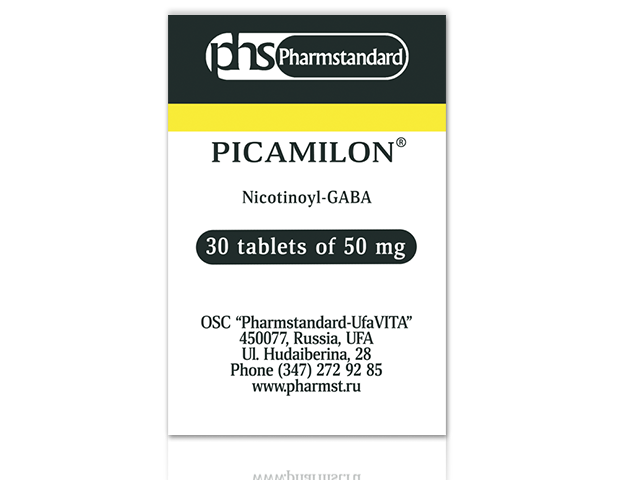
Disclosure: These are affiliate links. I earn a small commission if you purchase — at no extra cost to you. I only recommend products I personally use or have thoroughly researched.
Research & Studies
This section includes 4 peer-reviewed studies referenced in our analysis.