

- Enhanced memory retention
- Improved learning capacity
- Increased focus and attention
Here’s a number that still haunts me from my research into obscure nootropics: one study. That’s how much human data we have on PRL-8-53 — a single trial from 1978 that showed remarkable memory improvements. And then… nothing. Radio silence for nearly 50 years.
If you’ve stumbled onto PRL-8-53 while hunting for memory enhancement compounds that aren’t completely mainstream, you’ve found one of the most intriguing dead-ends in nootropics research. Intriguing because the results were impressive. Dead-end because almost nobody followed up on it.
The Short Version: PRL-8-53 is a synthetic cholinergic compound investigated in a 1978 human trial that showed significant improvements in memory retention — participants who took a single 5mg dose demonstrated 100-200% better recall on memory tests compared to placebo. Despite promising results, minimal follow-up research exists, leaving us with compelling preliminary data but major gaps in long-term safety and efficacy profiles.
Research Chemical Notice: PRL-8-53 is an investigational compound that has not been approved by the FDA for human use. The information below is compiled from published research for educational purposes only. This is not medical advice and should not be interpreted as a recommendation for human consumption. Always consult a qualified healthcare provider.
What Is PRL-8-53?
PRL-8-53 (methyl 3-(2-benzylmethylamino)propanoate benzoate) is a synthetic nootropic compound developed by neurobiologist Nikolaus Hansl at Creighton University in the 1970s. The compound was specifically designed to enhance memory formation and retention — a “learning pill” in the truest sense.
Unlike naturally-derived compounds like Bacopa Monnieri or Lion’s Mane, PRL-8-53 is entirely synthetic, created through deliberate molecular design to cross the blood-brain barrier and interact with cholinergic systems. The “PRL” designation comes from its classification as a potential “learning and retention” compound.
The compound gained brief attention in research communities after the 1978 publication in Psychopharmacology, but funding dried up and no major pharmaceutical company picked it up for further development. Today, it exists in a research limbo — available from grey-market research chemical vendors, discussed in online nootropics communities, but almost completely absent from modern scientific literature.
How Does PRL-8-53 Work? (The Mechanisms Under Investigation)
The exact mechanisms of PRL-8-53 remain partially understood, which is both fascinating and frustrating. Based on available research, the compound appears to work through at least three distinct neurochemical pathways.
Cholinergic potentiation is the primary suspected mechanism. Rather than increasing acetylcholine levels directly (like Alpha-GPC or CDP-Choline), PRL-8-53 appears to enhance the brain’s responsiveness to existing acetylcholine. Think of it like turning up the volume on your radio rather than increasing the signal strength. The cholinergic system is critical for encoding new memories and maintaining attention during learning tasks, which explains why research participants showed improved retention of learned material.
Dopaminergic modulation is the second pathway. Animal studies showed that PRL-8-53 could counteract the effects of reserpine, a drug that depletes dopamine and other monoamines in the brain. This suggests the compound helps maintain optimal dopamine levels or enhances dopamine receptor sensitivity. The dopaminergic effects likely contribute to improved motivation and goal-directed learning — you’re not just remembering better, you’re more engaged with the material you’re trying to learn.
Serotonergic activity rounds out the picture. PRL-8-53 demonstrates partial serotonin inhibition, which may reduce cognitive rigidity and create a more balanced neurochemical state for learning. This isn’t a strong effect — nothing like an SSRI — but it appears to work synergistically with the cholinergic and dopaminergic effects.
Translation: PRL-8-53 seems to create an optimal brain state for encoding and consolidating new information by fine-tuning three major neurotransmitter systems simultaneously. The catch is that most of this is inferred from limited data. We don’t have the mechanistic depth that exists for compounds like Modafinil or Piracetam.
Reported Effects of PRL-8-53 (What the Research Actually Shows)
Let’s talk about that 1978 study, because it’s basically the entire evidence base for PRL-8-53 in humans.
The landmark trial: Researchers at Creighton University administered a single 5mg oral dose of PRL-8-53 to healthy adult volunteers and tested their ability to memorize and recall a 12-word list. The results were striking — participants who received PRL-8-53 showed 100-200% improvement in retention when tested 24 hours later compared to placebo. Participants with naturally poorer baseline memory (those who struggled to recall words in the placebo condition) showed the most dramatic improvements.
That’s remarkable. For context, most established nootropics show modest 10-30% improvements in specific cognitive domains after weeks of consistent use. PRL-8-53 showed triple-digit improvements from a single dose.
But here’s the reality check: This was a single study with a small sample size, published nearly 50 years ago, and never replicated. The protocol tested acute effects on rote memorization, not complex learning, creative thinking, or real-world memory tasks. We have no data on what happens with repeated dosing, different populations (older adults, students, people with cognitive impairment), or long-term use.
| Cognitive Domain | Evidence Level | Key Finding |
|---|---|---|
| Memory retention | Preliminary (single human trial) | 100-200% improvement in 24-hour recall |
| Learning capacity | Preliminary (mechanistic inference) | Enhanced cholinergic responsiveness suggests improved encoding |
| Focus/Attention | Weak (extrapolated from mechanisms) | Dopaminergic effects may support sustained attention |
| Processing speed | No data | Not investigated |
| Executive function | No data | Not investigated |
Anecdotal reports from research chemical communities suggest users experience noticeable improvements in retention of studied material, particularly for verbal and factual information. Some users report enhanced clarity during learning sessions. But anecdotal reports are not controlled research, and placebo effects are powerful in the cognitive enhancement space.
Reality Check: One impressive study from 1978 is not the same as a robust body of evidence. The results are compelling enough to warrant interest, but not strong enough to make definitive claims about efficacy. If you’re considering PRL-8-53, understand that you’re essentially participating in self-experimentation based on very limited data.
Research Administration Protocols (Doses Investigated in Studies)
The 1978 human trial used a single 5mg oral dose administered on an empty stomach, with memory testing conducted 1.5 hours post-administration and again 24 hours later. That’s the only human dosing protocol we have published data for.
Research chemical community reports suggest users typically investigate doses in the 5-20mg range, often split into divided doses. The rationale for higher doses appears to be extrapolated from animal studies, though direct translation from animal to human dosing is speculative at best.
| Protocol | Dose | Timing | Context |
|---|---|---|---|
| Published human research | 5mg | Single dose, empty stomach | Memory testing scenario |
| Community-reported investigation | 5-10mg | Morning, before learning tasks | Conservative approach |
| Community-reported investigation | 15-20mg | Split dose (morning + early afternoon) | Higher-intensity investigation |
Absorption considerations: The published study administered PRL-8-53 on an empty stomach, though no data exists comparing fed vs. fasted absorption. Based on the compound’s chemistry (benzoate salt), empty stomach administration likely enhances bioavailability.
Onset and duration: Based on the study protocol, cognitive effects appear to manifest within 90 minutes and persist for at least 24 hours (the longest interval tested). User reports suggest a 4-6 hour window of peak effects, though this is entirely anecdotal.
Cycling: No research exists on tolerance development or optimal cycling protocols. Some users in research communities report diminishing effects with daily use and suggest cycling 5 days on / 2 days off, though this is purely speculative.
Pro Tip: If investigating this compound, starting at the researched dose (5mg) makes the most sense — it’s the only dose with human safety and efficacy data. Escalating beyond that puts you in territory with zero human evidence to guide you.
Adverse Events & Safety Profile
This is where the evidence gaps become glaring. The 1978 trial reported no significant adverse events at 5mg doses in healthy adults. That’s encouraging, but it’s also the extent of published safety data.
What we don’t know:
- Long-term safety profile (weeks, months, years of use)
- Effects in vulnerable populations (elderly, adolescents, pregnant/nursing)
- Interaction profile with common medications
- Potential for tolerance, dependence, or withdrawal
- Effects at higher doses (10mg+)
- Impact on sleep architecture (some users report insomnia if dosed late in the day)
Reported side effects in community contexts:
- Mild headaches (possibly cholinergic-related, similar to racetams)
- Difficulty falling asleep if taken after noon
- Occasional gastrointestinal discomfort
- Potential overstimulation at higher doses
Contraindications and interactions:
| Medication/Substance | Interaction Type | Risk Level | Notes |
|---|---|---|---|
| Cholinergic drugs (donepezil, rivastigmine) | Additive cholinergic effects | Moderate-High | Potential for excessive cholinergic activity |
| MAOIs | Monoamine modulation | Moderate | PRL-8-53 affects dopamine; theoretical interaction risk |
| Stimulants (amphetamines, caffeine) | CNS stimulation | Low-Moderate | May increase overstimulation risk |
| Anticholinergics (antihistamines, tricyclics) | Opposing mechanisms | Low | May reduce effectiveness |
Pregnancy and nursing: No safety data exists. Avoid entirely.
Important: The lack of long-term safety data is not the same as evidence of safety. Operating in the grey zone of “no reported problems” is fundamentally different from “proven safe.” Anyone investigating this compound should understand they’re accepting unknown risks.
Investigated Combinations in Research
No published research exists on PRL-8-53 combinations, but research communities have explored theoretical synergies based on mechanism of action. These are speculative combinations, not evidence-based protocols.
For Enhanced Memory Encoding & Retention
PRL-8-53 + Alpha-GPC + Lion’s Mane
- Rationale: PRL-8-53 potentiates cholinergic signaling; Alpha-GPC provides choline substrate; Lion’s Mane supports neuroplasticity through NGF stimulation
- Community-reported protocol: 5mg PRL-8-53 + 300mg Alpha-GPC + 500mg Lion’s Mane extract (morning, before study sessions)
- Theoretical risk: Excessive cholinergic activity (headaches, brain fog)
For Learning + Focus
PRL-8-53 + L-Theanine + Caffeine
- Rationale: Cholinergic/dopaminergic enhancement (PRL-8-53) + calm focus (L-Theanine) + alertness (caffeine)
- Community-reported protocol: 5mg PRL-8-53 + 200mg L-Theanine + 100mg caffeine (morning stack)
- Theoretical benefit: Balanced stimulation without jitters
For Comprehensive Cognitive Support
PRL-8-53 + Bacopa Monnieri + Rhodiola Rosea
- Rationale: Acute memory enhancement (PRL-8-53) + long-term memory support (Bacopa) + stress resilience (Rhodiola)
- Community-reported protocol: 5-10mg PRL-8-53 (morning) + 300mg Bacopa (standardized) + 200mg Rhodiola (morning)
- Note: Bacopa requires 8-12 weeks for effects; this is a long-term stack approach
Combinations to approach with caution:
- Other cholinergics (Huperzine A, CDP-Choline) — risk of excessive cholinergic activity
- Racetams (Piracetam, Aniracetam) — both affect cholinergic systems; compounding effects unknown
- Stimulants beyond caffeine — dopaminergic effects may amplify overstimulation
| Stack Goal | Combination | Synergy Mechanism | Caution Level |
|---|---|---|---|
| Memory encoding | PRL-8-53 + Alpha-GPC + Lion’s Mane | Cholinergic + neuroplasticity | Moderate (watch for headaches) |
| Balanced focus | PRL-8-53 + L-Theanine + Caffeine | Enhancement + calm alertness | Low |
| Long-term + acute | PRL-8-53 + Bacopa + Rhodiola | Acute + chronic memory support | Low |
Insider Tip: If investigating combinations, introduce compounds sequentially — not all at once. Start with PRL-8-53 alone for 3-5 days, then add one additional compound at a time with at least 3 days between additions. This lets you isolate effects and identify what’s actually working (or causing problems).
Current Research Assessment
Here’s the honest assessment: PRL-8-53 is one of the most intriguing compounds in nootropics research because of what we don’t know. That 1978 study showed dramatic results — improvements in memory retention that dwarf what most mainstream nootropics can achieve. But it’s also a single data point, never replicated, never expanded upon.
If I were evaluating this compound purely on evidence quality, I’d say the research base is too thin to make strong claims. One trial, no follow-up, minimal safety data, no mechanistic confirmation in humans. Compare that to Bacopa Monnieri (dozens of human trials, established safety profile) or Creatine (hundreds of studies, well-understood mechanisms) — the evidence gap is enormous.
But here’s the nuance: Sometimes the most interesting compounds are the ones that got left behind. PRL-8-53 wasn’t abandoned because it didn’t work or because it was dangerous — it was abandoned because research funding disappeared. That’s not the same as a clinical failure.
Who might find the existing research most relevant:
- Researchers interested in cholinergic mechanisms of memory enhancement
- Students or knowledge workers specifically focused on retention of factual/verbal information
- People who have exhausted more established options (Alpha-GPC, Bacopa, Lion’s Mane) and are willing to investigate compounds with limited data
- Those comfortable operating in grey areas with unknown long-term safety profiles
Who should probably explore other options:
- Anyone looking for well-established cognitive enhancers with robust safety data → start with Bacopa Monnieri, Rhodiola Rosea, or L-Theanine + Caffeine
- People seeking comprehensive cognitive enhancement beyond memory → Lion’s Mane for neuroplasticity, Creatine for overall brain energy
- Those uncomfortable with research chemicals or compounds lacking FDA approval → stick to established supplements
The bottom line: PRL-8-53 represents a gamble. The potential upside (dramatic memory improvement) is backed by one compelling study. The risks (unknown long-term effects, minimal safety data, lack of replication) are real. Whether that gamble is worth taking depends entirely on your risk tolerance and how much you value comprehensive evidence vs. compelling preliminary data.
If the nootropics research world had followed up on PRL-8-53 the way it did with Modafinil or Piracetam, we’d know whether that 1978 result was a fluke or a genuine breakthrough. Instead, we’re left with a tantalizing “what if” — and that’s exactly where this compound sits today.
Recommended PRL-8-53 Products
I know how frustrating it is to sort through dozens of brands making the same claims. These are the ones I've personally vetted — because quality is the difference between results and wasted money.
![PRL 8-53 [Powder] by Research Chemical Depot](/images/drupal/product-images/PRL-8-53-1G_NU-wpp1705119372162.jpg)
PRL 8-53 [Powder] by Research Chemical Depot
Shop Now →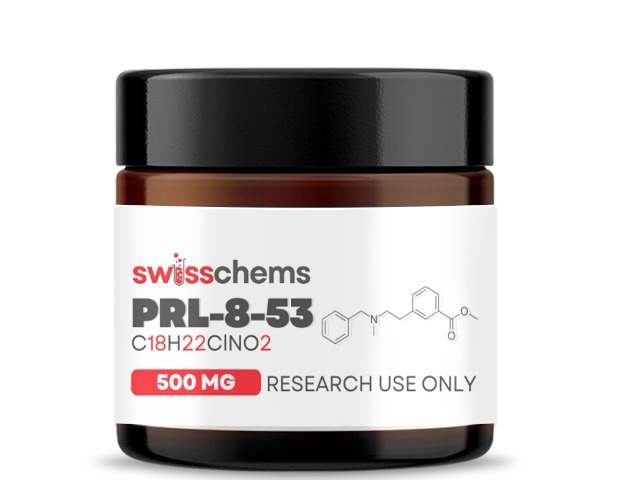
PRL-8-53 Cognitive Enhancer by SwissChem
Shop Now →
PRL-8-53 – Powder, 500mg by SwissChem
Shop Now →Disclosure: These are affiliate links. I earn a small commission if you purchase — at no extra cost to you. I only recommend products I personally use or have thoroughly researched.
Research & Studies
This section includes 1 peer-reviewed study referenced in our analysis.