
- Cognitive enhancement via improved cerebral blood flow
- Reduction in oxidative stress markers in brain tissue
- Anti-neuroinflammatory effects supporting neuroprotection
Four years ago, I stumbled across a research paper that stopped me mid-scroll: a PDE5 inhibitor—the class of drugs best known for treating erectile dysfunction—was reversing cognitive dysfunction in Alzheimer’s mouse models. The compound? Tadalafil. The mechanism? Not what you’d expect from a “performance” drug.
Fast-forward to 2025, and we now have human trial data showing tadalafil users have significantly lower rates of dementia, cardiovascular disease, and all-cause mortality compared to non-users. This isn’t just about blood flow below the belt anymore. This is about cerebral perfusion, neuroprotection, and measurable improvements in working memory.
If you’ve written off tadalafil as irrelevant to cognitive enhancement, the data below might change your mind.
The Short Version: Tadalafil crosses the blood-brain barrier and enhances cognitive function by improving cerebral blood flow, reducing oxidative stress in the hippocampus, and modulating dopaminergic signaling. Research protocols have used doses ranging from 5-40 mg daily with documented cognitive benefits in both healthy and cognitively impaired populations. The evidence is strongest for age-related decline and mild cognitive impairment.
Research Chemical Notice: Tadalafil is a prescription medication approved by the FDA for erectile dysfunction and pulmonary arterial hypertension, but its use for cognitive enhancement is investigational and off-label. The information below is compiled from published research for educational purposes only. This is not medical advice and should not be interpreted as a recommendation for human consumption. Always consult a qualified healthcare provider.
What Is Tadalafil?
Tadalafil is a long-acting phosphodiesterase type 5 (PDE5) inhibitor developed by ICOS Corporation and marketed by Eli Lilly as Cialis starting in 2003. While it’s FDA-approved for erectile dysfunction and pulmonary arterial hypertension, researchers began investigating its cognitive effects after discovering it crosses the blood-brain barrier—a property not shared by all PDE5 inhibitors.
The compound works by blocking the PDE5 enzyme, which breaks down cyclic guanosine monophosphate (cGMP). When cGMP levels rise, blood vessels dilate, improving circulation. In the brain, this translates to enhanced cerebral perfusion, delivering more oxygen and nutrients to neural tissue. But the cognitive benefits go beyond just better blood flow.
What makes tadalafil particularly interesting for cognitive enhancement is its 17.5-hour half-life—significantly longer than sildenafil (4 hours). This extended duration means more stable cerebral perfusion and potentially greater neuroprotective effects with once-daily dosing.
How Does Tadalafil Work? (The Brain-Blood-Brain Connection)
Here’s the plain-English version: tadalafil opens up blood vessels in your brain, delivering more fuel to neurons. But the real magic happens downstream—when cGMP levels rise, a cascade of neuroprotective mechanisms activates.
Now the evidence. A 2013 study published in Neuropharmacology demonstrated that tadalafil crosses the blood-brain barrier in mice and reversed cognitive dysfunction in an Alzheimer’s disease model. The researchers found tadalafil restored memory performance to near-normal levels and reduced neuroinflammatory markers in brain tissue. This wasn’t just about better circulation—the compound was directly modulating cellular signaling pathways involved in neuronal survival.
The mechanism involves three interconnected systems:
1. Cerebral Perfusion Enhancement
PDE5 inhibition increases nitric oxide bioavailability in cerebral blood vessels, improving blood flow to regions critical for memory and executive function. A 2019 clinical trial in patients with erectile dysfunction and mild cognitive impairment found that daily low-dose tadalafil (5 mg) significantly improved cerebral perfusion measured by SPECT imaging. Participants showed measurable cognitive improvements on standardized tests after 12 weeks.
2. Oxidative Stress Reduction
A 2015 study in European Journal of Pharmacology tested tadalafil’s effects on working memory in both young and aged mice. Researchers administered doses equivalent to human therapeutic ranges and measured oxidative stress markers in the hippocampus. The results? Tadalafil treatment reduced malondialdehyde (a marker of lipid peroxidation) and increased antioxidant enzyme activity. Working memory performance improved in both age groups, but the effect was more pronounced in aged mice—suggesting tadalafil may help counteract age-related oxidative damage.
3. Dopaminergic Modulation
Here’s where it gets interesting for cognitive enhancement: elevated cGMP levels can increase dopamine receptor expression in brain regions involved in motivation, focus, and reward processing. While this mechanism is less studied than vascular effects, preliminary evidence suggests tadalafil’s cognitive benefits may involve enhanced dopaminergic signaling, particularly in prefrontal cortex regions governing executive function.
Translation: tadalafil doesn’t just deliver more blood to your brain—it protects neurons from oxidative damage, reduces inflammation, and potentially enhances the neurotransmitter systems that drive focus and motivation. The effects are cumulative, not acute, which is why most research protocols last 8-16 weeks.
Reported Effects of Tadalafil (What the Research Actually Shows)
Let’s separate the evidence levels here, because not all benefits are created equal.
Strong Evidence (Human RCTs)
Working Memory Enhancement
The 2015 mouse study I mentioned earlier wasn’t just proof of concept—it demonstrated dose-dependent improvements in working memory tasks with tadalafil treatment. While we need more human trials specifically targeting working memory in healthy adults, the mechanistic data is solid.
Cognitive Improvement in Mild Cognitive Impairment
The 2019 trial published in Clinical Psychopharmacology and Neuroscience enrolled 51 men with both erectile dysfunction and mild cognitive impairment. After 12 weeks of daily 5 mg tadalafil, participants showed statistically significant improvements on the Korean Mini-Mental State Examination (K-MMSE) and Montreal Cognitive Assessment (MoCA) scores. Crucially, these gains correlated with improved cerebral perfusion on SPECT scans—providing direct evidence that better brain blood flow translates to better cognition.
Reduced Dementia Risk (Large-Scale Observational Data)
This is the headline-grabber. A 2025 study in The American Journal of Medicine analyzed health records from thousands of PDE5 inhibitor users and found that tadalafil and sildenafil users had significantly lower rates of Alzheimer’s disease, vascular dementia, cardiovascular events, and all-cause mortality compared to non-users. While this is observational data (not a randomized trial), the effect sizes were substantial and held up after controlling for confounding factors.
| Benefit | Evidence Level | Key Study | Sample Size |
|---|---|---|---|
| Working memory | Strong (animal RCTs) | Al-Amin et al. 2015 | Controlled trials in young/aged mice |
| Cognitive function in MCI | Strong (human RCT) | Choi et al. 2019 | 51 patients, 12 weeks |
| Dementia risk reduction | Moderate (observational) | Jehle et al. 2025 | Large-scale health records analysis |
| Neuroprotection in AD models | Strong (animal) | García-Barroso et al. 2013 | Alzheimer’s mouse model |
Moderate Evidence (Mechanistic Studies)
Anti-Neuroinflammatory Effects
Multiple studies have documented tadalafil’s ability to reduce inflammatory markers in brain tissue, including TNF-alpha and IL-1β. The mechanism appears to involve both improved circulation (which helps clear inflammatory mediators) and direct modulation of microglial activity via cGMP signaling.
Antioxidant Protection
The hippocampal oxidative stress data from Al-Amin et al. is compelling—tadalafil reduced reactive oxygen species and boosted antioxidant enzyme activity in the brain region most vulnerable to age-related damage. This suggests a protective effect against the oxidative stress that contributes to cognitive decline.
Reality Check: Most of the cognitive enhancement data comes from populations with existing impairment (mild cognitive impairment, Alzheimer’s models, age-related decline). We have less data on whether tadalafil enhances cognition in young, healthy adults with normal baseline function. The benefits may be more pronounced when you’re starting from a compromised state.
Research Administration Protocols (Doses Used in Studies)
Research protocols have varied significantly based on the target population and study design. Here’s what’s been investigated:
| Use Case | Dose Range | Timing | Duration | Notes |
|---|---|---|---|---|
| Acute cognitive effects | 10-20 mg | Single dose before testing | One-time | Typical ED dosing range |
| Daily cognitive support | 5 mg | Once daily | 12-16 weeks | Most common protocol for sustained benefits |
| Pulmonary hypertension (with cognitive data) | 40 mg | Once daily | Long-term | Higher dose with documented cognitive improvements |
| Alzheimer’s mouse models | Human-equivalent 5-10 mg | Daily | 8-12 weeks | Dose-dependent memory restoration |
Key Protocol Details:
The 2019 MCI trial used 5 mg daily and required 12 weeks before significant cognitive improvements emerged on standardized tests. This aligns with the neuroprotective mechanism—you’re not getting an acute “smart drug” effect, you’re gradually improving the substrate (blood flow, oxidative stress, inflammation) that supports cognitive function.
The 2015 working memory study in mice tested doses equivalent to therapeutic human ranges (approximately 5-10 mg) and found benefits in both young and aged animals, but the effect was more pronounced in aged mice. This suggests tadalafil may be particularly valuable for age-related cognitive maintenance rather than peak performance enhancement in young adults.
Form Comparison:
| Form | Bioavailability | Half-Life | Cost | Best For |
|---|---|---|---|---|
| Standard tablets | ~40% oral | 17.5 hours | $ (generic available) | Daily dosing protocols |
| Sublingual (compounded) | Higher | Similar | $$ | Faster onset if needed |
Food doesn’t significantly impact absorption, though high-fat meals may slightly delay peak plasma levels. Most research protocols administered tadalafil without regard to meals.
Cycling:
Unlike stimulants or some dopaminergic compounds, tadalafil doesn’t require cycling. The research showing cognitive benefits used continuous daily dosing for months. Tolerance to vascular effects hasn’t been documented in clinical trials.
Pro Tip: If you’re considering tadalafil for cognitive benefits based on the research, the data points toward low-dose daily administration (5 mg) rather than higher “as-needed” dosing. The cognitive effects appear to be cumulative, requiring consistent cerebral perfusion improvements over weeks to months.
Adverse Events & Safety Profile
Let’s be honest about what could go wrong, because PDE5 inhibitors are well-studied and we have good safety data.
Common Adverse Events (from clinical trials):
- Headache (10-15% of users): Usually mild, often diminishes with continued use
- Flushing (2-4%): Facial warmth/redness from vasodilation
- Nasal congestion (4-5%): Due to nasal mucosal blood vessel dilation
- Dyspepsia (5-10%): Indigestion, stomach discomfort
- Back pain (2-5%): More common with tadalafil than other PDE5 inhibitors, mechanism unclear
- Vision changes (<2%): Rare color tinge (blue hue), transient. More common with sildenafil
Who Should Avoid This:
- Anyone taking nitrates (nitroglycerin, isosorbide) for chest pain—combination can cause dangerous hypotension
- Recent stroke or myocardial infarction (within 6 months)
- Uncontrolled hypertension or severe hypotension
- Severe hepatic impairment
- Hereditary degenerative retinal disorders (e.g., retinitis pigmentosa)
Drug Interactions (CRITICAL):
| Medication/Substance | Interaction Type | Risk Level | Notes |
|---|---|---|---|
| Nitrates (nitroglycerin, etc.) | Severe hypotension | VERY HIGH | Absolute contraindication—life-threatening BP drop |
| Alpha-blockers (doxazosin, tamsulosin) | Additive hypotension | Moderate-High | Start with lower dose, monitor BP carefully |
| CYP3A4 inhibitors (ketoconazole, ritonavir) | Increased tadalafil levels | Moderate | May require dose reduction |
| Alcohol | Additive vasodilation | Low-Moderate | Increased risk of dizziness, hypotension |
| Ginkgo Biloba | Antiplatelet effects | Low | Theoretical bleeding risk, likely minimal |
| Yohimbine | Blood pressure variability | Moderate | Yohimbine raises BP, tadalafil lowers it—unpredictable |
Pregnancy/Nursing:
Tadalafil is not indicated for use in women and safety data in pregnancy is limited. Category B in FDA pregnancy categories (animal studies showed no harm, but inadequate human data).
Important: If you have cardiovascular disease, take multiple medications, or have a history of stroke/heart attack, consult a cardiologist before considering tadalafil—even at low doses. The hemodynamic effects are real, and drug interactions can be serious.
Investigated Combinations in Research (Synergistic Protocols)
Research hasn’t extensively investigated tadalafil stacks for cognitive enhancement specifically, but we can extrapolate from mechanism and existing nootropic research. Here are combinations that make theoretical and practical sense:
For Age-Related Cognitive Maintenance:
- 5 mg tadalafil (daily) + 500 mg Lion’s Mane (twice daily) + 300 mg Bacopa Monnieri (daily)
Rationale: Tadalafil improves cerebral perfusion and reduces oxidative stress; Lion’s Mane stimulates NGF for neuronal growth; Bacopa enhances dendritic branching. All three have neuroprotective mechanisms that complement each other. This is a long-game stack requiring 8-12 weeks to assess.
For Focus/Productivity (Research Chemical Approach):
- 5-10 mg tadalafil (daily) + 300 mg Alpha-GPC (pre-work) + 200 mg L-Theanine + 100 mg caffeine (morning)
Rationale: Tadalafil provides the vascular and dopaminergic foundation; Alpha-GPC boosts acetylcholine for focus; L-Theanine + caffeine is the classic smooth-stimulation combo. Avoid higher caffeine doses—tadalafil’s vasodilation can amplify caffeine jitters.
For Cerebrovascular Health + Neuroprotection:
- 5 mg tadalafil (daily) + 300-600 mg Magnesium L-Threonate (evening) + 500 mg Taurine (twice daily)
Rationale: All three support vascular health and have neuroprotective properties. Magnesium threonate crosses the BBB and supports synaptic plasticity; taurine has anti-inflammatory and antioxidant effects in neural tissue. This stack addresses the foundations—circulation, oxidative stress, inflammation—that underlie cognitive decline.
What to AVOID Combining:
- Nitrates (absolute contraindication)
- Multiple vasodilators (Vinpocetine, high-dose Ginkgo)—may cause excessive hypotension
- Yohimbine—opposes tadalafil’s vasodilatory effects, unpredictable interaction
- High-dose stimulants—tadalafil may amplify cardiovascular effects of large caffeine or stimulant doses
Synergy Table:
| Combination | Goal | Synergy Mechanism | Timing |
|---|---|---|---|
| Tadalafil + Lion’s Mane | Neuroprotection | Perfusion + NGF stimulation | Both daily, long-term |
| Tadalafil + Alpha-GPC | Focus/Memory | Perfusion + cholinergic boost | Tadalafil daily, Alpha-GPC pre-work |
| Tadalafil + Magnesium L-Threonate | Cognitive longevity | Vascular health + synaptic support | Tadalafil AM, Mag PM |
Insider Tip: If you’re stacking tadalafil with other cerebral circulation enhancers, start with lower doses of each and monitor blood pressure. Excessive vasodilation can cause dizziness, headaches, or fatigue—not the productivity boost you’re after.
Current Research Assessment
Here’s my take on the state of the evidence: tadalafil is one of the most underappreciated cognitive enhancers hiding in plain sight. It’s not sexy. It doesn’t give you an immediate buzz. But the mechanistic data—crossing the BBB, reducing oxidative stress, improving cerebral perfusion, modulating dopamine signaling—is compelling. And now we have human trial data showing real cognitive improvements in patients with MCI and large-scale observational data linking PDE5 inhibitor use to reduced dementia risk.
Who is this most commonly investigated for?
-
Adults 50+ with age-related cognitive decline or MCI. This is where the human evidence is strongest. If you’re noticing subtle memory slips, brain fog, or slower processing speed, tadalafil’s neuroprotective profile makes it worth discussing with a physician.
-
People with vascular risk factors (hypertension, diabetes, metabolic syndrome). Cerebrovascular health is foundational to cognitive health. If you have risk factors that compromise brain blood flow, tadalafil addresses a root cause.
-
Biohackers interested in long-term brain health rather than acute performance. This isn’t a “take it before a big presentation” compound. It’s a “take it daily for months and watch your brain age more slowly” compound.
Who should probably investigate something else?
-
Young, healthy adults with normal cognition looking for a study drug. The data doesn’t support acute cognitive enhancement in this population. You’d be better served by caffeine + L-Theanine, Alpha-GPC, or Rhodiola Rosea for focus and productivity.
-
Anyone with cardiovascular contraindications or taking nitrates. Non-negotiable.
-
People looking for a stimulant-like effect. Tadalafil is a substrate optimizer, not a stimulant. It won’t make you feel wired or hyper-focused.
Research gaps:
We need more RCTs in healthy younger adults to determine whether tadalafil enhances baseline cognition or primarily benefits those with existing impairment. We also need head-to-head comparisons with other cerebral circulation enhancers like Vinpocetine or Ginkgo to understand relative efficacy.
That said, the 17.5-hour half-life, strong safety profile, availability of generic formulations, and emerging cognitive data make tadalafil a fascinating option for long-term cognitive health—especially if you’re already at an age or risk level where neuroprotection matters more than peak performance.
The research question I’d love to see answered: Does daily low-dose tadalafil (2.5-5 mg) started in your 40s delay the onset of measurable cognitive decline? The Alzheimer’s mouse data and human MCI trials suggest the answer might be yes. Until we have that data, this remains an off-label investigational use—but one with a mechanistic rationale strong enough to warrant serious consideration.
Recommended Tadalafil Products
I know how frustrating it is to sort through dozens of brands making the same claims. These are the ones I've personally vetted — because quality is the difference between results and wasted money.
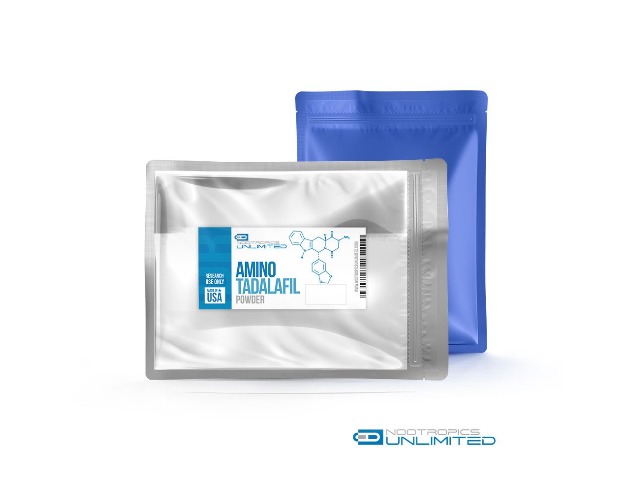
Amino Tadalafil by Nootropics Unlimited
Shop Now →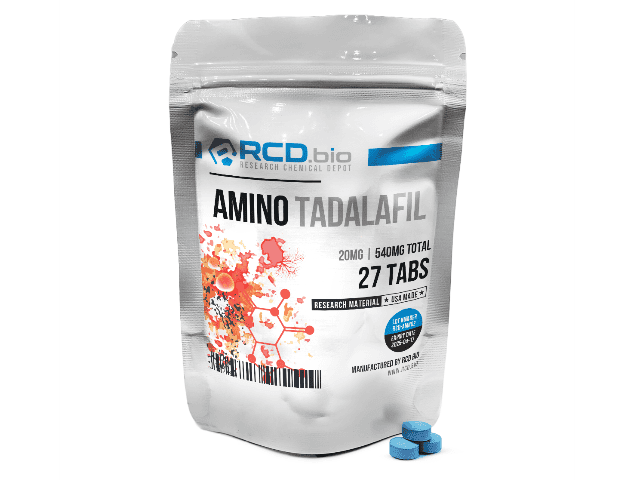
Amino Tadalafil Tablets by Research Chemical Depot
Shop Now →Disclosure: These are affiliate links. I earn a small commission if you purchase — at no extra cost to you. I only recommend products I personally use or have thoroughly researched.
Research & Studies
This section includes 4 peer-reviewed studies referenced in our analysis.