
- Enhances dopamine synthesis without stimulant side effects
- Reduces fatigue and asthenia
- Provides anxiolytic effects without sedation
- Supports physical performance under extreme conditions
- May upregulate BDNF and NGF
I used to think motivation was a character trait — something you either had or you didn’t. On good days, I’d power through my to-do list feeling unstoppable. On bad days, I’d stare at my screen for twenty minutes, open three browser tabs I didn’t need, and wonder what was wrong with me.
Turns out, it wasn’t a discipline problem. It was a dopamine synthesis problem. And bromantane is one of the most fascinating compounds I’ve come across for addressing that exact issue — without the jitters, crashes, or dependency that come with traditional stimulants.
The Short Version: Bromantane is a Soviet-era compound that enhances your brain’s ability to produce dopamine rather than artificially flooding your system with it. A large Russian clinical trial showed it reduced fatigue in 76% of patients at 50–100mg/day, with minimal side effects and no dependence. It’s genuinely different from stimulants like modafinil or adrafinil, and the mechanism of action backs that up.
What Is Bromantane?
Bromantane — sold in Russia under the brand name Ladasten — is a synthetic compound developed in the 1980s at the Zakusov State Institute of Pharmacology in Moscow. The Soviets weren’t messing around. They wanted something that could keep soldiers functional during extreme conditions — heat, exhaustion, altitude, emotional stress — without the burnout that comes from amphetamines or other classical stimulants.
They classified it as an “actoprotector,” which is a uniquely Russian pharmacological category. Think of it as a synthetic adaptogen: a compound that helps you perform under stress without exhausting your body’s reserves. It’s structurally related to amantadine and memantine — both belong to the adamantane family — but pharmacologically, it’s doing something completely different.
Bromantane gained international attention in 1996 when five athletes tested positive for it at the Atlanta Olympics, prompting a swift ban from the IOC and later WADA. Back home, Russian regulators approved it in 1997 for treating asthenia — a clinical term for persistent fatigue coupled with anxiety. It was later rebranded as Ladasten around 2005–2009 for neurasthenia treatment.
Outside of Russia, it has zero regulatory approval. You’ll find it sold as a “research chemical,” which means sourcing and quality control require extra vigilance on your part.
How Does Bromantane Work?
Here’s what makes bromantane genuinely interesting — and I don’t use that word lightly in a space full of overhyped compounds.
Most stimulants work by either blocking the recycling of dopamine (like methylphenidate) or forcing neurons to dump their dopamine stores all at once (like amphetamines). Both approaches give you a surge of focus and motivation, but they’re essentially borrowing from tomorrow. Your brain has a finite supply of dopamine at any given moment, and these drugs drain it faster than you can replenish it. That’s why you crash.
Bromantane does something fundamentally different. Instead of manipulating existing dopamine, it tells your brain to make more.
Specifically, bromantane upregulates two key enzymes in the dopamine production pathway. First, tyrosine hydroxylase (TH) — the rate-limiting enzyme that converts L-tyrosine into L-DOPA. Second, aromatic L-amino acid decarboxylase (AADC) — which converts L-DOPA into usable dopamine. Animal studies show a single dose can produce a 2–2.5 fold increase in TH expression in the hypothalamus within just a couple of hours, with TH mRNA levels peaking at roughly 220% in the ventral tegmental area within an hour of administration.
In plain English: bromantane turns up the volume on your brain’s dopamine factory rather than cranking open the faucet on a fixed tank. That’s why users describe it as feeling like a “better-rested version of yourself” rather than feeling artificially wired.
But the dopamine story isn’t the whole picture. Bromantane also:
- Modulates GABA signaling by reducing expression of GABA transporters, which contributes to its anxiolytic (anti-anxiety) effects — without the sedation or dependence of phenibut or benzodiazepines
- Upregulates BDNF and NGF (brain-derived neurotrophic factor and nerve growth factor) in animal models, which may support long-term neuroplasticity
- Activates protein kinases (PKA, PKC) that likely serve as the upstream signal triggering all this enzyme upregulation
One critical point: you’ll sometimes see bromantane described as a dopamine/serotonin/norepinephrine reuptake inhibitor. Technically, it can do this in a test tube — but the concentrations required (50–500 μM) are wildly higher than anything you’d achieve from a normal dose. At therapeutic doses, it is not a meaningful reuptake inhibitor. Don’t let sloppy product descriptions confuse you.
Reality Check: Nearly all the mechanistic research on bromantane comes from Russian laboratories. The science is compelling, but it hasn’t been independently replicated in Western institutions. Keep that in mind when evaluating the strength of these claims.
Benefits of Bromantane
Fatigue and Asthenia — The Strongest Evidence
The crown jewel of bromantane research is a multi-center Russian clinical trial involving 728 patients with asthenia. At doses of 50–100mg/day for 28 days:
- 76% showed physician-rated improvement in fatigue symptoms
- Global clinical impression scores were positive in over 90% of patients
- Benefits extended to mood, motivation, and sleep quality
- Effects persisted for one month after stopping the drug
- Only 3% experienced side effects, and just 0.8% discontinued because of them
That last finding — effects lasting a month after you stop — is consistent with the genomic mechanism. When you’ve upregulated enzyme production, the machinery doesn’t just vanish overnight.
Cognitive Optimization Under Stress
A small EEG study in 10 healthy volunteers found bromantane promoted signs of “moderate vigilance rise” and what researchers called a “productive action state.” More practically, a comparative study with sydnocarb (a traditional Russian stimulant) found that bromantane optimized performance by reducing errors rather than simply increasing output speed — the opposite of how amphetamines work, which push you to do more while making more mistakes.
Physical Performance
The original Soviet research documented enhanced physical stamina under hypoxia, heat stress, and fatigue — without increasing oxygen consumption or heat production. This is the actoprotector concept in action: your body performs better without burning hotter. It’s why the military found it useful and why athletes got caught using it.
Anxiolytic Effects
Through its GABAergic modulation, bromantane provides genuine anxiety reduction without sedation. This dual action — motivation plus calm — is what makes it so appealing to people who find that stimulants make them productive but anxious, or that anxiolytics make them calm but unmotivated.
Insider Tip: The anxiolytic and motivational effects of bromantane often develop on different timelines. Many users report the anti-anxiety benefits kicking in within the first few days, while the full motivational and cognitive effects build over 5–7 days of consistent use. Don’t judge this compound by day one alone.
How to Take Bromantane
Starting dose: 25–50mg per day. Give yourself at least a week at this level before increasing.
Standard dose: 50–100mg per day. This is the range validated in the large clinical trial and where most users find their sweet spot.
Upper range: Some community members go up to 200mg/day, but this is less well-studied and offers diminishing returns for most people.
Timing: Take it in the morning. This is non-negotiable. The most common complaint about bromantane — mild insomnia — is almost always caused by afternoon or evening dosing. Effects last 6–8 hours, so morning administration lets it work during the day and clear by bedtime.
With food: Can be taken either way. Some users prefer taking it with a fat-containing meal since bromantane has poor water solubility, though this hasn’t been formally studied for bioavailability differences.
Duration and cycling: The clinical trial used a 28-day course, and the fact that benefits persisted a full month after stopping supports this kind of cyclical approach. A common community protocol is 4 weeks on, 2–4 weeks off. There’s no established tolerance development, but cycling is reasonable given the limited long-term data.
Forms: Primarily available as powder or capsules. Sublingual administration is discussed in nootropics communities but hasn’t been clinically validated.
Pro Tip: Pair bromantane with L-tyrosine supplementation. Since bromantane upregulates the enzymes that convert tyrosine into dopamine, having adequate substrate available makes the whole process work better. Think of it like upgrading your factory’s machines (bromantane) while also ensuring the raw materials keep flowing (tyrosine). 500–1000mg of L-tyrosine taken alongside your morning bromantane dose is a solid starting point.
Side Effects and Safety
Bromantane has a genuinely favorable safety profile at standard doses — I’m not just saying that because I want you to try it.
Common side effects (reported in ~3% of clinical trial participants):
- Mild insomnia (almost always a timing issue)
- Headache
- Irritability
At higher doses (200mg+, anecdotal):
- Tension headaches
- Restlessness
- A “wired but tired” feeling the next day
What you won’t experience (at normal doses):
- No tolerance development observed in studies
- No withdrawal symptoms upon stopping
- No addiction potential
- No significant cardiovascular stimulation — one study found bromantane actually increased cardiac stroke volume while reducing heart rate and peripheral resistance
- The LD50 in rats is approximately 1,750 mg/kg, indicating a very wide safety margin
Important: Bromantane induces CYP-450 liver enzymes, which means it can speed up the metabolism of other drugs. This is clinically significant if you’re taking benzodiazepines, oral contraceptives, SSRIs, or other CYP-450-metabolized medications — their blood levels may drop, reducing effectiveness. If you’re on prescription medications, discuss this with your healthcare provider before experimenting with bromantane. Do not combine with MAOIs under any circumstances.
Pregnancy and nursing: Animal studies showed dose-dependent effects on litter size and offspring neurodevelopment. Not recommended during pregnancy or breastfeeding.
Athletes: WADA-banned. Detectable in urine for up to 14 days. If you’re competing in any tested sport, stay away.
Stacking Bromantane
Bromantane’s unique mechanism makes it a versatile stack component — it provides the dopaminergic foundation that many nootropic stacks are missing.
Bromantane + L-Tyrosine (Synergistic) The most logical pairing. Bromantane upregulates the enzymes; L-tyrosine supplies the raw material. Together, they create a complete dopamine-production support system.
Bromantane + Caffeine + L-Theanine (Balanced Energy) Caffeine adds immediate alertness, L-theanine smooths out the jitters, and bromantane provides the sustained dopaminergic backbone. This is a solid daily productivity stack for people who find caffeine alone isn’t cutting it anymore.
Bromantane + N-Acetyl Semax Amidate (Advanced Nootropic) One of the most popular pairings in the nootropics community. Semax potentiates dopaminergic and neurotrophic effects while bromantane’s GABAergic activity provides calming balance. Both come from the Russian research tradition and complement each other well.
Bromantane + Noopept (Focus + Motivation) Noopept enhances memory consolidation and focus while bromantane addresses the motivational and energy side. Different mechanisms, complementary benefits.
What to avoid combining:
- Amphetamines or high-dose stimulants — additive dopaminergic overstimulation risk
- MAOIs — dangerous, full stop
- SSRIs/SNRIs — bromantane’s CYP-450 induction may reduce their effectiveness, and there’s a theoretical serotonin syndrome risk
- Phenibut — both modulate GABAergic systems, and the combination may amplify sedation and dependence risk beyond what either produces alone
My Take
Bromantane occupies a genuinely unique space in the nootropic landscape, and I don’t say that about many compounds. The mechanism — upregulating dopamine synthesis rather than manipulating existing supply — is elegant and explains why the subjective experience is so different from stimulants.
In my experience, the “calm drive” description is accurate. It’s not the laser-focused tunnel vision of modafinil or the raw energy of phenylpiracetam. It’s more like someone quietly removed the friction between deciding to do something and actually doing it. Tedious tasks stop feeling like they require an act of Congress to start. That’s valuable.
Who this is best for:
- People dealing with persistent low motivation or mental fatigue who’ve already addressed sleep, nutrition, and stress basics
- Anyone who’s tried stimulants and found them too “speedy,” anxiety-inducing, or prone to crashes
- Individuals looking for anxiolytic effects and cognitive enhancement in one compound
Who should look elsewhere:
- If you want an immediate, powerful cognitive boost — bromantane is more of a slow burn. Try modafinil or phenylpiracetam
- If you’re on multiple prescription medications — the CYP-450 induction is a real concern
- If you need something with robust Western clinical validation — the evidence base is almost exclusively Russian
The elephant in the room is the evidence quality. One large clinical trial, almost entirely Russian-language research, no independent Western replication. The pharmacology is interesting and internally consistent, but I’d be lying if I said the evidence meets the bar I’d set for something like creatine or magnesium. It’s a promising compound with a plausible mechanism and a solid safety profile — but approach it with appropriate caution and realistic expectations.
Start at 50mg in the morning. Give it at least a week before changing anything. Pair it with L-tyrosine. And if you’re not noticing anything after two weeks of consistent use, this may simply not be the right tool for your neurochemistry. That’s fine — not every compound works for every brain.
Recommended Bromantane Products
I know how frustrating it is to sort through dozens of brands making the same claims. These are the ones I've personally vetted — because quality is the difference between results and wasted money.
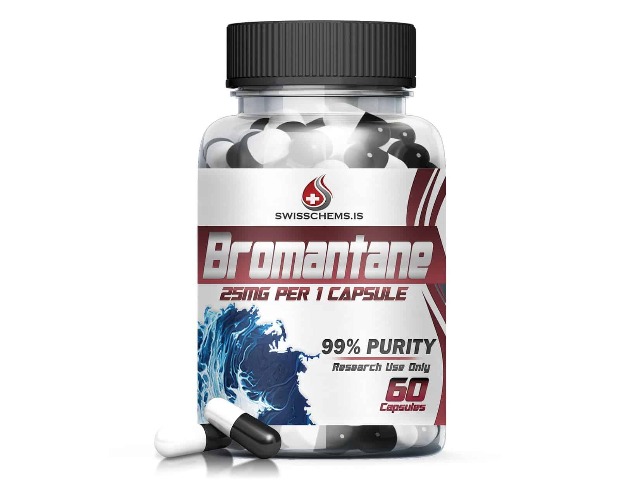
Disclosure: These are affiliate links. I earn a small commission if you purchase — at no extra cost to you. I only recommend products I personally use or have thoroughly researched.
Research & Studies
This section includes 3 peer-reviewed studies referenced in our analysis.