
- Deep sleep enhancement
- Stress and cortisol reduction
- Neuroprotection
- Pain management support
- Withdrawal symptom relief
I used to think I was sleeping fine. Seven hours, out like a light, up with the alarm. Then I started tracking my sleep stages and realized I was spending almost no time in deep sleep — the phase where your brain actually repairs itself, consolidates memories, and clears out metabolic waste. I was unconscious for seven hours, sure. But I wasn’t recovering.
That realization sent me down a rabbit hole into one of the strangest peptides in neuroscience — a compound that was literally named after the deepest phase of sleep, discovered over fifty years ago, and yet remains one of the most mysterious molecules researchers have ever studied.
The Short Version: Delta Sleep Inducing Peptide (DSIP) is a naturally occurring neuropeptide that targets slow-wave (delta) sleep — the deepest, most restorative sleep phase. It crosses the blood-brain barrier freely, modulates GABA, NMDA, and stress hormones, and shows promise for sleep quality, cortisol reduction, and neuroprotection. However, human evidence is limited and dated, no specific receptor has ever been found, and it requires injection or nasal administration. It’s a fascinating research compound, not a proven therapy.
What Is Delta Sleep Inducing Peptide?
DSIP is a tiny peptide — just nine amino acids long — that was first isolated in 1974 by researchers at the University of Basel in Switzerland. They pulled it from the brain blood of rabbits that had been electrically stimulated into slow-wave sleep, sequenced it by 1978, and gave it a name that promised exactly what everyone wanted: delta sleep on demand.
Here’s where it gets weird. After fifty years of research, nobody has found the gene that codes for DSIP, the precursor protein it’s cut from, or the specific receptor it binds to. For a bioactive peptide, that’s almost unheard of. It’s like finding a key that opens a lock, but you can’t find the lock, the locksmith, or the blueprint for either one.
What we do know is that DSIP shows up naturally throughout your body — in the hypothalamus, pituitary, cerebrospinal fluid, blood plasma, and even breast milk. It’s not some synthetic lab creation. Your body makes it. We just don’t fully understand how or why.
Reality Check: DSIP is not FDA-approved for any therapeutic use. As of September 2024, it’s on the FDA’s Category 2 restricted drugs list. Most of the human research dates to the 1980s with small sample sizes. If you’re considering DSIP, you should know you’re working with a research compound, not a proven medication.
How Does Delta Sleep Inducing Peptide Work?
Think of DSIP as a master dimmer switch for your nervous system — it doesn’t just flip one circuit, it gently adjusts the lighting across the entire room. That’s both what makes it fascinating and what makes it so hard to pin down.
At the neurotransmitter level, DSIP touches several major systems simultaneously. It boosts GABA-activated currents in the hippocampus and cerebellum — GABA being your brain’s primary “calm down” signal. At the same time, it blocks NMDA receptor activity in the cortex, reducing excitatory signaling. It modulates serotonin, dopamine, glutamate, and melatonin levels. And it appears to dial back the HPA axis — your body’s central stress response system — reducing cortisol release by an estimated 20-40%.
One genuinely remarkable feature: DSIP freely crosses the blood-brain barrier. Most peptides can’t do this, which is why so many promising peptide drugs fail. DSIP uses a saturable transport mechanism at the choroid plexus, essentially hitching a ride on a dedicated shuttle system into the brain.
Here’s the practical translation: DSIP doesn’t knock you out like a sedative. It appears to promote the specific architecture of deep sleep — increasing delta wave activity without distorting your natural sleep stages. That’s a fundamentally different approach than something like phenibut, which hammers GABA-B receptors into submission, or even melatonin, which primarily signals “it’s bedtime” to your circadian clock. DSIP seems to help your brain do what it already wants to do during deep sleep — just more effectively.
The catch? DSIP has a plasma half-life of roughly 15 minutes. It should be gone from your system almost immediately. Yet its effects persist for hours to days. The leading theory is that it binds to carrier proteins or triggers downstream cascades that outlast the peptide itself. But honestly, nobody knows for sure. This is a molecule that keeps its secrets.
The Benefits — And How Strong the Evidence Actually Is
Deep Sleep Enhancement
This is the headline claim, and ironically, it’s also the most debated. A 1981 study gave DSIP intravenously to six volunteers and saw sleep increase by 59% within about two hours. An open study of seven severe insomniacs found that ten DSIP injections normalized sleep in six of seven patients — and the effects lasted three to seven months after treatment ended.
But a double-blind study of chronic insomniacs found mixed results: better sleep efficiency and shorter time to fall asleep, yes, but the researchers concluded that “short-term treatment is not likely to be of major therapeutic benefit.”
More recent animal work is encouraging. A 2018 study in Life Sciences showed that phosphorylated DSIP enhanced both NREM and REM sleep in rats under chronic low-oxygen conditions — suggesting it may be particularly useful when sleep is disrupted by physiological stress.
The honest assessment: The sleep evidence is promising but inconsistent. Some people may respond dramatically, others may not notice much. The delayed onset — effects sometimes appearing the next night rather than immediately — complicates both research and personal experimentation.
Stress and Cortisol Reduction
This is where I think DSIP gets underappreciated. Studies show roughly a 30% reduction in peak cortisol during stress exposure versus placebo, normalization of diurnal cortisol rhythm, and improved subjective calmness — without the sedation or cognitive impairment you’d get from a benzodiazepine.
If you’re someone whose sleep problems are driven by a stress response that won’t shut off — you’re exhausted but wired at bedtime, your mind races, your cortisol peaks at 11 PM instead of 7 AM — DSIP’s cortisol-modulating effects might matter more than its direct sleep effects.
Insider Tip: Don’t judge DSIP after a single dose. Many users report that the real benefits build over the first one to two weeks of consistent use. And pay attention to your stress levels and mood during the day, not just your sleep — the cortisol modulation may be the first benefit you notice.
Neuroprotection
The most compelling recent research is in neuroprotection. A 2021 study in Molecules found that intranasal DSIP over eight days accelerated motor function recovery in rats after focal stroke. A DSIP analogue called KND reduced heart attack damage by more than half and brain infarction size by 40% compared to controls in a Biomedicines study the same year.
The mechanisms make sense: DSIP inhibits free radical overproduction, reduces lipid peroxidation, activates oxidative phosphorylation, and increases neuronal resistance to low-oxygen conditions. These are all things you’d want a neuroprotective agent to do.
Critical caveat from the stroke research: When the peptide was given during blood vessel blockage rather than during reperfusion afterward, mortality was 100%. Timing matters enormously with this compound. This isn’t just an academic detail — it underscores that DSIP is not a simple “more is better” supplement.
Pain and Withdrawal Support
A small pilot study gave IV DSIP to seven chronic pain patients over five consecutive days. Six of seven showed significant pain reduction along with improvement in depressive symptoms (European Neurology, 1984). In a larger open-label study of roughly 100 inpatients, 97% of opiate addicts and 87% of alcohol addicts showed rapid improvement in withdrawal symptoms.
These numbers are striking, but the studies are old, small, and lack proper controls. Consider them intriguing signals, not established evidence.
Growth Hormone Release
I need to be straight with you here: despite what you’ll read on peptide forums, DSIP has not been shown to increase growth hormone in humans. Animal studies were positive, but human studies found no significant effect on serum GH, prolactin, or their circadian rhythms. This is a significant translation failure from animal to human research. If GH stimulation is your goal, look at ipamorelin or sermorelin instead.
How to Take Delta Sleep Inducing Peptide
Dosage
Start at 100-200 mcg per administration. The standard range used in research is 100-300 mcg. Clinical studies typically used around 25 nanomoles per kilogram intravenously, which works out to roughly 200-250 mcg for an average adult.
Administration
Subcutaneous injection (abdomen or thigh) is the most reliable method and what most users choose. Reconstitute lyophilized powder with bacteriostatic water following standard peptide preparation protocols.
Intranasal spray is easier and non-invasive. Animal research supports this route, though human absorption is more variable. If needles aren’t your thing, this is a reasonable alternative — just know the effective dose may differ.
Oral administration does not work. The peptide gets destroyed in your stomach. Don’t waste your money on oral DSIP products.
Timing and Cycling
Administer 30-60 minutes before bed. But here’s an important quirk — DSIP has a notable delayed effect. A dose given Monday night might produce its strongest sleep effects Tuesday night. Don’t give up after one session.
Cycle protocol: Use 2-3 times per week for 4-8 weeks, then take a break. Some users extend to 12 weeks. Daily use isn’t recommended — both to minimize potential tolerance and because the effects appear to build and persist between doses.
Pro Tip: Keep a sleep journal when starting DSIP. Track not just how quickly you fall asleep, but how you feel upon waking, your dream recall, your daytime energy, and your stress levels. The benefits may show up in places you’re not expecting, and the delayed onset means you need several data points before drawing conclusions.
Storage
Store unreconstituted powder in the freezer for long-term stability. Once reconstituted, refrigerate at 2-8°C, protect from light, and discard after 28 days.
Side Effects and Safety
DSIP is generally well-tolerated. The most common reports include transient headache, mild nausea, dizziness, vivid or intense dreams, and some daytime grogginess — particularly at higher doses. These typically resolve within a few days of use.
A few things to watch for:
Paradoxical insomnia. At higher doses, some users report worse sleep. If you’re not responding well, try reducing your dose before assuming DSIP doesn’t work for you.
Immunogenicity. The FDA has flagged that compounded DSIP may trigger immune reactions. Source quality matters enormously here — more on that below.
Important: Do NOT combine DSIP with benzodiazepines, opioids, alcohol, or other strong sedatives. DSIP modulates both GABA and NMDA systems, creating real risk of excessive sedation and potentially respiratory depression when combined with other CNS depressants. If you’re on prescription sleep medications, talk to your doctor before adding DSIP.
Who should avoid DSIP:
- Pregnant or nursing women (safety not established)
- Individuals with a history of cancer (cited as a contraindication in some clinical sources)
- Anyone taking ACE inhibitors like captopril (may alter DSIP degradation)
Long-term safety is unknown. Most studies lasted weeks, not months. The good news is that in decades of animal research, “no dose had ever killed an animal subject” according to a 2001 editorial in the European Journal of Anaesthesiology. But the stroke study mortality finding reminds us that context and timing matter — this is not a blanket statement of safety.
Stacking Delta Sleep Inducing Peptide
DSIP + Epitalon — The Deep Sleep + Circadian Stack
This is the most popular DSIP combination, and it makes mechanistic sense. Epitalon stimulates melatonin production and supports circadian rhythm regulation, while DSIP targets delta sleep depth directly. You’re addressing both when you sleep and how deeply you sleep. Many users run these concurrently — DSIP 2-3 times per week, Epitalon in standard cycling protocols.
DSIP + Selank — The Stress-Insomnia Stack
If your sleep problems are anxiety-driven, combining DSIP with Selank (an anxiolytic peptide) covers both the stress response and the sleep architecture. Selank handles the daytime anxiety and racing thoughts; DSIP deepens the actual sleep. Some users add Epitalon for a comprehensive “Delta Wave Stack.”
Gentler Complementary Options
- Magnesium L-threonate or glycinate: Works through entirely different mechanisms and has strong standalone evidence for sleep. A solid foundation regardless.
- L-theanine: Promotes relaxation without sedation. Won’t interfere with DSIP and may ease the transition to sleep.
- Ashwagandha: Its cortisol-modulating effects may complement DSIP’s HPA axis activity.
What to Avoid
Do not stack DSIP with phenibut, benzodiazepines, strong GABAergic compounds, opioids, or alcohol. The overlapping mechanisms create genuine risk for excessive sedation and respiratory depression. This isn’t theoretical caution — it’s basic pharmacological common sense.
My Take
I’ll be honest — DSIP occupies a strange place in the nootropics landscape. The science is genuinely fascinating. A peptide that freely crosses the blood-brain barrier, targets the deepest phase of sleep specifically, modulates cortisol, and shows neuroprotective effects in recent animal research? On paper, that’s incredible.
But the human evidence is thin, old, and inconsistent. The mechanism is literally unknown after fifty years of research. And it requires injection or nasal spray — this isn’t something you can just pop with your morning supplements.
Who I think DSIP is best for: People who’ve already dialed in their sleep hygiene, tried the foundational supplements (magnesium, l-theanine, melatonin), and still struggle with deep sleep specifically — not falling asleep, but staying in restorative sleep. Also worth considering if your sleep problems are clearly stress-driven and you’re comfortable with peptide administration.
Who should probably try something else first: If you haven’t optimized the basics — consistent sleep schedule, dark room, no screens before bed, stress management — start there. If you’re needle-averse and skeptical of intranasal absorption variability, look at magnesium L-threonate or apigenin first. They’re easier, cheaper, and better-studied.
The bottom line: DSIP is a legitimate research compound with real scientific interest behind it, not a scam or a fad. But it’s also not a proven therapy. If you decide to try it, source carefully (demand third-party COAs with chromatograms), start low, be patient with the delayed onset, and track your results methodically. The people who get the most out of DSIP seem to be the ones who approach it as a careful experiment, not a quick fix.
And if nothing else, DSIP is a humbling reminder that after five decades and countless studies, there are still molecules in our own bodies that we fundamentally don’t understand. That’s either unsettling or exciting, depending on your perspective. I choose exciting.
Recommended Delta Sleep Inducing Peptide Products
I know how frustrating it is to sort through dozens of brands making the same claims. These are the ones I've personally vetted — because quality is the difference between results and wasted money.
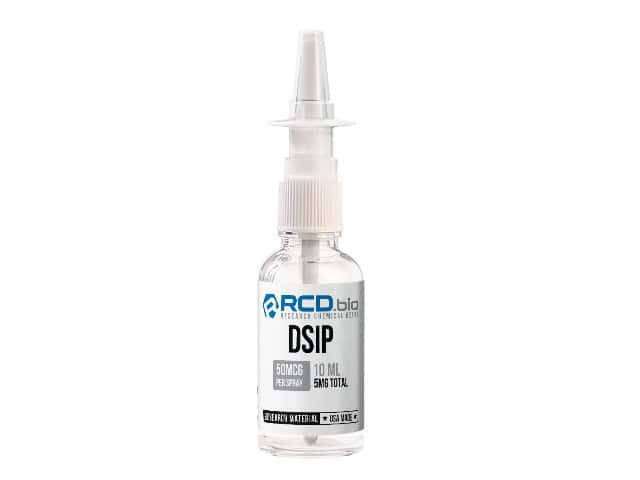
Disclosure: These are affiliate links. I earn a small commission if you purchase — at no extra cost to you. I only recommend products I personally use or have thoroughly researched.
Research & Studies
This section includes 9 peer-reviewed studies referenced in our analysis.