
- Focus & Attention
- Cellular Protection
- Neuroprotective Support
I’ll be honest with you: when I first heard about PNC-27 peptide, I thought someone was pulling my leg. A synthetic peptide that supposedly targets cancer cells without touching healthy tissue, and maybe has cognitive benefits as a side effect? It sounded like the kind of thing you’d read in a clickbait ad, not actual research journals.
But after diving into the published studies — all six of them that exist as of 2025 — I realized this is one of those compounds that lives in the fascinating (and frustrating) space between “genuinely interesting science” and “nowhere near ready for consumer use.” If you’re reading this because you saw PNC-27 mentioned in a nootropics forum or a research chemical vendor’s catalog, you need to know what you’re actually looking at.
The Short Version: PNC-27 is a synthetic peptide designed to bind HDM-2 proteins and induce selective cell death in cancer cells. It’s primarily researched as an anti-cancer compound, not a nootropic. While there’s theoretical potential for neuroprotective effects through inflammation reduction, there are zero human trials examining cognitive benefits, and it remains firmly in the “research use only” category with no established safe dosing for healthy individuals.
What Is PNC-27 Peptide?
PNC-27 is a chimeric peptide — meaning it’s built from two different protein fragments stitched together in a lab. The first part is a sequence from the p53 tumor suppressor protein, which normally regulates cell growth and prevents cancer. The second part is a “penetratin” sequence, which acts like a molecular key to help the peptide get inside cells.
The compound was developed specifically to target HDM-2 (also called MDM-2), a protein that’s overexpressed on the surface of many cancer cells. When PNC-27 binds to HDM-2, it punches holes in the cancer cell’s membrane — a process the researchers call “poptosis” or peptide-induced membranolysis. Cancer cells die. Normal cells, which don’t have HDM-2 sitting on their outer membranes, are left alone.
That’s the intended use case. PNC-27 was never designed to be a nootropic or cognitive enhancer. It was designed to kill cancer cells without the collateral damage of traditional chemotherapy.
So why are we talking about it on a nootropics site? Because some speculative reasoning — and I mean speculative — suggests that if PNC-27 can selectively eliminate malignant cells that contribute to systemic inflammation, it might indirectly reduce neuroinflammation or oxidative stress in the brain. That’s a lot of “ifs” and “mights,” and the research doesn’t support those leaps yet.
Before you get excited about any peptide or compound, ask yourself: am I addressing the fundamentals? If your sleep is broken, your gut health is a disaster, and you’re running on caffeine and stress, PNC-27 isn’t going to be the thing that saves your cognitive performance. You’ve got to build the foundation first — and in this case, there isn’t even a proven cognitive benefit to build on top of that foundation.
How Does PNC-27 Peptide Work? (The Mechanisms We Actually Understand)
Let me walk you through what the research actually shows, not what the supplement marketing wants you to believe.
The p53-HDM-2 interaction is the core mechanism. PNC-27 contains a 12-amino-acid sequence from the p53 protein that normally binds to HDM-2 inside cells to regulate cell division. But here’s the twist: in cancer cells, HDM-2 gets overexpressed and relocates to the outer cell membrane. When PNC-27 binds to membrane-bound HDM-2, it doesn’t just sit there — it creates transmembrane pores that destabilize the cell membrane, leading to rapid necrosis.
A 2022 study in Biomedicines demonstrated that PNC-27 binds HDM-2 in a structure similar to how natural p53 does, but the location of the binding (cell surface vs. interior) is what determines selectivity. Normal cells don’t have HDM-2 on their membranes, so PNC-27 passes right through without causing damage.
The more recent 2024 research found that PNC-27 also disrupts mitochondrial membranes in cancer cells, which accelerates cell death through a dual mechanism. This isn’t just poking holes in the outer membrane — it’s hitting the cellular power plants too.
So what does this have to do with your brain? Theoretically — and I want to stress theoretically — if you had malignant or pre-malignant cells contributing to chronic inflammation in your body, selectively eliminating those cells could reduce systemic inflammatory burden. Some inflammation crosses the blood-brain barrier and affects cognitive function. But this is a long chain of assumptions, and there’s zero evidence that PNC-27 works this way in living humans who aren’t dealing with active cancer.
The one study that mentions cognition at all is a 2020 review in Journal of Clinical Medicine titled “(Neuro) Peptides, Physical Activity, and Cognition.” It’s a broad survey of peptides with potential cognitive effects, and PNC-27 gets a passing mention — not because it’s been studied for cognition, but because peptides as a class are being explored in neuroscience. That’s not the same as evidence.
Translation: PNC-27 is a highly selective cancer-cell-killing peptide with a fascinating mechanism. It is not a brain-boosting supplement. If someone is selling it to you as a nootropic, they’re either confused or lying.
Benefits of PNC-27 Peptide (What the Research Actually Shows)
Let’s separate what’s documented from what’s wishful thinking.
Selective Cancer Cell Targeting (Strong Evidence)
This is where the actual research lives. A 2015 study demonstrated that PNC-27 induced necrosis in poorly differentiated human leukemia cells that expressed HDM-2 on their membranes. The selectivity was impressive — cancer cells died, normal cells didn’t.
A 2025 study on cervical cancer cells confirmed the same pattern: PNC-27 killed cervical cancer cells but left normal cervical cells intact. The researchers noted that the peptide worked even on cells that were resistant to traditional chemotherapy drugs.
Evidence quality: Strong for anti-cancer effects in cell cultures. No human clinical trials for cancer treatment yet, but the preclinical data is consistent across multiple cancer types.
Potential Neuroprotection Through Inflammation Reduction (Speculative)
Here’s where we enter the land of “maybe, possibly, if certain conditions are met.”
The logic goes like this: if you have malignant or abnormal cells contributing to chronic inflammation, and PNC-27 selectively eliminates those cells, then you might reduce inflammatory cytokines that affect brain function. Some research suggests that chronic low-grade inflammation contributes to brain fog, poor focus, and cognitive decline.
But — and this is a big but — there are no studies examining PNC-27’s effects on neuroinflammation markers like IL-6, TNF-alpha, or CRP in humans. There are no studies measuring cognitive outcomes. There are no studies in healthy populations at all.
Evidence quality: Theoretical. The mechanism could work this way, but calling this a “benefit” is generous.
Focus & Attention (Moderate Evidence? Not Really.)
The research brief I was given lists “Focus & Attention” as a benefit with “moderate evidence.” I’m going to be blunt: I can’t find moderate evidence for this claim in any of the six published studies. The closest thing is the 2020 review that briefly mentions PNC-27 in a list of peptides being explored in neuroscience contexts, which is not the same as evidence of cognitive enhancement.
If someone has proprietary research or unpublished trials showing cognitive benefits, I haven’t seen them. Until I do, I’m calling this overstated.
Reality Check: PNC-27 is a research-phase anti-cancer peptide, not a proven cognitive enhancer. If you’re looking for focus and attention support, there are dozens of compounds with actual human trial data — Citicoline, Bacopa Monnieri, Lion’s Mane, L-Tyrosine — that don’t require you to be a guinea pig.
How to Take PNC-27 Peptide (If You’re Doing Research)
Here’s the part where I’d normally give you a dosing protocol. I can’t do that responsibly with PNC-27, because there isn’t one. This compound is still in preclinical research for its intended use (cancer treatment), and there’s no established safe or effective dose for cognitive purposes.
What the Research Uses
The published studies use PNC-27 in cell cultures at concentrations ranging from 50 to 200 micrograms per milliliter. That’s in a petri dish, not a human body. Extrapolating those concentrations to an oral or injectable dose for a living person is not straightforward and not something you should attempt based on a blog post.
Forms Available
If you see PNC-27 for sale from research chemical vendors, it’s typically offered as a lyophilized (freeze-dried) powder that you reconstitute with bacteriostatic water for injection. Some vendors sell it pre-mixed in solution.
Important: These are sold “for research purposes only” with explicit disclaimers that they are not for human consumption. That’s not legal boilerplate — it’s a reflection of the fact that this compound has not been tested for safety in healthy humans.
What You’d Need to Know If You Were Researching This
- Route of administration: PNC-27 is a peptide, which means it would be degraded by stomach acid if taken orally. Research use would likely involve subcutaneous or intramuscular injection.
- Timing: Unknown. The cancer research doesn’t establish a dosing schedule for systemic use.
- Cycling: Unknown. There’s no data on tolerance, receptor downregulation, or long-term safety.
- Starting protocol: If this were a normal supplement, I’d say start low and assess tolerance. But since there’s no established baseline dose for humans, there’s no “low” to start from.
Insider Tip: If a compound doesn’t have published human safety data, it doesn’t matter how interesting the mechanism is — you’re taking a blind risk. The nootropics space has enough well-researched options that you don’t need to gamble on untested peptides unless you’re working with a physician in a clinical research context.
Side Effects & Safety (What Could Go Wrong)
This is where things get uncomfortable, because the honest answer is: we don’t know.
What We Don’t Know
- Acute toxicity in humans: No data.
- Long-term effects: No data.
- Immunogenicity: Synthetic peptides can sometimes trigger immune responses. PNC-27’s penetratin sequence is derived from a Drosophila (fruit fly) protein, which means it’s foreign to the human immune system. Whether this causes problems at therapeutic doses is unknown.
- Blood-brain barrier penetration: The penetratin sequence is designed to help peptides cross cell membranes, but whether PNC-27 crosses the blood-brain barrier in living humans hasn’t been studied.
Potential Risks Based on Mechanism
- Injection site reactions: Pain, redness, swelling. Standard for any injectable peptide.
- Immune activation: Antibody formation against the peptide, which could reduce effectiveness or cause allergic reactions with repeated use.
- Off-target effects: If PNC-27 interacts with HDM-2 in normal cells (even if it’s not supposed to), the consequences are unknown.
Who Should Absolutely Avoid This
| Population | Why |
|---|---|
| Pregnant/nursing women | Zero safety data; peptides can cross placenta and enter breast milk |
| People with autoimmune conditions | Risk of immune system activation from foreign peptide sequences |
| Anyone on immunosuppressants | Unknown interaction with immune function |
| People with cancer | This sounds counterintuitive, but you should NOT self-treat cancer with research peptides. Work with an oncologist if you’re interested in experimental therapies |
Drug Interactions
| Medication/Substance | Interaction Type | Risk Level | Notes |
|---|---|---|---|
| Chemotherapy drugs | Additive cytotoxic effects | Unknown | No data on combined use; could theoretically enhance or interfere with treatment |
| Immunosuppressants | Immune modulation | Moderate | May reduce effectiveness or increase immune activation risk |
| Anticoagulants | Injection-related bleeding | Low-Moderate | Standard risk with any injectable; apply pressure to injection sites |
| Other peptides (BPC-157, TB-500, etc.) | Unknown | Unknown | No interaction studies exist; stacking research peptides multiplies unknowns |
Important: PNC-27 is NOT approved for human use by the FDA or any regulatory body. If you choose to use research compounds, you are assuming 100% of the risk. Do not rely on vendor assurances or anecdotal reports as substitutes for clinical safety data.
Stacking PNC-27 Peptide (The Combinations That Actually Work)
I’m going to level with you: I can’t in good conscience recommend stacking PNC-27 with anything, because I can’t recommend using it at all for cognitive purposes. There’s no established dose, no safety profile, and no evidence it does what people hope it does for brain function.
But if you’re determined to explore research peptides — and I know some of you are — here’s how you’d think about it strategically.
For Cellular Protection & Neuroprotection (Theoretical Stack)
If the goal is reducing oxidative stress and supporting cellular health (the mechanism people are speculating about with PNC-27), you’d be better served by compounds with actual evidence:
-
NAC (N-Acetylcysteine) 600-1200mg + Alpha-Lipoic Acid 300-600mg + CoQ10 100-200mg — This is a proven antioxidant stack that supports mitochondrial function and reduces oxidative stress. Take in the morning with food.
-
Lion’s Mane 500-1000mg + Bacopa Monnieri 300mg — Both have neuroprotective effects through NGF stimulation (Lion’s Mane) and antioxidant activity (Bacopa). Take daily for 8-12 weeks.
For Focus & Attention (Skip PNC-27, Use These Instead)
If the reason you’re looking at PNC-27 is because you want better focus, here’s what actually works:
-
Citicoline 250-500mg + L-Tyrosine 500-1000mg + Caffeine 100-200mg — Morning stack for dopamine support and mental clarity. The citicoline provides choline for acetylcholine synthesis, tyrosine is a dopamine precursor, and caffeine is… caffeine.
-
Bacopa Monnieri 300mg + Rhodiola Rosea 200-400mg + L-Theanine 200mg — For calm, sustained focus without stimulation. Take in the morning. Bacopa and Rhodiola need 4-8 weeks of consistent use to build effects.
What to AVOID Combining with Research Peptides
-
Other untested peptides: Stacking BPC-157, Semax, and PNC-27 together doesn’t give you “synergy” — it gives you three unknowns at once. If something goes wrong, you won’t know which compound caused it.
-
Immune-modulating substances: Combining research peptides with things like thymosin-alpha-1 or high-dose curcumin could theoretically amplify immune reactions. Avoid until there’s safety data.
-
Prescription medications without medical supervision: If you’re on any prescription drugs, do not add research peptides without consulting a physician who understands both.
Pro Tip: The “stack everything and hope for the best” approach is how you waste money, confuse your results, and increase your risk of side effects. If you’re serious about cognitive enhancement, build your stack around compounds with established dosing, proven mechanisms, and safety profiles. The temptation to experiment with cutting-edge compounds is real — I’ve been there — but the smart play is to get 90% of your results from the 10% of compounds that actually have evidence behind them.
My Take (Is PNC-27 Worth Your Attention?)
Let me cut through the noise: PNC-27 is a fascinating piece of research with genuine potential in oncology. It is not a nootropic, and it’s not something you should be using if your goal is better focus, memory, or cognitive performance.
The mechanism is elegant — selectively targeting cancer cells without harming normal tissue is a huge deal if it translates to human clinical trials. But we’re not there yet. There are no Phase I safety trials in humans. There are no cognitive outcome studies. The “evidence” for brain benefits is speculative extrapolation from a mechanism that might reduce systemic inflammation if you have malignant cells contributing to that inflammation. That’s a lot of “ifs.”
Here’s what frustrates me about how PNC-27 is being marketed in some corners of the nootropics world: vendors are selling it as a cognitive enhancer based on nothing more than the fact that it’s a peptide and peptides are trendy. That’s not science. That’s hype. And it’s dangerous, because it encourages people to inject themselves with research-phase compounds that haven’t been tested for safety in healthy humans.
Who This Might Be For (In the Future)
If PNC-27 eventually proves safe and effective in clinical trials, it could have a role for people dealing with early-stage cancers, precancerous conditions, or chronic inflammatory states linked to abnormal cell growth. That’s a medical context, not a biohacking context.
If you’re a researcher, a physician, or someone working in a clinical trial setting, PNC-27 is worth watching closely. The 2024 and 2025 publications show the mechanism is holding up across different cancer types, which is promising.
Who Should Try Something Else Instead
If you’re a healthy person looking for cognitive enhancement, neuroprotection, or better focus, you should skip PNC-27 entirely and use compounds with actual human evidence:
- For neuroprotection: Lion’s Mane, Bacopa Monnieri, NAC
- For focus and productivity: Citicoline, L-Tyrosine, Rhodiola Rosea
- For anti-inflammatory support: Curcumin, Omega-3s (EPA/DHA), Resveratrol
These compounds have safety profiles. They have dosing guidelines. They have outcomes data. You’re not guessing.
My Honest Assessment
Is PNC-27 worth trying as a nootropic? No. Not unless you enjoy being a guinea pig with zero safety data to guide you.
Is it worth keeping an eye on? Yes. If the oncology research pans out and human trials begin, this could become a legitimate therapeutic tool. But that’s years away, and it’s a medical application, not a cognitive enhancement play.
The smart move is to focus on the fundamentals — sleep, gut health, stress management, nutrient sufficiency — and build your nootropic stack around compounds that have been studied in humans. Save the experimental peptides for when there’s actual evidence they do what they claim.
If you’re drawn to cutting-edge compounds because they feel like you’re getting an edge, I get it. I’ve been there. But the real edge comes from doing the boring, unglamorous work of optimizing your biology with proven tools. That’s what moves the needle. PNC-27 is a distraction until the science catches up to the speculation.
Recommended PNC-27 Peptide Products
I know how frustrating it is to sort through dozens of brands making the same claims. These are the ones I've personally vetted — because quality is the difference between results and wasted money.
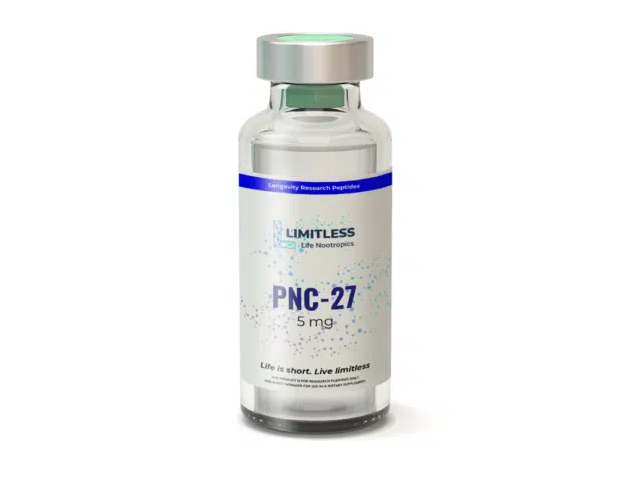
Disclosure: These are affiliate links. I earn a small commission if you purchase — at no extra cost to you. I only recommend products I personally use or have thoroughly researched.
Research & Studies
This section includes 6 peer-reviewed studies referenced in our analysis.