
- Focus & Attention
- Mood Support
- Neurotransmitter Production
- Cognitive Function
Here’s something that frustrated me for years: I was spending hundreds of dollars on fancy nootropic stacks, cycling through racetams and peptides and exotic mushroom extracts, while completely ignoring the fact that I was probably deficient in one of the most important nutrients for brain function.
That nutrient? Vitamin B6. Pyridoxine. The boring one nobody talks about.
Turns out, you can’t synthesize serotonin, dopamine, GABA, or acetylcholine without it. It’s like trying to build a house without a hammer — technically you have all the materials, but good luck putting them together.
The Short Version: Pyridoxine (Vitamin B6) is an essential cofactor for producing every major neurotransmitter in your brain. Most people get barely enough to avoid deficiency, but nowhere near enough for optimal cognitive function. Supplementing 25-100mg daily can significantly improve focus, mood, and mental clarity — especially when stacked with precursor amino acids like L-Tyrosine or 5-HTP.
What Is Pyridoxine? (The Foundation Nobody Talks About)
Pyridoxine is the supplemental form of Vitamin B6, one of eight essential B-vitamins your body can’t manufacture on its own. You’ve probably seen it listed on cereal boxes and multivitamin labels, right next to all the other vitamins that sound important but vaguely forgettable.
Here’s why it actually matters for cognitive function: B6 is a coenzyme. That means it’s required for specific enzymes to work — and those enzymes happen to be responsible for converting amino acids into the neurotransmitters that determine how you think, feel, and focus.
Without adequate B6, you could be eating all the L-Tryptophan and L-DOPA in the world and still not produce enough serotonin or dopamine. It’s the biological equivalent of having a gas tank full of fuel but no spark plugs.
The RDA for adults is only 1.3-2.0mg daily — enough to prevent outright deficiency diseases like pellagra. But “not dying from a vitamin deficiency” is a pretty low bar for brain optimization. Research suggests that higher doses in the 25-100mg range can meaningfully enhance neurotransmitter synthesis and improve cognitive outcomes, especially in people with suboptimal baseline levels.
And a lot of people have suboptimal levels. Chronic stress, poor diet, alcohol consumption, certain medications (especially oral contraceptives and antidepressants), and even intense exercise can all deplete B6. You might not be clinically deficient, but you’re probably not optimized either.
Reality Check: B6 isn’t a magic bullet that’s going to turn you into a productivity machine overnight. It’s a foundational nutrient that allows other systems to work properly. If you’re deficient or suboptimal, correcting that deficiency will feel significant. If you’re already replete, adding more probably won’t do much. This is infrastructure, not rocket fuel.
How Does Pyridoxine Work? (The Neurotransmitter Assembly Line)
Think of your brain’s neurotransmitter production like a factory assembly line. You have raw materials (amino acids from protein) coming in one end, and finished products (serotonin, dopamine, GABA, acetylcholine) coming out the other. Pyridoxine is the machinery that makes the conversion happen.
Specifically, B6 serves as a cofactor for several rate-limiting enzymes:
Aromatic L-amino acid decarboxylase converts L-DOPA into dopamine and 5-HTP into serotonin. Without adequate B6, this conversion slows to a crawl, and you end up with a backlog of precursors but not enough of the neurotransmitters you actually need.
Glutamic acid decarboxylase converts glutamate (excitatory) into GABA (inhibitory). This is crucial for maintaining the brain’s excitatory-inhibitory balance. B6 deficiency tips the scales toward excitation, which manifests as anxiety, racing thoughts, and difficulty relaxing.
Choline acetyltransferase and related enzymes in the cholinergic pathway also depend on B6 for optimal function, supporting acetylcholine synthesis — the neurotransmitter critical for learning, memory, and focused attention.
A 2018 study published in Biochimica et Biophysica Acta found that pyridoxine supplementation in animal models improved hippocampal cognitive function through increases in serotonin turnover and tyrosine hydroxylase activity (the enzyme that produces dopamine). The researchers noted significant improvements in memory and learning tasks, with effects mediated through the CB1 cannabinoid receptor pathway.
In plain English: B6 helps your brain produce more of the neurotransmitters that make you feel good, think clearly, and stay focused. It’s not adding anything exotic to your system — it’s just ensuring the natural processes work efficiently.
The active form of B6 in the body is pyridoxal-5-phosphate (P5P), which is what actually binds to enzymes and makes things happen. Your liver converts standard pyridoxine into P5P, which works fine for most people. But some individuals — particularly those with liver dysfunction, genetic polymorphisms affecting B6 metabolism, or chronic inflammation — may benefit from supplementing with P5P directly, bypassing that conversion step.
Pro Tip: If you’re taking precursor amino acids like L-Tyrosine, L-Tryptophan, or 5-HTP, you NEED adequate B6 to actually convert them into neurotransmitters. Stacking B6 with these precursors significantly enhances their effectiveness — it’s like giving your brain both the raw materials and the tools to use them.
Benefits of Pyridoxine (What the Research Actually Shows)
Let’s be honest about the evidence here. B6 isn’t going to give you superhuman focus or cure depression on its own. What it does is create the conditions for your brain to function optimally. The benefits are most noticeable when you’re starting from a suboptimal baseline.
Focus & Attention (Moderate Evidence)
Multiple studies demonstrate that adequate B6 levels support sustained attention and cognitive performance, particularly in populations with marginal deficiency. A 1993 review in Nutrition Reviews by Guilarte examined the relationship between B6 and cognitive development, noting that deficiency impairs neurotransmitter synthesis and negatively affects learning and memory across both human and animal studies.
The mechanism makes sense: dopamine and acetylcholine are both critical for attention and working memory, and B6 is required to produce both. When synthesis is impaired, focus suffers. When synthesis is optimized, focus improves.
In my experience, B6 doesn’t produce the acute “I can suddenly concentrate” effect you get from stimulants like caffeine or modafinil. It’s more like the difference between trying to focus while running on fumes versus having a full tank — the effort required decreases, and sustained attention becomes easier.
Mood & Stress Regulation (Moderate to Strong Evidence)
This is where B6 really shines. A 2018 randomized controlled trial published in PLOS ONE compared magnesium supplementation alone versus magnesium combined with B6 in adults with low magnesemia experiencing severe stress. The combination group showed significantly greater improvements in stress-related symptoms compared to magnesium alone.
The serotonin connection is key here. Low serotonin is associated with depression, anxiety, irritability, and poor stress resilience. B6 is absolutely required for serotonin synthesis. Multiple studies have found that women taking oral contraceptives (which deplete B6) show improvements in mood when supplementing with B6, presumably due to restoration of serotonin production.
A 2009 study in Neuroscience and Behavioral Physiology examined central neurotransmission in animals with magnesium deficiency and found that B6 played a critical role in normalizing serotonergic and GABAergic activity. The researchers noted that B6 helped restore the balance between excitatory and inhibitory neurotransmission, reducing anxiety-like behaviors.
| Benefit | Evidence Level | Key Findings |
|---|---|---|
| Focus & Attention | Moderate (human + animal studies) | Supports dopamine/ACh synthesis; improves cognitive performance in deficiency states |
| Mood Support | Moderate-Strong (RCTs) | Enhances serotonin production; reduces stress symptoms; particularly effective in OCP users |
| Neurotransmitter Synthesis | Strong (mechanistic + clinical) | Required cofactor for dopamine, serotonin, GABA, and acetylcholine production |
| Cognitive Function | Moderate (observational + intervention) | Supports learning and memory; most pronounced benefits in marginal deficiency |
Behavioral Regulation (Emerging Evidence)
Interestingly, B6 has shown promise in mitigating behavioral adverse effects from certain medications. A 2023 systematic review in Epilepsy & Behavior examined the use of adjunct pyridoxine for treating behavioral side effects associated with levetiracetam (an anti-seizure medication). While the evidence is preliminary, multiple case reports and small studies suggest that B6 may help reduce irritability and aggression caused by altered GABAergic activity.
The mechanism likely relates to GABA synthesis — B6 is required for converting glutamate (excitatory) into GABA (calming). When GABA production is impaired, the brain becomes hyperexcitable, leading to irritability, anxiety, and behavioral dysregulation.
Insider Tip: If you’re dealing with anxiety, irritability, or racing thoughts that don’t respond well to typical interventions, consider the possibility of suboptimal B6 status — especially if you’re on medications that deplete B6, drink alcohol regularly, or have chronic digestive issues that impair nutrient absorption.
How to Take Pyridoxine (Without Wasting Your Money)
Here’s where most people screw this up: they either take ridiculously high doses because “more is better,” or they take ineffective forms at doses too low to matter.
Dosage by Goal
| Use Case | Dosage | Timing | Form | Notes |
|---|---|---|---|---|
| General maintenance | 1.3-2.0mg | With breakfast | Pyridoxine HCl | RDA; sufficient for most people eating varied diets |
| Suboptimal/deficiency correction | 25-50mg | Morning with food | Pyridoxine HCl or P5P | Start here if supplementing for cognitive benefits |
| Cognitive enhancement stacking | 50-100mg | Split: morning + afternoon | P5P preferred | When stacking with amino acid precursors |
| Therapeutic (stress, mood support) | 100mg | Morning with food | P5P preferred | Under guidance; monitor for peripheral neuropathy >200mg/day long-term |
Start low. Even if you’re supplementing for cognitive enhancement, begin with 25-50mg daily and assess for 2-4 weeks. B6 has a relatively narrow therapeutic window — benefits plateau around 100mg for most people, and doses above 200mg daily long-term carry risk.
Take with food. B6 absorption is enhanced when taken with a meal, and it reduces the (rare) risk of stomach upset.
Consider the form. Standard pyridoxine hydrochloride works fine for most people. Your liver converts it to the active P5P form without issue. However, P5P may be preferable if you have liver dysfunction, take medications that interfere with B6 metabolism, or simply want to bypass the conversion step for maximum bioavailability. P5P is more expensive, but the difference in absorption is real.
Don’t megadose long-term. The tolerable upper limit is set at 100mg/day, though therapeutic doses up to 200mg are used clinically with monitoring. Chronic intake above 200mg daily has been associated with peripheral neuropathy (nerve damage in extremities) — symptoms usually reverse when supplementation stops, but it’s avoidable by not being reckless with dosing.
Cycling
You don’t need to cycle B6. It’s a water-soluble vitamin, meaning excess is excreted in urine rather than stored in tissues. As long as you’re staying within safe dosing ranges (≤100-150mg daily), consistent use is fine.
Pro Tip: If you’re taking a B-complex supplement, check the B6 content. Many “high-potency” B-complexes contain 50-100mg of B6, which is plenty. Adding another standalone B6 supplement on top could push you into unnecessary excess. Read your labels.
Side Effects & Safety (What Could Go Wrong)
B6 is remarkably safe at recommended doses. Most people tolerate 25-100mg daily without any issues. That said, there are some important safety considerations.
Common Side Effects (Rare at Normal Doses)
- Mild nausea — usually only if taken on an empty stomach at higher doses (>100mg). Take with food.
- Vivid dreams — some users report more intense or memorable dreams when taking B6, particularly P5P, in the evening. If this bothers you, take it in the morning instead.
- Photosensitivity — very rare, but high doses may increase sun sensitivity in some individuals.
Serious Side Effects (Dose-Dependent)
- Peripheral neuropathy — nerve damage causing numbness, tingling, or pain in hands and feet. This is dose- and duration-dependent, typically occurring only with long-term use above 200mg daily. Symptoms usually resolve after discontinuation, but prevention is better. Stay at or below 100mg daily unless under medical supervision.
Who Should Avoid or Use Caution
- Parkinson’s patients on L-DOPA — B6 can increase peripheral conversion of L-DOPA to dopamine, reducing the amount that reaches the brain. This only applies to L-DOPA alone; carbidopa-levodopa combinations are unaffected. If you’re on Parkinson’s medication, consult your neurologist.
- Pregnant/nursing women — B6 is safe and often recommended during pregnancy (for morning sickness), but stick to moderate doses (25-50mg) unless advised otherwise by your healthcare provider.
Drug Interactions
| Medication/Substance | Interaction Type | Risk Level | Notes |
|---|---|---|---|
| Levodopa (alone) | Reduces efficacy | Moderate | B6 increases peripheral dopamine conversion; does NOT apply to carbidopa-levodopa (Sinemet) |
| Phenytoin (Dilantin) | Reduces B6 levels | Moderate | Anti-seizure med depletes B6; supplementation may be beneficial but coordinate with prescriber |
| Oral contraceptives | Depletes B6 | Low-Moderate | Birth control pills reduce B6 levels; supplementation often recommended |
| Isoniazid (TB medication) | Depletes B6 | Moderate-High | Often prescribed with B6 to prevent neuropathy |
| Alcohol | Depletes B6 | Low-Moderate | Chronic alcohol use impairs B6 absorption and metabolism |
| Theophylline | Depletes B6 | Low | Asthma medication; may benefit from B6 supplementation |
Important: If you’re on any of these medications, talk to your healthcare provider before supplementing with B6. In many cases (like oral contraceptives or isoniazid), supplementation is actively beneficial and often recommended — but coordination is important.
Stacking Pyridoxine (The Combinations That Actually Work)
B6 is one of those rare supplements that makes almost everything else work better. Because it’s required for neurotransmitter synthesis, stacking it with precursor amino acids is particularly synergistic.
For Focus & Productivity
Morning Stack:
- 50mg Pyridoxine (P5P)
- 500-1000mg L-Tyrosine
- 300mg Alpha-GPC
- 100-200mg Caffeine + 200mg L-Theanine
Why this works: L-Tyrosine provides the raw material for dopamine synthesis; B6 ensures efficient conversion. Alpha-GPC boosts acetylcholine for memory and attention. Caffeine and L-Theanine provide acute alertness with smoothness. This is my go-to deep work stack.
For Mood & Stress Support
Daily Stack:
- 50-100mg Pyridoxine (P5P)
- 200-400mg Magnesium Glycinate (or Magnesium L-Threonate)
- 100-200mg 5-HTP (evening dose)
- 200mg L-Theanine
Why this works: Magnesium and B6 have documented synergy for stress reduction (per the 2018 PLOS ONE trial). 5-HTP provides the serotonin precursor; B6 ensures conversion. L-Theanine adds additional GABAergic calm. This stack is excellent for managing chronic stress or low mood.
| Stack Goal | Key Synergies | Timing | Expected Timeline |
|---|---|---|---|
| Focus & Productivity | B6 + L-Tyrosine + Alpha-GPC | Morning | Acute effects within 1-2 hours; builds over 2-4 weeks |
| Mood & Stress | B6 + Magnesium + 5-HTP | Daily (5-HTP evening) | 2-4 weeks for full effects |
| Sleep Quality | B6 + Magnesium + Glycine | Evening | 1-2 weeks |
For Sleep Quality (Vivid Dream Enthusiasts)
Evening Stack:
- 50mg Pyridoxine (P5P) — taken 1-2 hours before bed
- 400mg Magnesium Glycinate
- 3g Glycine
Why this works: B6 (especially P5P) is known for enhancing dream vividness and recall, likely through increased serotonin metabolism during sleep. Magnesium promotes relaxation and deep sleep. Glycine acts as an inhibitory neurotransmitter and lowers core body temperature, improving sleep quality. If you’re into lucid dreaming or just enjoy remembering your dreams, this stack is worth experimenting with.
What to AVOID Combining
- B6 + Levodopa (alone) — reduces L-DOPA efficacy. Fine with carbidopa-levodopa combinations.
- Excessive B-vitamins — taking multiple high-dose B-complex supplements or “energy” products can push you over safe B6 limits. One high-potency B-complex OR standalone B6, not both.
Insider Tip: When stacking B6 with amino acid precursors like L-Tyrosine or 5-HTP, you’ll notice the effects kick in more reliably and consistently. Without B6, amino acid supplementation is hit-or-miss because the conversion bottleneck limits how much neurotransmitter you actually produce. With B6, the conversion happens efficiently, and the benefits are much more pronounced.
My Take (Is Pyridoxine Worth It?)
Here’s my honest assessment after years of tracking my own cognitive performance and working with clients on supplement protocols: B6 is one of those foundational nutrients that nobody gets excited about, but everyone should be paying attention to.
If you’re chasing exotic nootropics while ignoring basic vitamin status, you’re building on sand. I’ve seen people spend $200/month on cutting-edge compounds while being deficient in B6, magnesium, and vitamin D — and then wondering why nothing works. Get the foundations right first.
Who B6 is best for:
- Anyone supplementing with amino acid precursors (L-Tyrosine, L-Tryptophan, 5-HTP) — B6 is non-negotiable if you’re doing this
- Women on oral contraceptives (OCP depletes B6)
- People dealing with chronic stress, low mood, or anxiety
- Anyone with suboptimal diet quality or digestive issues affecting absorption
- Individuals on medications that deplete B6 (isoniazid, phenytoin, etc.)
Who should probably try something else:
- If you’re already taking a high-quality B-complex with 50-100mg of B6 and seeing no additional benefit, standalone supplementation won’t add much
- If your primary goal is acute focus or energy, B6 alone won’t cut it — it’s a cofactor, not a stimulant. Try caffeine, L-Tyrosine, or Rhodiola Rosea instead
- If you’re looking for rapid mood enhancement, B6 supports long-term serotonin production but won’t have the immediate effect of something like L-Theanine or Phenibut
My protocol: I take 50mg of P5P daily as part of my morning stack, usually combined with L-Tyrosine and Alpha-GPC. I’ve experimented with going off it for a few weeks, and I notice a subtle but real decline in focus stamina and stress resilience. It’s not dramatic — it’s infrastructure. But infrastructure matters.
If you’re just starting out, grab a quality P5P supplement (or a good B-complex with at least 25-50mg B6), take 25-50mg daily with breakfast for a month, and pay attention. You probably won’t feel like you’ve taken something. You’ll just notice over a few weeks that focus comes easier, mood is more stable, and stress doesn’t hit as hard. That’s exactly how foundational nutrients should work.
And if you’re stacking amino acids without B6, stop wasting your money and fix that immediately. You’re literally leaving neurotransmitters on the table.
Recommended Vitamin B6 Products
I know how frustrating it is to sort through dozens of brands making the same claims. These are the ones I've personally vetted — because quality is the difference between results and wasted money.
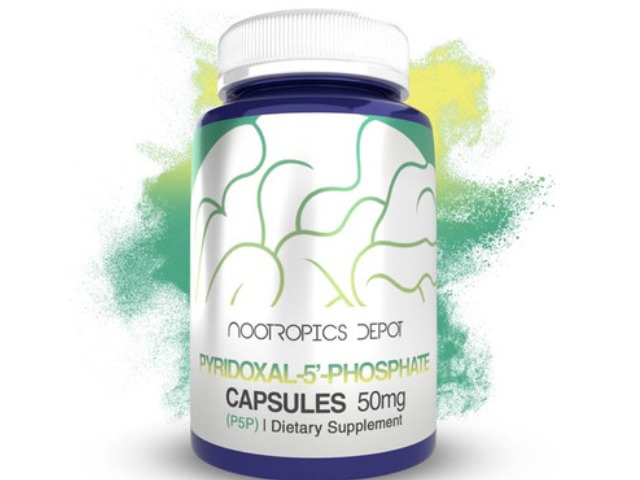
Disclosure: These are affiliate links. I earn a small commission if you purchase — at no extra cost to you. I only recommend products I personally use or have thoroughly researched.