Most “best herbs for focus” articles are glorified listicles — six herbs with a paragraph each, no comparative evidence, and affiliate links to whatever the author gets the highest commission on. I wanted to do something different here: actually rank herbal nootropics against each other based on what the clinical data shows.
That’s now possible thanks to a 2026 network meta-analysis published in Phytotherapy Research that pooled 29 RCTs (2,107 total participants) and used SUCRA rankings to compare herbal cognitive enhancers across multiple cognitive domains. This is the first time we’ve had a rigorous head-to-head comparison rather than relying on individual trials that each test a single herb against placebo.
The results were striking — and overturned some conventional wisdom about which herbs are actually the best for cognitive enhancement.
The Short Version: Bacopa monnieri at doses of 600mg+ achieved a perfect SUCRA score of 100% for working and short-term memory, decisively outranking all other herbs tested. Ginkgo biloba ranked lower than expected despite its popularity. The combination of Cistanche + Ginkgo biloba scored highest for executive function. Panax ginseng at 200mg/day showed consistent cognitive benefits in a 12-week trial. Ashwagandha works primarily through stress reduction rather than direct cognitive enhancement. For acute focus needs, Huperzine A is the most potent option but requires cycling.
The Network Meta-Analysis Rankings

The 2026 analysis compared herbs across five cognitive domains using SUCRA (Surface Under the Cumulative Ranking Curve), where 100% = always the best and 0% = always the worst. Here are the key findings:
Working and Short-Term Memory:
- Bacopa monnieri (high dose, ≥600mg) — SUCRA 100%
- Sage (Salvia officinalis) — SUCRA ~85%
- Panax ginseng — SUCRA ~65%
- Ginkgo biloba — SUCRA ~45%
Executive Function:
- Cistanche + Ginkgo biloba combination — highest ranking
- Bacopa monnieri — strong performer
- Ginkgo biloba alone — moderate
Long-Term Memory:
- Bacopa monnieri — again the top performer
- Panax ginseng — solid second
Attention/Processing Speed:
- Results were more heterogeneous here, with no single herb dominating
The takeaway: if you had to pick one herb for cognitive enhancement, the data points squarely at Bacopa monnieri at adequate doses. But different cognitive goals suggest different choices, and combinations may outperform single herbs.
Tier 1: Strong Clinical Evidence
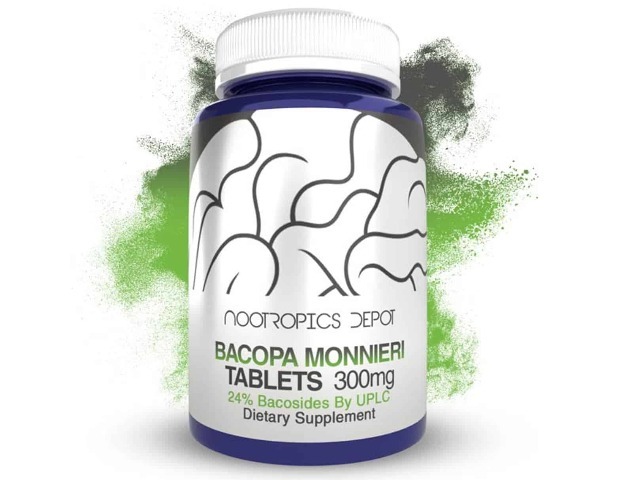
Bacopa Monnieri — The Data-Driven Winner
Bacopa monnieri has been used in Ayurvedic medicine for centuries, but the modern clinical evidence now genuinely supports those traditional claims — at least for memory.
A comprehensive 2024 RCT found significant improvements across multiple domains: verbal short-term memory, spatial short-term memory, working memory, visuospatial working memory, episodic memory, concentration, alertness, reasoning, and mental flexibility compared to placebo after 84 days. Anxiety and cortisol were reduced while sleep quality and BDNF levels increased.
A 2025 RCT added nuance: in healthy adults with self-reported memory problems, Bacopa didn’t significantly improve verbal learning or working memory, but did significantly reduce stress reactivity and post-cognitive-demand fatigue.
How to interpret the mixed data: Bacopa’s benefits emerge most clearly with higher doses (≥600mg for the network meta-analysis SUCRA 100% ranking vs. standard 300mg), longer supplementation periods (12+ weeks), and in populations with genuine cognitive challenges rather than already-optimized healthy adults.
The mechanism is multifaceted: Bacopa modulates acetylcholine release, binds muscarinic receptors, enhances choline acetyltransferase activity, reduces cortisol, and supports hippocampal function through anti-inflammatory pathways. For more on its role in cholinergic stacks, see our cholinergics article.
Dose: 300-600mg standardized extract daily (10-20% bacopa glycosides). Take with a fat-containing meal for better absorption. Minimum 12 weeks for cognitive effects. See our Bacopa substance page.
Panax Ginseng — Consistent but Modest
Panax ginseng has a long history in Traditional Chinese Medicine and a solid base of clinical evidence. A 2024 twelve-week RCT found that 200mg daily of standardized Panax ginseng extract significantly improved cognitive performance, including memory and processing speed, compared to placebo.
Ginseng’s mechanism differs from Bacopa: it primarily works through ginsenosides that modulate nitric oxide production (improving cerebral blood flow), reduce neuroinflammation, and have mild stimulatory effects on the cholinergic system. The cognitive effects are moderate but consistent across trials.
Important distinction: Panax ginseng (Korean/Asian ginseng) and Panax quinquefolius (American ginseng) have different ginsenoside profiles and somewhat different effects. Most clinical evidence is on Panax ginseng. Siberian ginseng (Eleutherococcus senticosus) is not ginseng at all and shouldn’t be confused with it.
Dose: 200-400mg standardized extract daily. Effects are noticeable within 2-4 weeks, unlike Bacopa’s slower onset. Can be mildly stimulating — morning dosing recommended.
Tier 2: Effective but Overhyped or Situational
Ginkgo Biloba — Less Effective Than Its Reputation
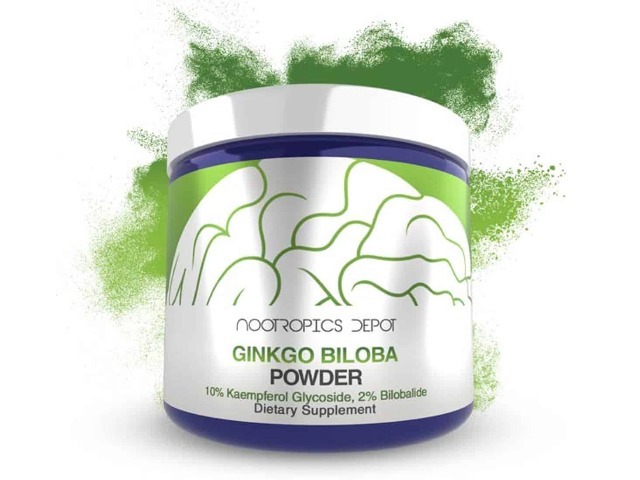
Ginkgo biloba is probably the most famous herbal cognitive enhancer in the Western world, which makes the network meta-analysis results surprising: it ranked below Bacopa and only moderately for most cognitive domains.
An updated Cochrane systematic review confirmed that Ginkgo has consistent evidence for improving cognitive function in dementia patients, but the benefits in healthy adults are smaller and less consistent. The “smart drug” reputation is largely based on older, lower-quality studies.
Where Ginkgo does shine: cerebral blood flow. EGb 761 (the standardized extract) increases blood flow to the prefrontal cortex and enhances acetylcholine and dopamine release in the medial prefrontal cortex. For people with circulatory components to their cognitive issues (aging, sedentary lifestyle), Ginkgo may be more helpful than for young, healthy adults.
The Cistanche + Ginkgo combination outperformed Ginkgo alone for executive function in the network meta-analysis, suggesting the combination addresses complementary mechanisms.
Dose: 120-240mg EGb 761 standardized extract daily. See our Ginkgo substance page.
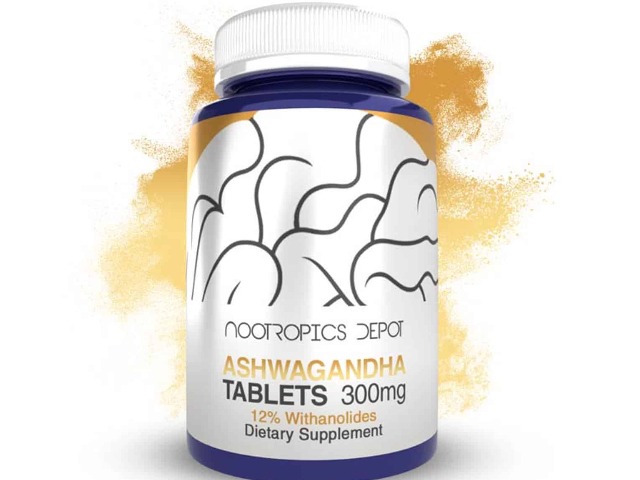
Ashwagandha — Stress Reduction, Not Direct Enhancement
Ashwagandha (Withania somnifera) is frequently included in focus supplement lists, but its cognitive benefits are primarily indirect — mediated through stress and cortisol reduction rather than direct cognitive enhancement.
A 2024 systematic review of KSM-66 ashwagandha trials confirmed significant improvements in cognitive function, but the effect sizes were strongest in stressed populations. In well-rested, non-stressed adults, the cognitive benefits are minimal.
This makes ashwagandha excellent for a specific situation: when stress or anxiety is the barrier to focus. If you can’t concentrate because your mind is racing with worry, ashwagandha’s HPA axis modulation may restore your ability to focus. If your focus issues stem from other causes (sleep deprivation, cholinergic decline, boredom), ashwagandha won’t help much.
Dose: 300-600mg KSM-66 daily. For more on ashwagandha for anxiety, see our supplements for anxiety article.
Rhodiola Rosea — Anti-Fatigue, Not Nootropic
Rhodiola rosea has a similar story to ashwagandha: it’s marketed as a cognitive enhancer but functions primarily as an adaptogen and anti-fatigue agent.
A 2025 triple-blinded crossover study found that 4-day Rhodiola supplementation produced trivial-to-small effects on mental fatigue, visual-cognitive processing, or perceived exertion. This conflicts with earlier, less rigorous studies that reported cognitive improvements.
Where Rhodiola works: sustaining mental performance during extended work sessions, reducing the cognitive impact of fatigue, and buffering stress. It’s genuinely useful for these purposes. But calling it a focus herb is a stretch.
Dose: 200-400mg standardized extract (3% rosavins, 1% salidroside). Morning dosing, as it can be mildly stimulating. See our Rhodiola substance page.
Lion’s Mane — Promising but Early
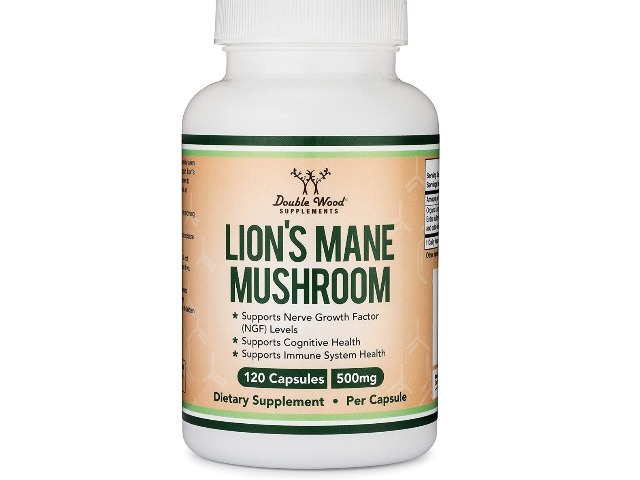
Lion’s mane (Hericium erinaceus) stimulates nerve growth factor (NGF) synthesis through its active compounds hericenones and erinacines. A 2024 systematic review found cognitive improvements in small human trials, particularly in older adults with mild cognitive impairment.
The theoretical case for focus enhancement is compelling: NGF supports cholinergic neuron health, and the cholinergic system is the primary neural substrate of sustained attention. But the human trial data is still limited — most studies are small, short-duration, and in aging or impaired populations.
I include lion’s mane here because many people ask about it, but it’s better categorized as a long-term neuroprotective strategy than an acute focus enhancer.
Dose: 500-3,000mg dual-extracted preparation daily for 8+ weeks. See our lion’s mane substance page.
Tier 3: Situational or Niche Use
Huperzine A — Potent, Requires Cycling
Huperzine A is not technically an herb in the traditional sense — it’s an isolated alkaloid from Chinese club moss. But it’s derived from a plant and widely available, so I’m including it.
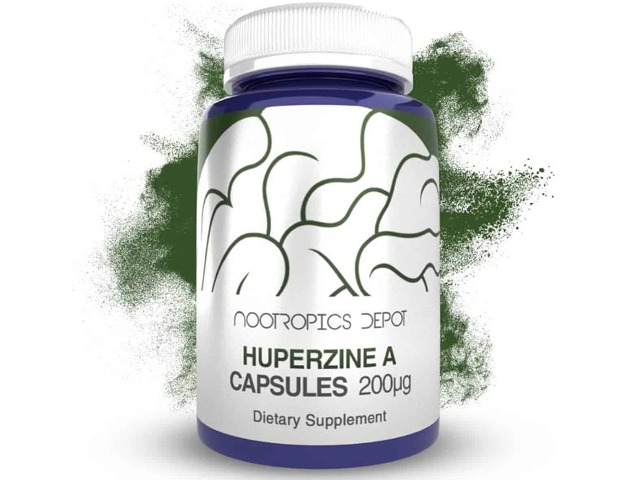
Huperzine A is the most pharmacologically potent option on this list. It inhibits acetylcholinesterase, making existing acetylcholine last longer. A 2025 RCT showed it preserved cognitive function after general anesthesia, and a phase II Alzheimer’s trial found significant cognitive improvement at 400mcg twice daily.
The catch: because it works by enzyme inhibition rather than increasing supply, overuse leads to cholinergic excess — brain fog, flat mood, GI discomfort. Cycle it: use only on days of peak cognitive demand, 3-4 days on and 2-3 days off. For a detailed discussion, see our cholinergics article.
Dose: 50-200mcg on demanding days only. See our Huperzine A substance page.
Cistanche — The Emerging Combination Player
Cistanche (Cistanche tubulosa) is a parasitic desert plant used in Traditional Chinese Medicine. It ranked highest for executive function when combined with Ginkgo biloba in the network meta-analysis. The proposed mechanism involves phenylethanoid glycosides (echinacoside and acteoside) that modulate dopaminergic signaling and reduce neuroinflammation.
As a standalone cognitive enhancer, the evidence is thin. As a combination ingredient with Ginkgo, it’s interesting. This is one to watch as more data accumulates.
Dose: 100-300mg standardized extract daily, typically combined with Ginkgo.
What I’d Skip
Sage: Despite ranking well in the network meta-analysis for memory, the total number of participants in sage trials is very small. The evidence is promising but preliminary.
Gotu kola (Centella asiatica): Traditional use for cognition, but human trial evidence is limited to very small studies with methodological concerns.
“Brain formula” multi-herb products: Products combining 6-8 herbs at sub-clinical doses. The network meta-analysis showed that dose matters enormously — high-dose Bacopa scored 100% SUCRA while lower doses were far less impressive. Pre-made stacks rarely provide adequate doses of any single ingredient.
Building a Focus-Oriented Herbal Stack
Based on the network meta-analysis and supporting evidence, here’s how I’d approach herbal cognitive enhancement:
For Memory and Working Memory:
- Bacopa monnieri (450-600mg standardized extract daily for 12+ weeks)
- Panax ginseng (200mg daily) as a complementary agent
For Executive Function:
- Ginkgo biloba (120-240mg EGb 761) combined with Cistanche (100-300mg)
For Focus Under Stress:
- Ashwagandha (300-600mg KSM-66) to remove the stress barrier
- Rhodiola (200-400mg) for fatigue resistance during extended work
For Acute Peak Demand:
- Huperzine A (50-200mcg) on specific high-demand days, cycled
Pair with non-herbal nootropics: These herbs combine well with alpha-GPC (300mg for cholinergic precursor support) and L-theanine (200mg for calm focus). See our cholinergics for focus article and L-theanine + caffeine article.
My Protocol
- Daily: 300mg Bacopa monnieri with dinner (fat-containing meal). This is my long-term memory and cognitive resilience builder. I’ve been consistent with this for over a year.
- Occasional: I’ve experimented with Ginkgo and Rhodiola but neither produced effects I could clearly distinguish from my baseline stack of alpha-GPC + L-theanine + caffeine.
- What I’ve learned: The herbs that work (primarily Bacopa) require patience — 12+ weeks before benefits are clearly noticeable. If you’re looking for something you’ll feel today, herbs are the wrong category. Look at cholinergic precursors or caffeine + L-theanine instead.
For detailed pharmacology, dosing, and safety information on each herb, see the individual substance pages linked throughout.