
- Supports healthy mitochondrial function and energy metabolism
- May promote exercise-like metabolic benefits
- Supports healthy aging and cellular resilience
- May help regulate blood sugar and insulin sensitivity
- Supports healthy body composition
I’ll be honest — when I first heard about a peptide that could “mimic exercise,” my BS detector went off immediately. I’ve been in the supplement world long enough to know that anything promising the benefits of a workout without the work is usually snake oil with better marketing.
But MOTS-c kept showing up in the research. Not from supplement companies — from serious mitochondrial biology labs. And the more I dug into the science, the more I realized this wasn’t another overhyped shortcut. It’s a molecule your body already makes, and understanding how it works might change the way you think about energy, aging, and metabolic health.
The Short Version: MOTS-c is a naturally occurring peptide produced by your mitochondria that helps regulate metabolism, insulin sensitivity, and cellular energy production. It’s best suited for people interested in longevity, metabolic optimization, and supporting mitochondrial health — especially as they age. The science is genuinely exciting, but most human data is still preliminary, so temper expectations accordingly.
What Is MOTS-c?
MOTS-c (Mitochondrial Open Reading Frame of the 12S rRNA Type-c) is a 16-amino-acid peptide that’s encoded in your mitochondrial DNA — not your nuclear DNA. That distinction matters more than it sounds.
Your mitochondria aren’t just “the powerhouse of the cell” (sorry, high school biology). They’re sophisticated signaling centers that communicate with nearly every system in your body. MOTS-c is one of the key messengers they use to do it. Discovered in 2015 by Dr. Changhan David Lee’s lab at USC, it was one of the first mitochondrial-derived peptides (MDPs) identified as having major systemic effects on metabolism.
Here’s why people are paying attention: MOTS-c levels naturally decline as you age. And that decline tracks suspiciously well with the metabolic dysfunction, insulin resistance, and loss of cellular resilience that come with getting older. The question researchers are now asking is whether supplementing with MOTS-c can restore some of what time takes away.
Before we go further — if your sleep is a wreck, your gut health is in shambles, or you’re chronically stressed, a peptide isn’t going to fix what’s broken. MOTS-c is a precision tool, not a foundation. Get the basics right first: quality sleep, real food, stress management, and movement. Then consider whether something like this deserves a place in your protocol.
How Does MOTS-c Work?
Think of your mitochondria as tiny factories inside every cell. They don’t just produce energy — they send status reports to the rest of your body about how things are going. MOTS-c is one of those status reports, and it carries some serious authority.
When MOTS-c is released, it travels through the bloodstream and activates a pathway called AMPK (AMP-activated protein kinase). If you’ve ever heard of AMPK referred to as the body’s “metabolic master switch,” that’s not much of an exaggeration. AMPK activation is one of the primary mechanisms behind the metabolic benefits of exercise and caloric restriction. It shifts your cells from “growth and storage” mode into “burn fuel and repair” mode.
A landmark 2015 study published in Cell Metabolism by Lee et al. demonstrated that MOTS-c activates AMPK and regulates metabolic homeostasis in both cell cultures and mice. The treated mice showed improved glucose regulation and resistance to age-dependent and high-fat-diet-induced insulin resistance. A follow-up 2019 study by the same group in Cell Metabolism showed that exercise itself triggers MOTS-c translocation to the nucleus, where it directly regulates gene expression related to metabolic stress — essentially proving that MOTS-c is part of why exercise works at the cellular level.
In plain English: MOTS-c helps your cells behave like they just went for a run. It improves how they process glucose, burn fat, and handle metabolic stress. That doesn’t mean you can skip the gym — but it does mean this peptide taps into some of the same machinery that makes exercise so powerful for your health.
MOTS-c also appears to influence the folate-methionine cycle, which is critical for cellular methylation and one-carbon metabolism. Disruptions in this pathway are linked to everything from cardiovascular disease to cognitive decline. By regulating this cycle, MOTS-c may support broader cellular maintenance and repair processes that go well beyond simple energy production.
Reality Check: MOTS-c is sometimes called an “exercise mimetic,” which is catchy but misleading. It activates some of the same pathways as exercise, but exercise does hundreds of things simultaneously — cardiovascular conditioning, neurotransmitter release, mechanical loading of bones and muscles. No peptide replaces all of that. Think of MOTS-c as capturing one important piece of the exercise puzzle, not the whole thing.
Benefits of MOTS-c
The research on MOTS-c is genuinely promising, but I want to be upfront about what’s solid and what’s still speculative. Here’s where the evidence stands:
| Benefit | Evidence Level | Key Research |
|---|---|---|
| Insulin sensitivity & glucose regulation | Strong (animal + mechanistic) | Lee et al. 2015, Cell Metabolism |
| Exercise-related metabolic signaling | Strong (mechanistic) | Reynolds et al. 2021, Nature Communications |
| Fat metabolism & body composition | Moderate (animal studies) | Lee et al. 2015; Kim et al. 2018 |
| Anti-aging / longevity markers | Moderate (observational + animal) | Zempo et al. 2021; Kim et al. 2018 |
| Cognitive support & neuroprotection | Preliminary (animal + in vitro) | Weng et al. 2022; Ming et al. 2016 |
| Bone density support | Preliminary (animal) | Hu & Chen 2018 |
Metabolic health and insulin sensitivity are where the evidence is strongest. Multiple animal studies consistently show that MOTS-c supplementation improves glucose uptake and reduces insulin resistance, even in mice fed high-fat diets. A 2021 study in Nature Communications by Reynolds et al. confirmed that MOTS-c levels in skeletal muscle increase after exercise in humans and that higher circulating levels correlate with better metabolic health markers. That’s a meaningful data point connecting animal research to human biology.
Body composition effects have been observed in animal models, where MOTS-c-treated mice showed reduced fat accumulation and improved lean mass ratios. These results align with the AMPK activation mechanism — when your cells are in “burn and repair” mode more often, metabolic efficiency tends to improve.
Longevity markers are the most intriguing but least proven area. Observational studies, including Zempo et al. (2021) in Aging, have found that certain MOTS-c gene variants are more common in Japanese centenarians, suggesting a protective role. But correlation isn’t causation, and we’re still far from proving that supplemental MOTS-c extends lifespan in humans.
Neuroprotective potential is emerging in early research. Animal studies suggest MOTS-c may protect neurons from oxidative stress and support mitochondrial function in brain cells. Given that mitochondrial dysfunction is increasingly linked to cognitive decline, this line of research makes mechanistic sense — but we need human trials before making any claims.
Insider Tip: If you’re primarily interested in MOTS-c for metabolic health, pair it with lifestyle habits that also activate AMPK — fasting, exercise, and cold exposure. Stacking the signal through multiple pathways tends to produce stronger results than relying on any single intervention.
How to Take MOTS-c
MOTS-c is primarily available as a subcutaneous injection. Oral peptides generally get destroyed in the gut before they can do anything useful, so injectable is the standard route for this one.
| Protocol | Dosage | Frequency | Best For |
|---|---|---|---|
| Conservative start | 5mg subcutaneous | 2-3x per week | New users, general wellness |
| Standard optimization | 10mg subcutaneous | 3x per week | Metabolic support, active individuals |
| Intensive protocol | 10mg subcutaneous | Daily for 2-4 weeks, then maintenance | Short-term metabolic reset |
Dosage specifics:
- Starting dose: 5mg subcutaneous injection, 2-3 times per week
- Maintenance dose: 5-10mg, 2-3 times per week
- Timing: Morning administration is most common, as it aligns with natural metabolic rhythms. Some practitioners recommend dosing before exercise to amplify AMPK activation
- Reconstitution: MOTS-c typically comes as a lyophilized (freeze-dried) powder that needs reconstitution with bacteriostatic water. Follow sterile technique — this isn’t optional
- Storage: Reconstituted MOTS-c should be refrigerated and used within 3-4 weeks
Cycling considerations:
- Most protocols suggest 8-12 week cycles followed by a 4-week break
- Some practitioners use a “5 days on, 2 days off” weekly schedule
- No definitive research establishes the optimal cycling protocol yet, so monitor your response and adjust
Pro Tip: Keep a simple log of your fasting glucose, energy levels, and body composition changes when starting MOTS-c. Subjective “I feel different” assessments are unreliable — numbers don’t lie. A basic glucose monitor and monthly progress photos will give you much better feedback than vibes alone.
Important: MOTS-c requires subcutaneous injection, which means you should learn proper injection technique from a qualified healthcare provider. This is not a supplement you eyeball and toss back with your morning coffee. If you’re not comfortable with self-injection, work with a practitioner who can guide you through it.
Side Effects and Safety
MOTS-c is a naturally occurring peptide in the human body, which gives it a generally favorable safety profile compared to synthetic compounds. That said, supplemental doses are supra-physiological — meaning you’re taking more than your body normally produces — and that warrants respect.
Commonly reported side effects:
- Injection site reactions (redness, mild swelling, itching) — most common, usually resolves within hours
- Mild fatigue or lethargy in the first few days, likely related to metabolic shifting
- Transient headache
- Mild nausea, particularly if dosing on an empty stomach
Less common but reported:
- Blood sugar fluctuations — particularly relevant for diabetics or those on glucose-lowering medications
- Temporary muscle soreness or a “post-workout” feeling without exercise
- Mild flushing
Who should avoid MOTS-c:
- Pregnant or nursing women (no safety data)
- Anyone with active cancer (AMPK activation has complex effects on cancer biology — some protective, some potentially growth-promoting depending on the cancer type)
- People with hypoglycemia or on insulin/glucose-lowering medications without medical supervision
- Those with autoimmune conditions should proceed cautiously and consult with a practitioner
Drug interactions to watch:
- Metformin and other glucose-lowering drugs: MOTS-c also lowers blood sugar via AMPK, creating a potential additive effect. Monitor glucose closely
- Rapamycin / mTOR inhibitors: These interact with overlapping metabolic pathways. Combining them without guidance is unwise
- Insulin: Same concern as metformin — additive hypoglycemic risk
Important: The long-term safety of exogenous MOTS-c supplementation in humans has not been established through large-scale clinical trials. Most safety data comes from animal studies and anecdotal reports from the peptide community. Work with a knowledgeable healthcare practitioner, especially if you’re on any medications.
Stacking MOTS-c
MOTS-c works through metabolic and mitochondrial pathways, so it pairs logically with other compounds that support those systems. Here’s what makes sense and what doesn’t:
Strong synergies:
- CoQ10 (100-200mg) — Supports the electron transport chain directly. If MOTS-c is optimizing the signaling, CoQ10 is supplying the raw materials for mitochondrial energy production
- NMN or NR (250-500mg) — Boosts NAD+ levels, which mitochondria need to function. This is one of the most logical pairings since both target mitochondrial health from different angles
- Creatine Monohydrate (5g daily) — Supports cellular energy buffering. Simple, cheap, and well-researched
- Berberine (500mg 2-3x daily) — Another AMPK activator. Some practitioners combine these for enhanced metabolic effects, though start with one and add the other to avoid excessive blood sugar drops
Complementary pairings:
- PQQ (10-20mg) — Supports mitochondrial biogenesis (creation of new mitochondria). MOTS-c optimizes existing mitochondria; PQQ helps make more of them
- Alpha-Lipoic Acid (300-600mg) — Mitochondrial antioxidant that may protect against oxidative stress during increased mitochondrial activity
- Magnesium (200-400mg) — Essential cofactor for hundreds of metabolic reactions, including many of the pathways MOTS-c activates
Combinations to approach cautiously:
- MOTS-c + Berberine + Metformin — Triple-stacking AMPK activators with a glucose-lowering drug significantly increases hypoglycemia risk
- MOTS-c + high-dose Resveratrol — Both activate AMPK and sirtuin pathways. Redundancy isn’t always synergy, and excessive pathway stimulation can backfire
- MOTS-c + other injectable peptides without spacing — If you’re also using BPC-157, Epithalon, or growth hormone secretagogues, space your injections and introduction periods. Don’t start multiple new peptides simultaneously — you won’t know what’s doing what
My Take
I’ll cut to it: MOTS-c is one of the most scientifically interesting peptides I’ve come across in years. The mechanism of action is elegant — a tiny signaling molecule from your mitochondria that tells the rest of your body to get its metabolic act together. The animal data is compelling. The observational studies linking MOTS-c variants to longevity in centenarians are fascinating.
But here’s my honest assessment: we’re early. The human clinical trial data is thin. Most of what we know comes from mice, cell cultures, and a growing but still anecdotal community of biohackers. That doesn’t mean it doesn’t work — it means we can’t be as precise about dosing, cycling, and long-term effects as I’d like.
Who should seriously consider MOTS-c:
- People over 40 focused on metabolic health and longevity who have their basics dialed in
- Individuals with early insulin resistance or metabolic syndrome (under medical supervision)
- Biohackers and self-experimenters who are comfortable with injectable peptides and tracking their biomarkers
- Athletes or highly active people interested in mitochondrial optimization
Who should probably look elsewhere first:
- Anyone who hasn’t addressed sleep, nutrition, stress, and basic supplementation — Magnesium, Creatine, CoQ10, and Vitamin D will give you more bang for your buck at a fraction of the cost and complexity
- People uncomfortable with injections — there’s no reliable oral form yet
- Anyone looking for a cognitive nootropic specifically — the brain benefits are speculative at this point. Lion’s Mane or Bacopa are better first choices for that goal
The peptide space is evolving fast, and MOTS-c is a compound I’m keeping a close eye on. As more human data emerges, I expect it to become a cornerstone of evidence-based longevity protocols. For now, it’s a promising tool with a strong theoretical foundation — just not one I’d recommend as anyone’s first step into optimization. Build the foundation, then consider the precision tools.
Recommended MOTS-C Products
I know how frustrating it is to sort through dozens of brands making the same claims. These are the ones I've personally vetted — because quality is the difference between results and wasted money.
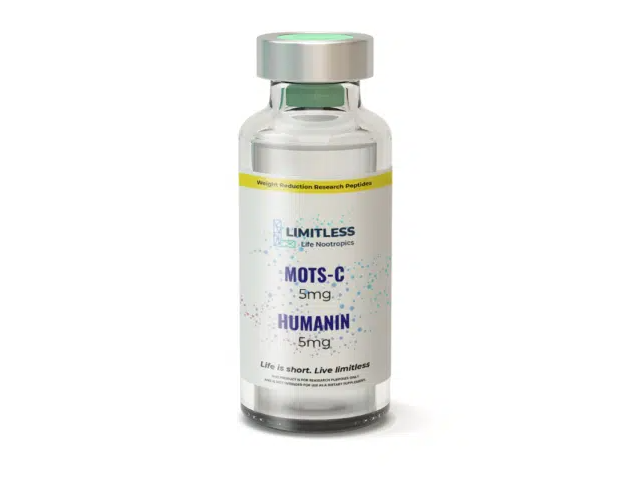
MOTS-C & Humanin Blend by Limitless Life Nootropics
Shop Now →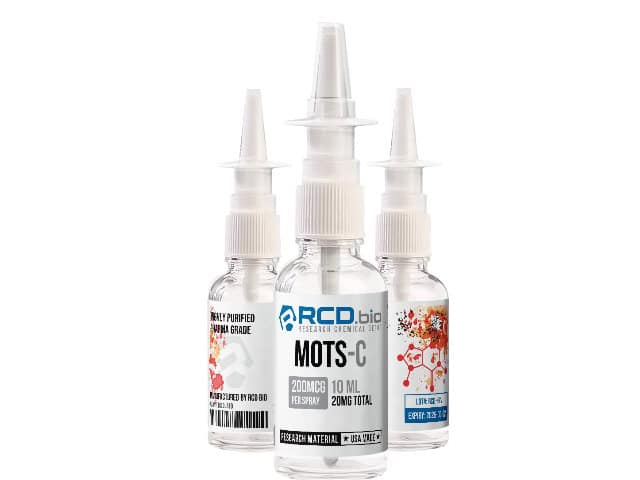
MOTS-C Nasal Spray by Research Chemical Depot
Shop Now →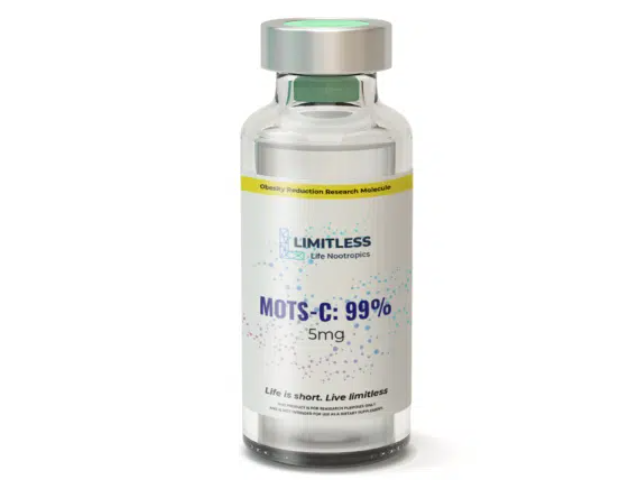
MOTS-C Peptide (10mg) by Limitless Life Nootropics
Shop Now →Disclosure: These are affiliate links. I earn a small commission if you purchase — at no extra cost to you. I only recommend products I personally use or have thoroughly researched.
Research & Studies
This section includes 8 peer-reviewed studies referenced in our analysis.