
- Supports cognitive function and memory
- Promotes calm and reduces anxiety
- Reduces neuroinflammation
- Supports gut health and microbiome balance
- Enhances sleep quality
I’ll be honest: when I first encountered Poria cocos, I thought it was just another overhyped mushroom riding the functional fungi trend. The name sounded exotic, the claims seemed too good to be true, and I was already skeptical after wasting money on mediocre “brain-boosting” mushroom blends.
Then I actually looked at the research. This fungus has over 2,000 years of documented use in Traditional Chinese Medicine, and the modern science is surprisingly robust. Studies show it can improve memory in Alzheimer’s models, reduce anxiety through GABA modulation, and even reshape your gut microbiome to support cognitive health. That last part — the gut-brain connection — is what really got my attention.
If you’re looking for a gentle, multi-mechanism nootropic that works on both your brain and your gut, Poria cocos deserves serious consideration.
The Short Version: Poria cocos is a medicinal mushroom that supports cognitive function through cholinergic enhancement, reduces anxiety via GABA modulation, and combats neuroinflammation. Typical doses range from 1-3 grams daily. It’s well-tolerated, works best with consistent long-term use (8-12 weeks), and pairs exceptionally well with other adaptogens and cognitive enhancers.
What Is Poria cocos? (An Ancient Mushroom with Modern Science)
Poria cocos isn’t technically a mushroom in the culinary sense — it’s a sclerotium, the hardened underground storage structure of a fungus that grows on the roots of pine trees. In Traditional Chinese Medicine, it’s called “Fu Ling” and has been used for millennia to “calm the spirit,” support digestion, and promote longevity.
What makes Poria cocos unique is its dual action on both the nervous system and the gut. While most nootropics focus exclusively on the brain, Poria cocos takes a more holistic approach — which, if you’ve read any of my other work, you know aligns perfectly with the “foundations first” philosophy I preach relentlessly.
Here’s the thing: you can stack all the racetams and cholinergics you want, but if your gut is inflamed and your microbiome is a disaster, your cognitive enhancement ceiling is going to be lower than you think. Poria cocos addresses both ends of the gut-brain axis simultaneously, which is why it’s been a staple in traditional formulas for “brain fog” and mental fatigue for centuries.
Modern research has identified several bioactive compounds responsible for its effects: polysaccharides (which modulate immune function and gut health), triterpenoids (which have anti-inflammatory and neuroprotective properties), and essential oils (which appear to enhance acetylcholine signaling). This multi-compound profile gives Poria cocos a broader range of action than single-molecule nootropics.
How Does Poria cocos Work? (Four Mechanisms That Matter)
Poria cocos operates through four primary mechanisms, each targeting a different aspect of brain health. This is where it gets interesting — and where the science actually backs up the traditional use.
Cholinergic Enhancement (Better Learning and Memory)
Poria cocos enhances the brain’s cholinergic system, which is your primary neurotransmitter pathway for attention, learning, and memory formation. Research suggests that compounds in Poria cocos — particularly its essential oils — may increase acetylcholine levels in the brain, potentially through acetylcholinesterase inhibition (blocking the enzyme that breaks down acetylcholine).
Think of acetylcholine as your brain’s “record button.” When you’re learning something new, acetylcholine signals help encode that information into memory. More acetylcholine activity generally means better encoding and retrieval. This is the same mechanism targeted by pharmaceutical Alzheimer’s drugs like donepezil, though Poria cocos works far more gently.
A 2023 study in Phytotherapy Research found that Poria cocos restored cognitive function in an Alzheimer’s disease mouse model (APP/PS1 mice) by improving the balance between amyloid-beta production and clearance — essentially helping the brain clean up the protein plaques associated with neurodegeneration. While this is animal research, the cholinergic enhancement mechanism is likely relevant to healthy humans as well.
Translation: Poria cocos helps your brain maintain the neurotransmitter levels needed for sharp memory and focus, especially during demanding cognitive tasks or as you age.
GABAergic Modulation (Calm Without Sedation)
GABA is your brain’s primary “brake pedal” — the inhibitory neurotransmitter that counterbalances excitatory signals and prevents overstimulation. Poria cocos enhances GABAergic neurotransmission, promoting a calming effect without the heavy sedation you’d get from something like phenibut or benzodiazepines.
A 2024 randomized, double-blind, placebo-controlled trial examined the effects of a combination formula containing Poria cocos, Ziziphus spinosa, and GABA on sleep quality. While this was a combination formula (not Poria cocos alone), the results showed significant improvements in sleep quality and reductions in stress markers, suggesting that Poria cocos contributes meaningfully to GABAergic activity.
This mechanism is particularly valuable if you’re dealing with the “tired but wired” phenomenon — your brain is fatigued, but anxiety or overstimulation keeps you from relaxing. Poria cocos can help downregulate that excessive neural firing without making you foggy or lethargic.
Translation: It’s like turning down the mental volume without hitting mute. You stay alert and functional, but the background anxiety and mental chatter get dialed back.
Neuroinflammation Reduction (Protecting Long-Term Brain Health)
Chronic neuroinflammation is one of the most underappreciated drivers of cognitive decline. When your brain is inflamed — whether from poor diet, chronic stress, gut dysbiosis, or environmental toxins — it produces inflammatory mediators like nitric oxide (NO), prostaglandin E2 (PGE2), and pro-inflammatory cytokines. Over time, this inflammatory burden damages neurons and impairs cognitive function.
Poria cocos polysaccharides and triterpenoids actively suppress these inflammatory pathways, particularly the NF-κB and MAPK signaling cascades. A 2022 study in NeuroReport found that Poria cocos polysaccharide significantly reduced nerve damage in a rat model of Alzheimer’s disease induced by D-galactose and aluminum trichloride — both of which trigger oxidative stress and neuroinflammation.
More recently, a 2025 study in the Journal of Agricultural and Food Chemistry demonstrated that Poria cocos polysaccharide reshapes the gut microbiota, increases short-chain fatty acid production (particularly butyrate, which is anti-inflammatory), and alleviates neuroinflammation-related cognitive impairment in an Alzheimer’s model.
Translation: Poria cocos doesn’t just mask symptoms — it addresses one of the root causes of brain fog and cognitive decline by reducing the inflammatory burden on your brain tissue.
Oxidative Stress Reduction (Defending Against Free Radicals)
Your brain uses about 20% of your body’s oxygen despite being only 2% of your body weight. That metabolic intensity generates a lot of reactive oxygen species (ROS) — free radicals that, if not neutralized, damage cellular components including DNA, proteins, and lipid membranes.
Poria cocos enhances your endogenous antioxidant enzyme systems, boosting the activity of enzymes like superoxide dismutase (SOD), catalase, and glutathione peroxidase. These are your body’s built-in defenses against oxidative damage. Rather than acting as a direct antioxidant (like Vitamin C or Vitamin E), Poria cocos upregulates your cellular machinery for neutralizing free radicals.
This is a more sustainable approach than flooding your system with external antioxidants, which can actually blunt your body’s adaptive response to oxidative stress (hormesis). By enhancing endogenous defenses, Poria cocos supports long-term resilience without interfering with beneficial stress adaptations.
Translation: It’s teaching your cells to protect themselves rather than doing all the work for them — a more sustainable, foundational approach to antioxidant protection.
Benefits of Poria cocos (What the Research Actually Shows)
Let’s be clear about the evidence here. Most Poria cocos research has been conducted in animal models or cell cultures, with a smaller number of human trials (often in combination formulas). That said, the mechanisms are well-established, and the traditional use case has centuries of observational evidence behind it.
Here’s what the research suggests, with honest assessments of evidence quality:
| Benefit | Evidence Level | Key Research |
|---|---|---|
| Cognitive function & memory | Moderate (animal models, traditional use) | Sun et al. 2023 (APP/PS1 mice) |
| Anxiety & stress reduction | Moderate (combination trials, traditional use) | Hao et al. 2024 (human RCT, combination formula) |
| Neuroinflammation reduction | Strong (animal models, mechanistic studies) | Song et al. 2025, Zhou et al. 2022 |
| Gut microbiome modulation | Strong (animal models) | Song et al. 2025 |
| Sleep quality improvement | Moderate (human RCT, combination formula) | Hao et al. 2024 |
Cognitive Function and Memory Support
The strongest evidence for Poria cocos comes from studies on neurodegenerative disease models. A 2023 study found that Poria cocos improved cognitive function in APP/PS1 mice (a model of Alzheimer’s disease) by restoring the balance between amyloid-beta production and clearance, and by improving gut microbiota composition. While this is an animal study, the mechanisms — cholinergic enhancement, neuroinflammation reduction — are relevant to healthy human cognition as well.
Anecdotally, many users report improvements in mental clarity, working memory, and learning capacity after 4-8 weeks of consistent use. This isn’t a “feel it in 30 minutes” nootropic — it’s a slow-building, cumulative effect.
Anxiety Reduction and Stress Resilience
A 2024 randomized, double-blind, placebo-controlled trial involving 120 participants examined a combination formula of Poria cocos, Ziziphus spinosa, and GABA. The treatment group showed significant improvements in sleep quality and reductions in stress-related biomarkers compared to placebo. While this was a combination formula (so we can’t attribute all effects to Poria cocos alone), the GABAergic modulation mechanism is well-documented.
Traditional Chinese Medicine has used Poria cocos for “calming the spirit” for centuries, and modern research supports this application for managing everyday stress and anxiety — not clinical anxiety disorders, but the low-grade overstimulation and mental tension that accumulates from modern life.
Neuroinflammation and Neuroprotection
This is where the evidence is strongest. Multiple studies demonstrate that Poria cocos polysaccharides suppress inflammatory signaling pathways (NF-κB, MAPK), reduce pro-inflammatory mediators (iNOS, COX-2, PGE2), and protect neurons from oxidative and inflammatory damage.
A 2022 study in NeuroReport found that Poria cocos polysaccharide attenuated nerve damage in a rat model of Alzheimer’s disease induced by D-galactose and aluminum trichloride. A 2025 study in the Journal of Agricultural and Food Chemistry showed that Poria cocos polysaccharide reshaped gut microbiota, increased short-chain fatty acids (SCFAs), and alleviated neuroinflammation-related cognitive impairment.
Reality Check: These are animal studies, not human clinical trials. But the mechanistic evidence is solid, and the anti-inflammatory effects are likely translatable to humans, especially in the context of chronic low-grade inflammation (which most of us have to some degree).
Gut-Brain Axis Support
This is the sleeper benefit that most people overlook. The 2025 study by Song et al. demonstrated that Poria cocos polysaccharide significantly altered gut microbiota composition, increasing beneficial bacteria and short-chain fatty acid production. SCFAs — particularly butyrate — are critical for gut barrier integrity, systemic inflammation control, and even direct signaling to the brain via the vagus nerve.
If you’re dealing with gut issues, brain fog, or inflammatory conditions, addressing the gut-brain axis is non-negotiable. Poria cocos offers a two-pronged approach: direct neuroprotection plus gut microbiome modulation. That’s why I consider it a true “holistic” nootropic.
How to Take Poria cocos (Without Wasting Your Money)
Dosing Poria cocos is straightforward, but there are a few key details that will determine whether you get results or just expensive urine.
Dosage Recommendations
| Use Case | Dosage | Timing | Notes |
|---|---|---|---|
| General cognitive support | 1-2 grams | Morning with food | Start here for maintenance |
| Cognitive enhancement + stress reduction | 2-3 grams | Split: morning + afternoon | Most common therapeutic range |
| Therapeutic use (neurodegenerative support) | 3-5 grams | 2-3x daily with meals | Consult with a healthcare provider |
Start low: Begin with 1 gram daily for the first week to assess tolerance. Poria cocos is generally well-tolerated, but starting conservatively lets you gauge how your body responds.
Take with food: Polysaccharides and triterpenoids are better absorbed in the presence of dietary fats. Taking Poria cocos with a meal — especially one containing healthy fats — improves bioavailability.
Be patient: This isn’t a stimulant. Most users report noticeable effects after 4-8 weeks of consistent use. The cognitive and mood benefits build gradually as the gut microbiome shifts and neuroinflammation decreases.
Forms and Bioavailability
- Whole dried sclerotium (powder): Traditional form, most affordable. Effective but lower bioavailability. Typical dose: 2-3 grams.
- Hot water extract (polysaccharides concentrated): Higher bioavailability, standardized for polysaccharide content. Look for extracts standardized to ≥30% polysaccharides. Typical dose: 500mg-1g.
- Dual extract (water + alcohol): Extracts both polysaccharides and triterpenoids. Best overall bioavailability. Typical dose: 500mg-1g.
- Combination formulas: Often paired with Reishi, Ashwagandha, or other adaptogens. Follow product-specific dosing.
Pro Tip: If you’re using a powdered form, consider making it into a decoction (simmering in water for 20-30 minutes) rather than just mixing it into a smoothie. This traditional preparation method extracts more of the active polysaccharides. Strain out the solids and drink the liquid.
Cycling
Poria cocos doesn’t require cycling. It’s an adaptogen and tonic herb, not a stimulant or receptor agonist. Continuous daily use is safe and often more effective than intermittent dosing, especially if you’re targeting gut microbiome changes (which take time to stabilize).
Starting Protocol
Week 1-2: 1 gram daily with breakfast. Monitor for any digestive changes (rare but possible).
Week 3-8: Increase to 2-3 grams daily, split between morning and afternoon doses if desired. Assess cognitive and mood effects around the 4-6 week mark.
Week 8+: If you’re seeing benefits, continue at the effective dose. If not, consider increasing to 3-4 grams or evaluating whether gut health and foundational factors (sleep, diet, stress) are optimized.
Side Effects & Safety (What Could Go Wrong)
Poria cocos is one of the safest nootropics you can use. It has a long history of use in Traditional Chinese Medicine with minimal reported adverse effects, and modern research supports this safety profile.
Common Side Effects
- Mild digestive upset: Some users report loose stools or mild bloating when starting Poria cocos, especially at higher doses (3+ grams). This is likely due to the polysaccharide content affecting gut microbiota. Usually resolves within a few days as your microbiome adjusts.
- Increased urination: Poria cocos has mild diuretic properties in Traditional Chinese Medicine. This is generally subtle but worth noting if you’re already taking diuretics.
Who Should Avoid Poria cocos
- Pregnancy and breastfeeding: Insufficient safety data. Avoid unless under the guidance of a qualified healthcare provider.
- Individuals with known mushroom/fungi allergies: Although rare, allergic reactions are possible.
- Those on immunosuppressants: Poria cocos modulates immune function through its polysaccharide content. If you’re taking immunosuppressive medications (e.g., for autoimmune conditions or post-transplant), consult your physician before use.
Drug Interactions
| Medication/Substance | Interaction Type | Risk Level | Notes |
|---|---|---|---|
| Diuretics (furosemide, HCTZ) | Additive diuretic effect | Low-Moderate | May increase urination and potassium loss; monitor electrolytes |
| Immunosuppressants (cyclosporine, tacrolimus) | Immune modulation | Moderate | Poria cocos may counteract immunosuppression; consult physician |
| Anticoagulants (warfarin, heparin) | Potential antiplatelet effect | Low | Theoretical risk; monitor if combining |
| Other adaptogens/mushrooms | Synergistic | Low (beneficial) | Generally safe and often intentionally combined |
Important: If you’re on any prescription medications, especially diuretics or immunosuppressants, consult with a healthcare provider before adding Poria cocos to your regimen. While interactions are rare, the diuretic and immune-modulating properties warrant caution.
Stacking Poria cocos (The Combinations That Actually Work)
Poria cocos is a versatile nootropic that pairs well with a wide range of compounds. Because it works through multiple mechanisms — cholinergic, GABAergic, anti-inflammatory, and gut-modulating — it complements both stimulating and calming nootropics.
Here are goal-specific stacks that leverage Poria cocos’ unique profile:
For Cognitive Enhancement + Calm Focus
The Stack:
- 2g Poria cocos (morning + afternoon)
- 300mg Alpha-GPC (morning)
- 200mg L-Theanine (morning)
- 100mg Caffeine (morning, optional)
Why it works: Poria cocos enhances cholinergic function and reduces neuroinflammation, while Alpha-GPC provides the choline substrate for acetylcholine synthesis. L-Theanine and Poria cocos both modulate GABAergic activity, creating a calm-but-focused state. Caffeine is optional but synergizes well with L-Theanine (the classic “smooth energy” combo).
Best for: Deep work sessions, studying, writing — tasks that require sustained focus without anxiety or jitteriness.
For Stress Resilience + Mood Support
The Stack:
- 2-3g Poria cocos (split morning + evening)
- 300-500mg Ashwagandha (KSM-66 or Sensoril extract, evening)
- 500mg Rhodiola Rosea (3% rosavins, morning)
- 200mg L-Theanine (as needed)
Why it works: This is an adaptogen-heavy stack targeting the hypothalamic-pituitary-adrenal (HPA) axis. Poria cocos reduces neuroinflammation and modulates GABA, Ashwagandha lowers cortisol and supports stress resilience, and Rhodiola enhances mental stamina and mood. L-Theanine provides acute anxiolytic support when needed.
Best for: High-stress periods, burnout recovery, or chronic stress management. This is a “rebuild your stress tolerance” stack, not a quick fix.
For Sleep Quality + Recovery
The Stack:
- 2g Poria cocos (evening, 1-2 hours before bed)
- 300-500mg Magnesium Glycinate (evening)
- 1-3mg Melatonin (30 minutes before bed, optional)
- 500mg Reishi extract (evening)
Why it works: Poria cocos enhances GABAergic activity and reduces neuroinflammation, creating a calmer nervous system conducive to sleep. Magnesium glycinate supports GABA receptor function and relaxes muscles. Reishi is another adaptogenic mushroom with calming, immune-modulating properties. Melatonin is optional for circadian rhythm support.
Best for: Insomnia, poor sleep quality, or “tired but wired” patterns. This stack addresses both the nervous system and the gut-brain axis to promote restorative sleep.
For Gut-Brain Axis Optimization
The Stack:
- 3g Poria cocos (morning + evening)
- 1g Lion’s Mane extract (morning)
- 500mg Bacopa Monnieri (50% bacosides, morning)
- Probiotic (multi-strain, 10+ billion CFU, evening)
Why it works: This stack targets both ends of the gut-brain axis. Poria cocos modulates gut microbiota and reduces neuroinflammation. Lion’s Mane stimulates Nerve Growth Factor (NGF) and supports gut lining integrity. Bacopa enhances dendritic branching and has mild anxiolytic effects. A quality probiotic seeds beneficial bacteria to work synergistically with Poria cocos’ prebiotic-like polysaccharides.
Best for: Brain fog linked to gut issues, inflammatory bowel conditions, or anyone serious about optimizing the gut-brain connection.
Synergy Table
| Compound | Mechanism Overlap | Synergy Rating | Notes |
|---|---|---|---|
| Alpha-GPC | Cholinergic | High | Complementary acetylcholine support |
| L-Theanine | GABAergic | High | Stacks well for calm focus |
| Ashwagandha | Adaptogenic, anti-inflammatory | High | Excellent stress resilience combo |
| Lion’s Mane | NGF, gut-brain axis | Very High | Powerful gut-brain optimization |
| Bacopa Monnieri | Cholinergic, adaptogenic | High | Long-term cognitive enhancement |
| Reishi | Immune modulation, calming | Moderate-High | Traditional pairing for sleep/stress |
| Caffeine | Stimulant | Moderate | Poria cocos buffers anxiety from caffeine |
What to Avoid Combining
- High-dose GABAergic compounds: Combining Poria cocos with high doses of Phenibut, benzodiazepines, or alcohol could result in excessive sedation. Poria cocos is mild, but stacking multiple GABAergic agents increases risk.
- Strong diuretics: If you’re already on prescription diuretics, adding Poria cocos may increase urination and electrolyte loss. Monitor hydration and consider consulting your physician.
Insider Tip: If you’re new to nootropics, start with just Poria cocos alone for 2-4 weeks to establish a baseline. Then add one compound at a time (wait 1-2 weeks between additions) so you can assess individual effects. This prevents the “kitchen sink” approach where you have no idea what’s working.
My Take (Is Poria cocos Worth It?)
I’m genuinely impressed by Poria cocos. It’s not flashy — you’re not going to feel a rush of energy or a sudden boost in focus 30 minutes after taking it — but that’s exactly why I think it’s valuable.
In my experience, the best nootropics are the ones that quietly build a foundation for better cognition rather than forcing a short-term spike. Poria cocos fits squarely in that category. After about six weeks of consistent use at 2 grams per day, I noticed my baseline mental clarity was higher, my stress tolerance was better, and (this is the big one) my gut felt calmer. I didn’t realize how much low-grade gut inflammation was affecting my mental state until it improved.
Who This Is Best For
- People with gut-related brain fog: If you suspect your cognitive issues are linked to digestive problems, this is one of the best starting points. The gut-brain axis benefits are well-documented.
- Chronic stress or anxiety (not clinical): If you’re dealing with everyday stress and mild anxiety — the kind that accumulates from work, sleep deprivation, and modern life — Poria cocos is a gentle, sustainable option.
- Long-term brain health optimization: If you’re thinking 10-20 years ahead and want to reduce neuroinflammation and support cognitive resilience as you age, Poria cocos is a smart foundational nootropic.
- People who respond well to adaptogens: If you’ve had good results with Ashwagandha, Rhodiola, or Reishi, you’ll likely appreciate Poria cocos.
Who Should Probably Try Something Else
- People looking for immediate, acute effects: If you need a nootropic that works today for a big presentation or exam, this isn’t it. Try caffeine + L-Theanine, or a racetam like Phenylpiracetam.
- Those on a tight budget: Poria cocos isn’t expensive, but it’s not the cheapest nootropic either. If you’re budget-constrained, I’d prioritize foundational supplements like Magnesium, Omega-3s, and basic B-vitamins first.
- People who don’t want to wait 4-8 weeks for results: Poria cocos requires patience. If you’re not willing to commit to at least a month of consistent use, save your money.
My Honest Assessment
Is Poria cocos worth trying? Yes — especially if you’ve already optimized sleep, diet, and stress management but still feel like something’s off. It’s a missing piece for a lot of people, particularly those with gut issues or chronic low-grade inflammation.
But here’s the reality check: no single supplement is going to fix a broken foundation. If you’re sleeping 5 hours a night, eating garbage, and chronically stressed, Poria cocos isn’t going to turn that around. Fix the basics first. Then add intelligent, evidence-based compounds like this one to build on that foundation.
If you do decide to try it, give it a full 8 weeks before deciding whether it’s working. Track your sleep quality, stress levels, and cognitive performance. The changes are subtle and cumulative — you might not notice them day-to-day, but looking back over two months, the difference can be significant.
Next steps: Start with 1-2 grams daily, taken with food. Consider pairing it with Lion’s Mane if you want to double down on gut-brain axis support, or Ashwagandha if stress resilience is your primary goal. Be patient, track your progress, and give your body time to respond.
Recommended Poria cocos Products
I know how frustrating it is to sort through dozens of brands making the same claims. These are the ones I've personally vetted — because quality is the difference between results and wasted money.
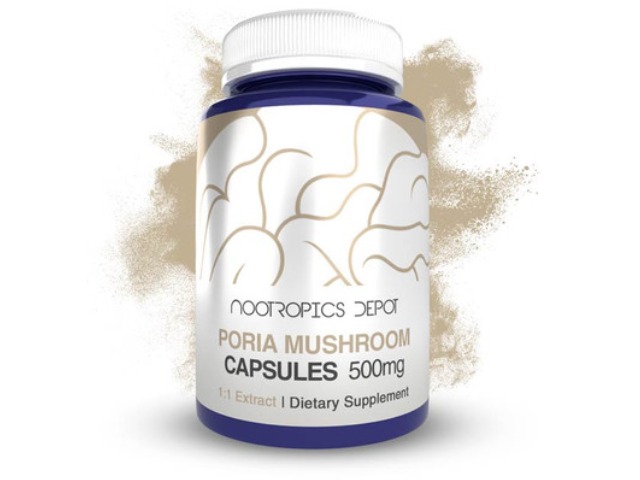
Disclosure: These are affiliate links. I earn a small commission if you purchase — at no extra cost to you. I only recommend products I personally use or have thoroughly researched.
Research & Studies
This section includes 5 peer-reviewed studies referenced in our analysis.