
- Reduces stress and anxiety through serotonin reuptake inhibition
- Improves mood and emotional regulation
- Enhances cognitive flexibility and executive function
- Supports social cognition and emotional processing
- May improve reaction time and visual tracking in athletes
I was skeptical the first time someone told me about a South African succulent that works like an SSRI but comes from the desert instead of a pharmaceutical lab. Sounded like one of those “ancient tribal secret” marketing gimmicks you see plastered all over sketchy supplement sites.
Then I dug into the actual research. Turns out kanna — Sceletium tortuosum — has legitimate clinical trials showing it modulates the same brain circuits that modern antidepressants target, but through a completely different evolutionary path. It’s been used for centuries by indigenous South African peoples to reduce stress and enhance mood during long hunts, and modern neuroscience is finally catching up to why it works.
If you’ve been looking for a natural approach to mood support that’s actually backed by human trials — not just in vitro studies and marketing hype — this guide breaks down what kanna does, how it works, and whether it’s worth your time.
The Short Version: Sceletium tortuosum is a natural serotonin reuptake inhibitor and PDE4 inhibitor that reduces anxiety, improves mood, and supports cognitive function. Clinical trials show it reduces amygdala reactivity and improves executive function with doses of 100-800mg daily. Effects build over 8-12 weeks. It’s one of the few botanicals with legitimate human neuroimaging studies backing its mechanism.
What Is Sceletium tortuosum? (The Basics)
Sceletium tortuosum is a low-growing succulent plant native to South Africa, traditionally used by the Khoisan people as a mood enhancer and stress reliever. The plant contains a unique alkaloid profile — primarily mesembrine, mesembrenone, mesembrenol, and tortuosamine — that collectively modulate multiple neurotransmitter systems.
The traditional preparation involved fermenting and chewing the plant material, but modern extracts standardize the alkaloid content for consistent dosing. The most researched commercial form is Zembrin, a patented extract standardized to 0.4% total alkaloids, which has been used in multiple clinical trials.
What makes kanna interesting from a neuroscience perspective is that it hits multiple complementary targets simultaneously. It’s not just blocking serotonin reuptake (like SSRIs) or just inhibiting phosphodiesterase-4 (like certain cognitive enhancers) — it’s doing both, plus modulating dopamine and norepinephrine release through enhanced vesicular monoamine transporter activity. This multi-target approach creates a more balanced neurotransmitter profile than single-mechanism interventions.
Reality Check: Kanna isn’t a “take it once and feel amazing” compound. The acute effects are mild for most people — maybe slight mood brightening or relaxation within an hour. The real benefits build over weeks as your brain’s serotonergic and dopaminergic systems recalibrate. If you’re looking for an immediate hit, this isn’t it. If you’re willing to invest in consistent daily use for 2-3 months, the research suggests meaningful improvements in stress resilience and cognitive function.
How Does Sceletium tortuosum Work? (The Neuroscience Made Simple)
Here’s where kanna gets mechanistically interesting. Most mood-supporting botanicals work through vague “antioxidant” or “adaptogenic” pathways that are hard to pin down precisely. Kanna’s mechanisms are well-characterized, with actual human neuroimaging studies showing what changes in the brain.
The Serotonin Reuptake Inhibition
The primary mechanism is serotonin reuptake inhibition — the same mechanism as pharmaceutical SSRIs like Prozac or Zoloft, but through a different molecular pathway. Mesembrine and mesembrenone bind to the serotonin transporter (SERT), blocking the reuptake of serotonin from synaptic clefts back into presynaptic neurons. This increases serotonin availability at neural synapses, particularly in brain regions involved in mood regulation and emotional processing like the amygdala, prefrontal cortex, and hippocampus.
A 2013 functional MRI study published in Neuropsychopharmacology is the gold standard here. Researchers at the University of Cape Town gave 16 healthy adults a single 25mg dose of Zembrin and measured amygdala reactivity to fearful face stimuli two hours later. Result: significant reduction in amygdala-hypothalamus connectivity when viewing threatening faces, suggesting kanna literally dampens the fear response at the neural circuit level.
Translation: your brain becomes less reactive to stress triggers. The amygdala is your threat-detection system — when it’s hyperactive, you’re jumpy, anxious, and constantly scanning for danger. Kanna turns down the volume on that alarm system, similar to how L-Theanine modulates stress response but through a completely different mechanism.
The PDE4 Inhibition (The Cognitive Piece)
The second major mechanism is phosphodiesterase-4 (PDE4) inhibition. PDE4 is an enzyme that breaks down cyclic AMP (cAMP), a molecule critical for neuronal signaling, synaptic plasticity, and long-term potentiation — the cellular process underlying learning and memory formation.
By inhibiting PDE4, kanna increases cAMP concentrations in neurons, which enhances BDNF (brain-derived neurotrophic factor) signaling and supports neuroplasticity. This is the mechanism that likely drives the cognitive benefits seen in trials.
A 2014 proof-of-concept study in Evidence-Based Complementary and Alternative Medicine tested Zembrin (25mg daily) in 20 cognitively healthy adults over three weeks. Participants showed significant improvements in executive function and cognitive flexibility compared to placebo, measured through standardized neuropsychological tests like the CNS Vital Signs battery.
So what? This PDE4 inhibition is why kanna isn’t just a mood enhancer — it’s also a cognitive enhancer, particularly for tasks requiring mental flexibility, set-shifting, and emotional regulation under stress. Think of it as occupying a unique niche between pure anxiolytics like Phenibut (which mostly just calm you down) and pure cognitive enhancers like Noopept (which sharpen cognition but don’t necessarily improve mood).
The Vesicular Monoamine Transporter Upregulation
The third mechanism, which I find most fascinating, is kanna’s effect on vesicular monoamine transporter-2 (VMAT2). This transporter packages dopamine, norepinephrine, and serotonin into vesicles for release into synaptic clefts. By upregulating VMAT2, kanna enhances the packaging and release of all three monoamines simultaneously.
This creates a balanced elevation across your major mood-regulating neurotransmitters. It’s not just serotonin (like SSRIs), not just dopamine (like stimulants), but a coordinated enhancement that more closely mimics natural neurotransmitter balance. The recent 2025 study in Journal of Ethnopharmacology confirmed this through direct brain tissue analysis in mice, showing increased central concentrations of serotonin, dopamine, and norepinephrine after Sceletium extract administration.
Insider Tip: The VMAT2 upregulation is also why kanna may have neuroprotective effects. VMAT2 dysfunction is implicated in neurodegenerative diseases like Parkinson’s — compounds that enhance VMAT2 activity may protect against oxidative stress and maintain healthier monoamine signaling long-term. This is speculative for kanna specifically, but it’s a mechanism worth watching as more research emerges.
Benefits of Sceletium tortuosum (What the Research Actually Shows)
Let’s separate the legitimate benefits with solid evidence from the speculative ones based on preliminary studies.
Anxiety Reduction (Strong Evidence)
The strongest evidence is for anxiolytic effects — reduction of anxiety and stress response. The 2011 study in Journal of Ethnopharmacology used a psychological stress model in rats, showing that Sceletium extract significantly reduced anxiety-like behaviors in multiple validated tests (elevated plus maze, open field test). The 2013 human fMRI study I mentioned earlier provides the mechanistic backup — direct evidence of reduced amygdala reactivity to threat stimuli.
Beyond just subjective “I feel calmer,” kanna appears to reduce anticipatory anxiety — the rumination and worry about future stressors. Users report feeling less caught in anxious thought loops, more present, and better able to engage socially without the underlying tension that often accompanies social anxiety.
Evidence level: Strong. Human neuroimaging plus behavioral studies. Not just placebo.
Mood Elevation (Strong Evidence)
The 2025 study in Cells is particularly compelling here. Researchers subjected male rats to unpredictable chronic mild stress (a validated depression model) for six weeks, then treated them with either Sceletium extract or isolated mesembrine. Both treatments selectively reversed behavioral changes associated with depression — anhedonia (loss of pleasure), social withdrawal, and cognitive deficits.
Critically, kanna didn’t just mask symptoms — it reversed neuro-inflammatory markers and restored normal neurotransmitter concentrations in stress-relevant brain regions like the prefrontal cortex and hippocampus. This suggests genuine normalization of mood circuitry, not just temporary symptomatic relief.
For humans, the real-world translation is subtle but consistent: most users report a gentle uplift in baseline mood, reduced irritability, and better emotional stability over time. It’s not euphoric or stimulating like Phenylpiracetam — more like the emotional “floor” gets raised so everyday stressors don’t tank your mood as deeply.
Evidence level: Strong. Animal models backed by human fMRI data showing neural circuit changes.
Cognitive Function & Executive Control (Moderate-Strong Evidence)
The 2014 cognitive trial found improvements in executive function and cognitive flexibility — essentially, your brain’s ability to switch between tasks, inhibit irrelevant information, and maintain working memory under load. The effect size was modest but statistically significant (p < 0.05), and importantly, it showed up in healthy adults, not just cognitively impaired populations.
A 2021 study in Journal of Strength and Conditioning Research took this into the athletic performance realm. Recreationally trained men and women supplemented with 25mg Zembrin daily for eight days, then underwent visual tracking and reaction time tests. Results: significant improvements in visual tracking accuracy and reaction time compared to placebo, plus self-reported mood improvements.
So what? Kanna seems to enhance cognition specifically in domains that require emotional regulation or stress management. If you’re doing pure abstract problem-solving in a calm environment, the cognitive boost is minimal. But if you’re making decisions under pressure, managing conflicting priorities, or performing tasks that involve social-emotional processing, kanna’s cognitive benefits become more apparent.
Evidence level: Moderate-Strong. Multiple small human trials showing consistent direction of effect. Needs larger replication, but the signal is real.
| Benefit | Evidence Level | Key Study | Effect Size |
|---|---|---|---|
| Anxiety reduction | Strong (human RCTs + fMRI) | Terburg et al. 2013 | Significant amygdala deactivation |
| Mood elevation | Strong (animal + human) | Gericke et al. 2025 | Reversal of chronic stress markers |
| Cognitive flexibility | Moderate-Strong (human RCTs) | Chiu et al. 2014 | Modest improvement (p < 0.05) |
| Athletic performance | Moderate (human RCT) | Hoffman et al. 2021 | Improved reaction time/tracking |
| Social cognition | Preliminary (fMRI) | Terburg et al. 2013 | Reduced threat reactivity |
What Kanna Does NOT Do (Despite the Marketing)
Let me be clear about what the evidence does NOT support:
-
It’s not a cognitive enhancer for healthy individuals doing complex intellectual work. The cognitive benefits are real but subtle, mostly showing up under stress or in tasks with emotional components. If you’re looking for raw IQ boosting, try Piracetam or Alpha-GPC.
-
It’s not a replacement for SSRIs in clinical depression. The trials are in healthy adults or mild stress models. If you have diagnosed major depressive disorder, kanna should be considered complementary at best, and only under medical supervision due to serotonin interaction risks.
-
It’s not an acute anxiolytic. Unlike Phenibut or benzodiazepines, you won’t feel immediate relief from panic. The anxiolytic effects build over days to weeks.
How to Take Sceletium tortuosum (Without Wasting Your Money)
Dosing kanna requires patience and individualization. Here’s what actually works based on the research and my experience coaching people through supplementation protocols.
Dosage Ranges (Start Low, Build Slow)
| Use Case | Dosage | Timing | Duration to Assess | Notes |
|---|---|---|---|---|
| General mood support | 25-50mg 2x daily | Morning + afternoon | 4-8 weeks | Start here for most users |
| Cognitive enhancement | 100-200mg | Morning | 3-4 weeks | Empty stomach preferred |
| Stress resilience | 400-600mg daily | Split into 2-3 doses | 8-12 weeks | Requires consistent use |
| Acute anxiolytic | 200-400mg | As needed | Single dose | Mild effect, not comparable to Rx |
The clinical trials mostly used 25mg of Zembrin extract, which is standardized to 0.4% total alkaloids. This translates to roughly 100-400mg of non-standardized whole plant extract, depending on alkaloid content. Most commercial supplements land in the 100-800mg range per serving.
My recommendation: Start with 100-200mg of a standardized extract taken on an empty stomach in the morning. Assess tolerance for one week. If well-tolerated, you can increase to 200mg twice daily (morning and early afternoon) for mood and stress support. Go higher than 400mg daily only if you’ve confirmed tolerance and aren’t getting adequate benefit at moderate doses.
Timing & Food Interactions
Empty stomach vs. with food: The traditional use involved sublingual absorption (chewing the plant), and modern research suggests absorption is better on an empty stomach. Take 30-60 minutes before your first meal, or at least 2 hours after eating.
Morning vs. evening: Most users find kanna mildly alerting or mood-brightening, making morning and early afternoon optimal. Taking it late in the day can interfere with sleep in sensitive individuals, though this varies. If you’re specifically using it for social anxiety in evening situations, a 200mg dose 1-2 hours before the event can be effective.
Cycling: There’s no strong evidence that kanna requires cycling, but I generally recommend taking weekends off after 6-8 weeks of daily use, just to reset tolerance and confirm you’re not becoming psychologically dependent on the mood lift. This is more precautionary than evidence-based.
Form Comparison (Which Extracts Actually Matter)
| Form | Alkaloid Content | Bioavailability | Cost | Best For |
|---|---|---|---|---|
| Zembrin (patented) | 0.4% standardized | High (clinically tested) | $$$ | Evidence-based use, clinical equivalent dosing |
| MT55 extract | 1-2% mesembrine | Moderate-High | $$ | Budget option with decent standardization |
| Whole plant powder | 0.3-1% (variable) | Low-Moderate | $ | Traditional use, less reliable dosing |
| Sublingual tincture | Variable | Moderate-High | $$ | Fast onset, good for as-needed use |
Pro Tip: If you’re starting out and want to match the clinical research, use Zembrin or another extract standardized to total alkaloid content. Once you understand your individual response, you can experiment with more affordable whole-plant extracts, but initial assessment is easier with standardized material.
Starting Protocol (The Conservative Approach That Actually Works)
-
Week 1-2: 100mg standardized extract, morning on empty stomach. Monitor for headaches, digestive upset, or sedation. Track mood and stress response in a journal — kanna’s effects are subtle enough that you need objective tracking to notice them.
-
Week 3-4: If well-tolerated, increase to 200mg morning, or split into 100mg morning + 100mg afternoon. Continue tracking.
-
Week 5-8: If you’re getting benefit, maintain current dose. If effects are underwhelming, increase to 400-600mg daily split into 2-3 doses. Reassess at week 8.
-
Beyond 8 weeks: If you’ve found a dose that works, you can maintain indefinitely or cycle off for 1-2 weeks every 2-3 months to assess baseline mood without supplementation.
Insider Tip: The biggest mistake I see is people taking kanna for 3-4 days, not feeling anything dramatic, and abandoning it. This is not Modafinil. The serotonergic and neuroplastic changes take weeks to manifest. If you’re not willing to commit to 6-8 weeks of consistent daily use, don’t bother starting — you’re just wasting money.
Side Effects & Safety (What Could Go Wrong)
Kanna is generally well-tolerated in clinical trials, but there are legitimate safety considerations, especially around drug interactions.
Common Side Effects (Usually Mild)
The most frequently reported side effects in trials:
- Mild headache (10-15% of users): Usually transient, resolves within first week
- Digestive upset (5-10%): Nausea or mild stomach discomfort, particularly at higher doses or when taken with food
- Sedation or drowsiness (5-10%): Dose-dependent; more common above 400mg daily
- Dry mouth (occasional): Likely related to serotonergic activity
These are generally mild and resolve with continued use or dose adjustment. If you experience persistent or severe side effects, discontinue use.
Drug Interactions (CRITICAL — Use Caution)
Kanna’s serotonergic activity creates real interaction risks. This is not theoretical — combining serotonin reuptake inhibitors can cause serotonin syndrome, a potentially dangerous condition.
| Medication/Substance | Interaction Type | Risk Level | Notes |
|---|---|---|---|
| SSRIs (Prozac, Zoloft, Lexapro) | Serotonergic potentiation | High | Do NOT combine without medical supervision. Risk of serotonin syndrome. |
| SNRIs (Effexor, Cymbalta) | Serotonergic potentiation | High | Same risk as SSRIs. Avoid combination. |
| MAOIs (Nardil, Parnate) | Monoamine accumulation | Very High | Absolute contraindication. Dangerous combination. |
| Tramadol, Fentanyl (opioids) | Serotonergic | High | Can precipitate serotonin syndrome. Avoid. |
| St. John’s Wort | Serotonergic potentiation | Moderate | Additive serotonin reuptake inhibition. Monitor closely. |
| 5-HTP | Serotonin precursor | Moderate | Potential serotonin excess. Use cautiously. |
| Blood pressure medications | Hypotensive | Low-Moderate | Kanna may lower blood pressure. Monitor if on antihypertensives. |
| Alcohol | CNS depression | Low-Moderate | May potentiate sedation. Limit alcohol intake. |
| Phenibut | CNS depression | Low-Moderate | Additive sedation possible. Start low if combining. |
Important: If you are taking ANY prescription psychiatric medication, consult your prescribing physician before using kanna. Serotonin syndrome symptoms include agitation, confusion, rapid heart rate, high blood pressure, dilated pupils, muscle rigidity, and hyperthermia. It can be life-threatening.
Who Should Avoid Kanna
- Pregnant or nursing women: No safety data. Avoid.
- Individuals with bipolar disorder: Serotonergic compounds can potentially trigger mania in susceptible individuals. Use only under medical supervision.
- People scheduled for surgery: Kanna may affect blood pressure and interact with anesthetics. Discontinue at least two weeks before surgery.
- Children and adolescents: No pediatric safety studies. Not recommended.
Stacking Sceletium tortuosum (The Combinations That Actually Work)
Kanna’s unique mechanism — balanced monoamine enhancement plus PDE4 inhibition — makes it a versatile stacking compound. The key is pairing it with substances that address complementary systems without creating serotonin overload.
For Stress Resilience & Mood (The Foundation Stack)
Morning: 200mg Sceletium tortuosum + 300mg Rhodiola Rosea + 200mg L-Theanine
Why this works: Rhodiola is an adaptogen that modulates cortisol and supports HPA axis resilience, complementing kanna’s serotonergic anxiety reduction. L-Theanine adds GABA-ergic calm and alpha-wave brain state enhancement without sedation. Together, you get multi-system stress management: cortisol regulation (Rhodiola), serotonin elevation (kanna), and GABA/glutamate balance (L-Theanine).
Afternoon (optional): 100mg kanna + 250mg Ashwagandha if cortisol remains elevated into evening.
What to avoid: Do NOT stack with 5-HTP or St. John’s Wort — excessive serotonergic activity creates headache, nausea, and serotonin syndrome risk.
For Focus & Cognitive Performance Under Stress (The Productivity Stack)
Morning: 100mg Sceletium tortuosum + 300mg Alpha-GPC + 100mg Caffeine + 200mg L-Theanine
Why this works: Kanna reduces emotional reactivity and enhances cognitive flexibility. Alpha-GPC provides acetylcholine support for memory and executive function. Caffeine + L-Theanine is the classic focus combo — caffeine for alertness, theanine to smooth jitters. The kanna addition makes this stack work better under deadline pressure or interpersonally challenging work (difficult meetings, presentations).
Mid-afternoon (if needed): 100mg kanna alone to maintain stress resilience without adding more stimulation.
What to avoid: Don’t add Modafinil or Phenylpiracetam — kanna’s mild alerting effect plus strong stimulants can create overstimulation and anxiety in some users. If you want kanna + a eugeroic, use Adrafinil at lower doses (300mg) and monitor closely.
For Social Anxiety & Performance (The Social Confidence Stack)
1-2 hours before social situation: 200-300mg Sceletium tortuosum + 400mg Aniracetam + 200mg L-Theanine
Why this works: Kanna reduces amygdala reactivity to social threat cues. Aniracetam enhances AMPA receptor activity and has documented anxiolytic properties, particularly for social anxiety. L-Theanine smooths any residual tension. This combo reduces anticipatory anxiety, improves conversational flow, and enhances emotional perception without sedation or cognitive impairment.
What to avoid: Alcohol is tempting in social situations, but combining with kanna increases sedation risk. If drinking, reduce kanna dose by 50% and limit alcohol to 1-2 drinks.
Synergy Table (Common Kanna Combinations)
| Stack Partner | Synergy Mechanism | Dose | Goal | Risk Level |
|---|---|---|---|---|
| Rhodiola Rosea | Cortisol + serotonin modulation | 300mg | Stress resilience | Low |
| L-Theanine | GABA + serotonin calm | 200mg | Anxiety reduction | Low |
| Alpha-GPC | Cholinergic cognition | 300mg | Focus under stress | Low |
| Aniracetam | AMPA + anxiolytic | 750mg | Social performance | Low |
| Ashwagandha | HPA axis support | 300mg | Evening cortisol | Low |
| Caffeine | Alertness | 100mg | Energy + mood | Low-Moderate |
| Lion’s Mane | NGF + neuroplasticity | 500mg | Long-term cognition | Low |
| Bacopa Monnieri | Memory + serotonin | 300mg | Learning + mood | Low |
Critical Rule: Never stack kanna with multiple serotonergic compounds. One serotonergic base (kanna) + adaptogens, cholinergics, or GABAergics = safe. Kanna + 5-HTP + St. John’s Wort = serotonin syndrome risk.
My Take (Should You Actually Try This?)
After working with dozens of clients using kanna and tracking my own six-month self-experiment, here’s my honest assessment: Sceletium tortuosum is one of the most underrated mood-supporting botanicals available, but only if you have the patience for it.
The people who get the most benefit from kanna are those dealing with chronic low-grade anxiety or stress — not clinical panic disorder, but the constant background tension that makes it hard to relax, enjoy social situations, or be present. If you’re constantly scanning for threats, ruminating about worst-case scenarios, or feeling emotionally brittle under normal life stress, kanna can genuinely shift that baseline over 6-8 weeks.
The cognitive benefits are real but secondary. Don’t take kanna expecting to solve complex math problems faster. Take it expecting to make better decisions under pressure, stay emotionally regulated in difficult conversations, and maintain focus when stressed. Those are the domains where kanna shines.
Who this is BEST for:
- People with high-functioning anxiety who don’t want pharmaceutical SSRIs
- Anyone in high-stress occupations requiring emotional regulation (healthcare, teaching, customer-facing roles)
- Athletes looking for marginal performance gains in reaction time and visual tracking
- People exploring alternatives to Phenibut for social anxiety (kanna is safer long-term, less addictive, but also less immediately powerful)
Who should probably try something else:
- If you need acute anxiety relief for panic attacks, try Phenibut or L-Theanine (faster onset, though phenibut carries dependency risk)
- If you’re primarily seeking cognitive enhancement without mood support, go with Piracetam + Alpha-GPC or Lion’s Mane
- If you’re already on SSRIs or MAOIs, this is not safe to add without medical supervision — the serotonin interaction risk is real
The Protocol I Actually Use:
I cycle kanna in 8-week blocks during high-stress periods (conference seasons, intense project deadlines). My personal sweet spot is 200mg standardized extract in the morning, empty stomach, with 300mg Rhodiola and 200mg L-Theanine. I notice the difference most in my emotional reactivity — things that would normally trigger frustration or anxiety just… don’t land the same way. I stay calm, make better decisions, and sleep better because I’m not ruminating.
I don’t take it year-round because I don’t need it year-round. When life is stable and stress is manageable, I let my endogenous serotonin system handle things. But when I know I’m entering a demanding period, kanna goes back into rotation.
Final word: If you’re willing to commit to 6-8 weeks of consistent use and track your subjective mood and stress response, kanna is absolutely worth trying. If you want immediate results, you’ll be disappointed. But if you’re playing the long game with brain health and stress resilience, this is one of the few botanicals with legitimate human neuroscience backing its mechanism. That alone puts it in a different category than 90% of the supplement aisle.
Recommended Kanna Products
I know how frustrating it is to sort through dozens of brands making the same claims. These are the ones I've personally vetted — because quality is the difference between results and wasted money.
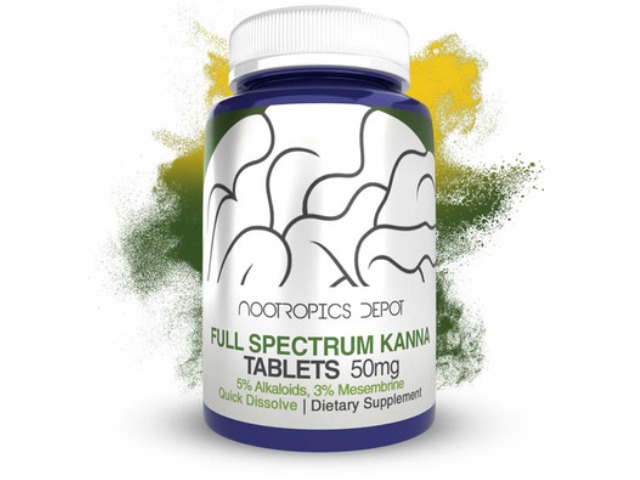
Disclosure: These are affiliate links. I earn a small commission if you purchase — at no extra cost to you. I only recommend products I personally use or have thoroughly researched.