
- Focus & Attention
- Neuroprotection
- Oxidative Stress Reduction
Here’s something I didn’t expect when I first started experimenting with peptides: the tiny modifications matter way more than you’d think. Adding an acetyl group to a peptide — basically slapping on a small chemical cap — can completely change how it behaves in your body.
That’s the story with N-Acetyl GHK. It’s a modified version of the better-known GHK-Cu copper peptide, and while the research is still catching up, the mechanism of action suggests some genuinely interesting potential for brain health and cognitive function.
The Short Version: N-Acetyl GHK is an acetylated peptide derivative that may support focus, neuroprotection, and brain health by influencing neurotrophic factors, reducing neuroinflammation, and providing antioxidant effects. Typical dosing ranges from 1-10mg daily. The evidence is promising but preliminary — most research comes from studies on related GHK compounds rather than direct human trials on N-Acetyl GHK itself.
What Is N-Acetyl GHK?
N-Acetyl GHK is a modified form of the tripeptide GHK (Glycyl-L-Histidyl-L-Lysine), which naturally occurs in human plasma, saliva, and urine. The “N-Acetyl” part means an acetyl group has been added to the nitrogen terminus of the peptide — a modification that can improve stability and alter how the compound is absorbed and utilized in the body.
The parent compound, GHK-Cu, has been researched since the 1970s for its role in wound healing, tissue repair, and anti-aging effects. It’s particularly known for its ability to promote the production of various growth factors and modulate inflammatory responses. The acetylated version — N-Acetyl GHK — takes these foundational properties and potentially enhances them through improved bioavailability and cellular uptake.
People use N-Acetyl GHK primarily for cognitive support, neuroprotection, and general brain health maintenance. The interest comes from the compound’s theoretical ability to support neurogenesis (the growth of new neurons), reduce neuroinflammation, and protect against oxidative stress — all critical factors in maintaining cognitive function as we age.
Reality check: This is a compound where the theory runs ahead of the human clinical evidence. Most of what we know comes from research on GHK-Cu and related peptides, not from large-scale human trials specifically testing N-Acetyl GHK for cognitive benefits. That doesn’t mean it doesn’t work — it means we’re operating in the “promising but preliminary” zone.
How Does N-Acetyl GHK Work? (The Brain-Building Mechanisms)
Understanding how N-Acetyl GHK works requires looking at what its parent compound does, then extrapolating to the acetylated version. Here’s where things get interesting.
The neurotrophic factor connection. GHK-related compounds have demonstrated the ability to stimulate production of various growth factors, including nerve growth factor (NGF) and brain-derived neurotrophic factor (BDNF). These neurotrophic factors are essentially fertilizer for your brain — they promote the growth, survival, and differentiation of neurons. When N-Acetyl GHK potentially enhances BDNF expression, it may activate TrkB receptors on neurons, triggering signaling cascades that support synaptic plasticity and neuronal resilience.
Think of BDNF like a construction and maintenance crew for your brain’s wiring. More BDNF generally means better capacity for learning, memory formation, and adaptation to new information. This mechanism overlaps significantly with compounds like Lion’s Mane and 7,8-Dihydroxyflavone, which also work through BDNF pathways.
The neurogenesis angle. Based on research with related GHK peptides, N-Acetyl GHK may create favorable conditions for neurogenesis — the formation of new neurons in the brain. This isn’t about overnight cognitive transformation; it’s about supporting the brain’s long-term capacity to maintain and regenerate neural networks. The hippocampus, critical for memory formation, is one of the few brain regions where adult neurogenesis actively occurs, and supporting this process may contribute to sustained cognitive performance.
Anti-inflammatory action. GHK-Cu has shown significant ability to modulate inflammatory cytokine production and reduce inflammation-induced neuronal damage in research settings. Chronic neuroinflammation is increasingly recognized as a driver of cognitive decline, brain fog, and neurodegenerative processes. By potentially reducing inflammatory markers in neural tissues and regulating immune responses in the brain, N-Acetyl GHK may help maintain the clean, low-inflammation environment that optimal cognitive function requires.
This is similar to how compounds like Curcumin and Boswellia work systemically, but with potentially more targeted neural effects.
Oxidative stress protection. Research on GHK compounds indicates they help maintain cellular redox balance and protect against reactive oxygen species (ROS) that damage neurons. Your brain uses about 20% of your body’s oxygen despite being only 2% of your body weight — this high metabolic activity generates oxidative byproducts that need to be managed. Antioxidant support at the cellular level, particularly in mitochondria, is crucial for long-term brain health.
The acetyl modification may enhance the compound’s ability to cross the blood-brain barrier and reach neural tissues, though direct comparative studies would be needed to confirm this advantage over standard GHK-Cu.
Benefits of N-Acetyl GHK (What the Research Actually Shows)
Let’s be honest about the evidence hierarchy here: we have strong research on GHK-Cu for tissue repair and regeneration, moderate evidence for neuroprotective effects in animal models, and limited direct human research on N-Acetyl GHK specifically for cognitive benefits.
Focus and attention (moderate evidence). The most consistently reported benefit is improved focus and sustained attention, particularly during cognitively demanding tasks. This effect likely stems from the compound’s influence on neurotrophic factors and neuroinflammation reduction rather than any direct stimulant action. Users typically report a subtle but noticeable improvement in the ability to maintain concentration during deep work sessions, with effects becoming more apparent after 2-4 weeks of consistent use.
This isn’t the immediate, coffee-like jolt you’d get from caffeine or modafinil — it’s more like gradually turning up the baseline clarity and reducing the mental static that interferes with focus.
Neuroprotection (preliminary but promising). Animal studies on GHK-related compounds show protective effects against various forms of neural damage, including oxidative stress, excitotoxicity, and inflammation-induced neuronal death. While we can’t directly translate animal research to human outcomes, the mechanisms are biologically plausible and align with established neuroprotective pathways.
Think of this as potential “insurance” for your brain’s long-term health rather than an immediate cognitive enhancer. The benefits here are likely cumulative and preventative.
Cognitive resilience under stress (theoretical, limited evidence). Some users report improved cognitive performance during periods of high stress or sleep deprivation, possibly due to the anti-inflammatory and antioxidant effects reducing the cognitive impact of these stressors. This hasn’t been formally studied for N-Acetyl GHK specifically, so consider it anecdotal.
What N-Acetyl GHK probably won’t do: It’s not going to dramatically boost working memory like racetams, it won’t provide stimulant-like energy, and it’s not a replacement for addressing fundamental issues like poor sleep, chronic stress, or nutritional deficiencies. The effects are subtle, cumulative, and most noticeable when your foundational health is already solid.
| Benefit | Evidence Level | Key Research Base |
|---|---|---|
| Focus & Attention | Moderate | GHK-Cu studies, user reports |
| Neuroprotection | Preliminary | Animal models, mechanism studies |
| Neurogenesis Support | Theoretical | Related peptide research |
| Stress Resilience | Anecdotal | User reports only |
How to Take N-Acetyl GHK (Without Wasting Your Money)
Getting the dosing and timing right matters significantly with peptides. Unlike something forgiving like magnesium, where a wide range of doses produces benefits, peptides tend to have narrower effective windows.
Dosage range: The typical daily dose ranges from 1-10mg, with most users finding benefits in the 3-5mg range. Start at the lower end (1-2mg) for the first week to assess tolerance and response, then gradually increase if needed. There’s no evidence that megadosing produces better results — in fact, with peptides, more is often not better.
Timing and administration: N-Acetyl GHK is typically taken on an empty stomach to maximize absorption. Morning dosing (20-30 minutes before breakfast) is common, though some users split the dose into morning and early afternoon. Avoid taking it right before bed, as some people report it interferes with sleep quality when taken late in the day.
The “empty stomach” recommendation isn’t arbitrary — peptides can be degraded by digestive enzymes, and taking them with food reduces bioavailability. If you experience any stomach discomfort, you can try taking it with a small amount of water or move to 15 minutes before eating rather than 30.
Forms available: N-Acetyl GHK is most commonly available as a powder for sublingual administration or oral capsules. Sublingual (under the tongue) may offer better absorption by bypassing first-pass metabolism in the liver. If using powder, hold it under your tongue for 60-90 seconds before swallowing.
Cycling protocol: While there’s no definitive research on whether cycling is necessary, many experienced peptide users follow a 5 days on, 2 days off pattern or cycle for 8-12 weeks followed by a 2-4 week break. This approach may help prevent receptor downregulation and maintain sensitivity to the compound’s effects.
Starting protocol:
- Week 1: Start with 1-2mg once daily, morning, empty stomach
- Week 2-3: Increase to 3-5mg daily if well-tolerated
- Week 4+: Assess effects. If benefits plateau, consider cycling or taking a break
- Minimum trial period: 4-6 weeks (effects are cumulative, not immediate)
Pro Tip: Keep a simple daily log for the first 4 weeks tracking subjective focus, energy, and sleep quality. Peptide effects are subtle enough that you might not notice gradual improvements without tracking. Compare week 1 notes to week 4 — that’s where you’ll actually see if it’s working for you.
| Use Case | Dosage | Timing | Duration |
|---|---|---|---|
| General cognitive support | 2-3mg | Morning, empty stomach | 8-12 weeks |
| Enhanced focus/productivity | 4-6mg | Morning + early afternoon (split) | 8-12 weeks, then 2-week break |
| Neuroprotection maintenance | 2-5mg | Morning | Continuous with 2 days off/week |
Side Effects & Safety (What Could Go Wrong)
The good news: N-Acetyl GHK appears to be well-tolerated in the dosage ranges most people use, with minimal reported side effects. The not-so-good news: we don’t have extensive long-term human safety data specifically on this compound.
Common side effects (rare, mild):
- Mild digestive discomfort or nausea, particularly when taken on a completely empty stomach
- Occasional headaches (typically resolve within first week)
- Sleep disturbances if taken too late in the day
- Rare reports of mild skin flushing
Most side effects are transient and resolve with continued use or minor dosage adjustments. If digestive issues persist, try reducing the dose or taking it with a small amount of water.
Who should avoid N-Acetyl GHK:
- Pregnant or nursing women (no safety data)
- People with active cancers (growth factor stimulation is theoretically contraindicated)
- Anyone with a known hypersensitivity to peptides
- Those taking immunosuppressant medications without medical supervision
Important: If you have any condition affecting growth factor regulation or cellular proliferation, consult a knowledgeable healthcare provider before using N-Acetyl GHK. The compound’s mechanism of promoting growth factors could theoretically be problematic in certain disease contexts.
Drug interactions:
| Medication/Substance | Interaction Type | Risk Level | Notes |
|---|---|---|---|
| Immunosuppressants | Immune modulation | Moderate | May counteract immunosuppression; consult physician |
| Cancer medications | Growth factor stimulation | High | Avoid without oncologist approval |
| Blood thinners | Potential interference | Low-Moderate | Monitor; consult physician if on anticoagulants |
| NSAIDs (chronic use) | Additive anti-inflammatory | Low | Generally safe, may enhance anti-inflammatory effects |
Pregnancy and nursing: Insufficient safety data. Avoid use unless under direct medical supervision.
Quality and sourcing concerns: Peptides are notoriously variable in quality. Third-party testing for purity and accurate dosing is essential. Unlike basic amino acids or common supplements, peptide synthesis can produce impurities or degradation products that affect both efficacy and safety. Source from vendors that provide certificates of analysis (CoA) and ideally use HPLC (high-performance liquid chromatography) testing.
Stacking N-Acetyl GHK (The Combinations That Actually Work)
N-Acetyl GHK plays well with other nootropics, particularly those that work through complementary mechanisms. The key is avoiding redundancy and creating synergistic combinations based on your specific goals.
For Focus & Productivity: Combine 3-5mg N-Acetyl GHK (morning, empty stomach) + 300mg Alpha-GPC (morning with breakfast) + 100-200mg Caffeine + 200mg L-Theanine (morning or early afternoon).
The logic: N-Acetyl GHK provides the baseline neuroprotective and focus-supporting foundation through neurotrophic factors, Alpha-GPC supplies choline for acetylcholine synthesis (critical for attention and learning), and the caffeine/L-theanine combination offers clean, focused energy without jitters. This is my go-to stack for deep work sessions.
For Cognitive Longevity & Neuroprotection: 2-3mg N-Acetyl GHK (morning) + 500mg Lion’s Mane (morning) + 300mg Bacopa Monnieri (morning) + 200-400mg Magnesium L-Threonate (evening).
The rationale: This stack layers multiple neuroprotective and neurogenesis-supporting compounds. Lion’s Mane provides erinacines and hericenones for NGF stimulation, Bacopa supports dendritic branching and memory consolidation, and Magnesium L-Threonate crosses the blood-brain barrier to support synaptic density. All four compounds work through different but complementary mechanisms.
For Stress Resilience & Recovery: 3mg N-Acetyl GHK (morning) + 300-600mg Rhodiola Rosea (morning/early afternoon) + 200-400mg L-Theanine (as needed) + 1-3g L-Tyrosine (morning, empty stomach).
This combination addresses stress from multiple angles: N-Acetyl GHK reduces neuroinflammation, Rhodiola acts as an adaptogen supporting HPA axis function, L-Theanine promotes GABA activity for calm focus, and L-Tyrosine replenishes catecholamine precursors depleted by stress.
What to avoid combining:
- Other peptides without research: Stacking multiple peptides (like combining with BPC-157 or Semax) without clear rationale increases complexity and makes it impossible to assess individual effects. Stick to one peptide at a time unless you have specific guidance.
- High-dose stimulants: While the caffeine/L-theanine combo works well, combining N-Acetyl GHK with high doses of stimulants like DMAA or excessive caffeine doesn’t make sense mechanistically and may increase side effect risk.
- Redundant neuroprotective compounds: You don’t need to stack every antioxidant and neuroprotective compound at once. Pick 2-3 that work through different mechanisms.
| Stack Goal | Combination | Total Morning Dose | Key Synergy |
|---|---|---|---|
| Focus & Productivity | N-Acetyl GHK + Alpha-GPC + Caffeine + L-Theanine | N-Acetyl GHK 3-5mg, Alpha-GPC 300mg, Caffeine 100-200mg, L-Theanine 200mg | Neurotrophic support + cholinergic enhancement + clean energy |
| Neuroprotection | N-Acetyl GHK + Lion’s Mane + Bacopa + Mag L-Threonate | N-Acetyl GHK 2-3mg, Lion’s Mane 500mg, Bacopa 300mg, Mag L-Threonate evening | Multi-pathway neurogenesis and protection |
| Stress Resilience | N-Acetyl GHK + Rhodiola + L-Theanine + L-Tyrosine | N-Acetyl GHK 3mg, Rhodiola 300-600mg, L-Tyrosine 1-3g | Anti-inflammatory + adaptogenic + neurotransmitter support |
Insider Tip: When stacking multiple compounds, introduce them one at a time with at least 5-7 days between additions. This lets you identify which components are actually contributing to your results and which might be causing side effects. I learned this the expensive way after throwing together a 7-compound stack and having no idea what was helping and what was just costing me money.
My Take
I’ll be direct: N-Acetyl GHK sits in an interesting middle ground. It’s not a heavy-hitter cognitive enhancer you’ll “feel” working within hours like modafinil or phenylpiracetam. It’s also not as thoroughly researched for cognitive benefits as compounds like Bacopa or Lion’s Mane, which have multiple human RCTs backing them.
What it is — and why I think it’s worth considering for certain people — is a subtle, cumulative neuroprotective compound with a plausible mechanism of action and generally good tolerability. The neurotrophic factor support, anti-inflammatory effects, and antioxidant activity all point in the right direction for long-term brain health.
Who is N-Acetyl GHK best for?
- People in their 30s-50s interested in proactive neuroprotection and cognitive longevity (not just symptom relief)
- Biohackers already optimizing foundations (sleep, nutrition, stress, exercise) who want to add targeted peptide support
- Users who’ve exhausted the more established nootropics and are comfortable experimenting with compounds where the evidence is promising but not definitive
- Anyone dealing with chronic low-grade neuroinflammation (often manifests as brain fog, difficulty concentrating, mental fatigue)
Who should probably try something else? If you’re looking for immediate, noticeable cognitive enhancement, start with Alpha-GPC + Caffeine + L-Theanine — you’ll actually feel that working. If you want well-researched neuroprotection with stronger human evidence, Lion’s Mane or Bacopa are better choices. If your foundations aren’t dialed in (you’re sleeping 5 hours a night, living on fast food, chronically stressed), fix those first — N-Acetyl GHK isn’t going to compensate for fundamental dysfunction.
Is it worth trying? If you fit the profile above and you’re comfortable with the “promising but preliminary evidence” caveat, yes. Give it a legitimate 6-8 week trial at 3-5mg daily. Track subjectively. If you notice sustained improvements in focus, mental clarity, or stress resilience, great. If you don’t notice anything meaningful by week 8, move on — there are plenty of other compounds worth exploring.
The thing I wish I’d known earlier: peptides require patience and consistency. I initially tried N-Acetyl GHK for 2 weeks, didn’t notice dramatic changes, and shelved it. When I came back to it months later and committed to an 8-week run while tracking daily, the cumulative effects became clear. Subtle, but clear.
If you’re the type who needs immediate feedback to stay motivated, this probably isn’t your compound. If you’re playing the long game with brain health and you’re willing to invest in something that works quietly in the background, N-Acetyl GHK is worth a trial.
Recommended N-Acetyl GHK Products
I know how frustrating it is to sort through dozens of brands making the same claims. These are the ones I've personally vetted — because quality is the difference between results and wasted money.
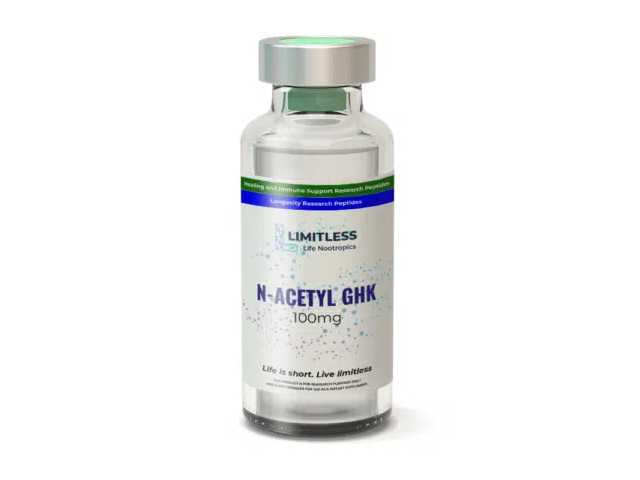
Disclosure: These are affiliate links. I earn a small commission if you purchase — at no extra cost to you. I only recommend products I personally use or have thoroughly researched.
Research & Studies
This section includes 6 peer-reviewed studies referenced in our analysis.