
- Focus & Attention
- Neuroinflammation reduction
- Oxidative stress protection
I’ll be honest: when I first came across Tetrahydromagnolol in the research literature, I thought it was a typo. The name sounds like something a pharmaceutical company’s random name generator spit out after a few too many espressos. But after digging into the pharmacology, I realized this magnolia bark metabolite represents something genuinely interesting — a compound that modulates both dopamine and cannabinoid receptors in ways that could theoretically support cognitive function without the downsides of traditional stimulants or full cannabinoid agonists.
The catch? Almost zero human research. We’re talking about a compound that shows promise in test tubes and animal models but hasn’t been properly studied in people. If you’re looking for a well-established nootropic with clear dosing protocols, this isn’t it. But if you’re interested in the cutting edge of phytochemical research and how plant compounds get metabolized into novel bioactive molecules, keep reading.
The Short Version: Tetrahydromagnolol is a metabolite of magnolia bark compounds (magnolol/honokiol) that acts as a partial agonist at dopamine D2 and CB2 cannabinoid receptors. Research suggests potential benefits for focus, neuroinflammation, and oxidative stress, but human studies are essentially nonexistent. No established dosing exists, and safety data is limited to preclinical work.
What Is Tetrahydromagnolol?
Tetrahydromagnolol is a metabolite — meaning it’s what your body creates when it breaks down other compounds. Specifically, it’s produced when you metabolize magnolol and honokiol, the two primary bioactive compounds found in Magnolia officinalis bark extract.
Magnolia bark has been used in traditional Chinese and Japanese medicine for centuries, primarily for anxiety and sleep support. The parent compounds — magnolol and honokiol — have been studied fairly extensively. But Tetrahydromagnolol is what happens after those compounds pass through your gut microbiome and liver metabolism. It’s chemically distinct from its parent molecules and appears to have different receptor activity.
The research interest kicked off in earnest around 2014 when a team at the University of Bonn discovered that Tetrahydromagnolol was a potent partial agonist at CB2 cannabinoid receptors — the same receptor system that CBD and other cannabinoids interact with. Unlike CB1 receptors (which produce the “high” from THC), CB2 receptors are primarily involved in immune function and neuroinflammation.
Here’s where it gets interesting: Tetrahydromagnolol also shows dopamine D2 receptor partial agonism. That dual action — cannabinoid and dopaminergic modulation — creates a unique pharmacological profile that doesn’t really match any other common nootropic.
Reality Check: This is not a compound you’re going to find at your local supplement shop. It’s not even commonly available as a standalone research chemical. Most people who experience its effects do so indirectly by taking magnolia bark extract and letting their body create the metabolite naturally. But even then, conversion rates vary wildly between individuals based on gut microbiome composition and liver enzyme activity.
How Does Tetrahydromagnolol Work? (The Pharmacology Gets Weird)
The mechanism of action here is genuinely fascinating if you’re into neurochemistry. Tetrahydromagnolol works through three primary pathways.
Dopamine D2 Partial Agonism
Partial agonists are one of the trickier concepts in pharmacology to wrap your head around. Unlike a full agonist (which maximally activates a receptor) or an antagonist (which blocks it), a partial agonist sits somewhere in the middle — it activates the receptor, but only to about 40-70% of maximum stimulation.
Why does this matter for cognition? The dopamine D2 receptor in the prefrontal cortex plays a critical role in working memory, executive function, and cognitive control. Too little dopamine activity and you get brain fog, poor motivation, and executive dysfunction. Too much and you risk agitation, impulsivity, and potentially psychomotor effects.
A partial agonist like Tetrahydromagnolol theoretically provides functional dopaminergic tone without overshooting into overstimulation. It’s the Goldilocks approach to dopamine modulation — enough to enhance prefrontal function, but self-limiting in a way that full agonists aren’t.
Translation: This could support focus and motivation through balanced dopamine signaling, similar to how L-Tyrosine provides dopamine precursors or how Bromantane upregulates dopamine synthesis, but through a different receptor-level mechanism.
CB2 Receptor Activation and Neuroinflammation
The CB2 cannabinoid receptor is primarily expressed in immune cells, including the microglia and astrocytes in your brain. When activated, CB2 receptors trigger anti-inflammatory signaling cascades that suppress pro-inflammatory cytokines like TNF-α, IL-1β, and IL-6.
A 2014 study in ACS Medicinal Chemistry Letters found that Tetrahydromagnolol activated CB2 receptors with notable potency while showing minimal activity at CB1 receptors (the ones responsible for psychoactive effects). This makes it fundamentally different from THC or even CBD, which has more complex polypharmacology.
The anti-inflammatory effects work through modulation of NF-κB signaling pathways — a central mechanism in neuroinflammatory responses. By dampening microglial activation and reducing inflammatory mediators in neural tissue, CB2 agonism could theoretically protect against neuroinflammation-driven cognitive decline.
In plain English: It might help calm down brain inflammation without making you feel stoned. That’s a meaningful distinction if you’re dealing with brain fog from chronic inflammation (which, in my experience, is way more common than people realize).
Antioxidant Properties
The molecular structure of Tetrahydromagnolol includes phenolic groups that can directly scavenge reactive oxygen species (ROS) and reduce lipid peroxidation in neural membranes. This is similar to the mechanism behind compounds like Resveratrol or Curcumin.
The antioxidant effects appear to be additive with the anti-inflammatory CB2 activity — you’re both reducing the production of inflammatory oxidative stress and neutralizing free radicals that do get generated.
Insider Tip: The relationship between neuroinflammation and oxidative stress is bidirectional. Inflammation creates oxidative stress, and oxidative stress triggers inflammation. Compounds that address both pathways simultaneously (like Tetrahydromagnolol appears to) can theoretically break that vicious cycle more effectively than targeting just one mechanism.
Benefits of Tetrahydromagnolol (What the Research Actually Shows)
Let’s be very clear about the evidence base here: there are no published human clinical trials specifically on Tetrahydromagnolol as a standalone compound. What we have is receptor binding data, enzyme assays, cell culture work, and a handful of animal studies on parent compounds.
That said, here’s what the available research suggests:
Focus & Attention (Moderate Evidence)
The dopamine D2 partial agonism provides a mechanistic rationale for cognitive enhancement, particularly in the domain of sustained attention and working memory. The 2014 Rempel study established that Tetrahydromagnolol binds to D2 receptors with meaningful affinity, though the functional behavioral outcomes haven’t been directly tested in humans.
Interestingly, a 2018 review in European Journal of Clinical Investigation discussed the biphasic cognitive effects of compounds with partial D2 agonism — low-to-moderate activation enhances prefrontal function, while excessive activation impairs it. Tetrahydromagnolol’s partial agonism profile theoretically keeps it in the beneficial range.
In practical terms: This might support focus and executive function through balanced dopaminergic modulation, but we don’t have human trial data to confirm dosing, effect sizes, or individual variability in response.
Neuroinflammation Reduction (Preliminary Evidence)
The CB2 receptor data is stronger. Multiple studies have confirmed CB2 activation suppresses neuroinflammatory markers in cell culture and animal models. The 2014 study found Tetrahydromagnolol to be a potent CB2 partial agonist, comparable to synthetic cannabinoids designed specifically for anti-inflammatory research.
A 2018 analysis in Human Psychopharmacology raised the question of whether magnolia metabolites might have abuse potential due to their cannabinoid activity, but concluded that CB2-selective compounds lack the rewarding properties of CB1 agonists. That’s reassuring from a safety perspective, but it doesn’t tell us much about anti-inflammatory efficacy in living humans.
Oxidative Stress Protection (Mechanistic Plausibility)
The antioxidant properties are well-established for the parent compounds magnolol and honokiol. Tetrahydromagnolol shares the core phenolic structure that confers free radical scavenging ability, though direct comparison studies haven’t been published.
Given that oxidative stress is implicated in everything from brain fog to neurodegenerative disease, antioxidant support is theoretically valuable. But without human dosing data, we can’t say whether Tetrahydromagnolol reaches sufficient concentrations in brain tissue to provide meaningful protection.
| Benefit | Evidence Level | Key Research |
|---|---|---|
| Focus & Attention | Mechanistic (D2 receptor binding) | Rempel et al. 2014 |
| Neuroinflammation reduction | Preclinical (CB2 activation) | Rempel et al. 2014 |
| Oxidative stress protection | Mechanistic (structural analogy) | Parent compound studies |
Reality Check: When a compound has “moderate evidence” but zero human trials, that’s science-speak for “this looks promising in the lab, but we’re basically guessing about what happens in people.” I’m not saying it doesn’t work — I’m saying we genuinely don’t know yet, and anyone claiming otherwise is overselling the data.
How to Take Tetrahydromagnolol (The Frustrating Lack of Data)
Here’s where things get tricky. There are no established human dosing protocols for Tetrahydromagnolol as a standalone compound. It’s not available as a purified supplement, and even if it were, we wouldn’t know the optimal dose.
What we can do is look at dosing for magnolia bark extracts (which your body converts to Tetrahydromagnolol) and extrapolate from preclinical receptor binding studies.
Magnolia Bark Extract Approach
Most magnolia bark supplements are standardized to 2-10% magnolol and honokiol content. Typical dosing ranges:
| Use Case | Extract Dose | Active Content | Timing | Notes |
|---|---|---|---|---|
| General anxiolytic/sleep support | 200-400mg | 4-40mg magnolol/honokiol | Evening | Standard supplementation |
| Higher-end cognitive support | 400-800mg | 8-80mg magnolol/honokiol | Morning or split dose | Upper range of common use |
The problem: We don’t know what percentage of ingested magnolol/honokiol gets converted to Tetrahydromagnolol, and that conversion is almost certainly variable based on individual gut microbiome composition.
If Tetrahydromagnolol Were Available as a Pure Compound
Based on receptor binding assays showing activity in the low micromolar range and extrapolating from similar partial agonists, a reasonable hypothesis might be 10-50mg as a starting range. But that’s pure speculation on my part. Do not take that as a dosing recommendation.
Timing & Food Interactions
Magnolia bark extracts are typically fat-soluble, so taking them with a meal containing some dietary fat likely improves absorption. Whether that applies to the metabolite is unknown.
Some users report mild sedative effects from magnolia bark (likely from honokiol’s GABA-A activity), which would suggest evening dosing. But if you’re specifically after the dopaminergic cognitive effects of Tetrahydromagnolol, morning dosing might make more sense.
Pro Tip: If you’re experimenting with magnolia bark extract as a Tetrahydromagnolol precursor, start at the low end (200mg standardized extract) and assess for at least 2 weeks before increasing. Metabolite production takes time, and you’re not going to “feel” this acutely like you would caffeine or modafinil.
Side Effects & Safety (What Could Go Wrong)
The honest answer: We don’t know. There are no human safety studies on isolated Tetrahydromagnolol.
What we can infer from parent compounds and mechanism of action:
Potential Concerns from Dopamine D2 Activity
Partial D2 agonists can theoretically cause:
- Nausea (common with dopaminergic compounds)
- Changes in appetite or motivation
- Sleep disruption if dosed too late in the day
- Potential interaction with dopaminergic medications
Potential Concerns from CB2 Activity
CB2-selective agonists are generally well-tolerated in research, but could theoretically:
- Modulate immune responses (which could be good or bad depending on context)
- Interact with other cannabinoid-containing supplements or medications
Who Should Avoid This
Given the lack of human data, I’d suggest avoiding magnolia bark extracts (and by extension Tetrahydromagnolol) if you:
- Are pregnant or nursing
- Have a dopamine-related movement disorder (Parkinson’s, etc.)
- Are taking antipsychotic medications (which block D2 receptors)
- Have a diagnosed immune disorder without medical guidance
Drug Interactions
| Medication/Substance | Interaction Type | Risk Level | Notes |
|---|---|---|---|
| Antipsychotics (haloperidol, risperidone, etc.) | Dopaminergic antagonism | Moderate-High | D2 partial agonism may reduce antipsychotic efficacy |
| L-DOPA / Dopamine agonists | Dopaminergic potentiation | Moderate | Could enhance or complicate dopaminergic effects |
| Benzodiazepines / GABA drugs | CNS depression (from parent compounds) | Low-Moderate | Additive sedation possible with magnolia bark |
| Immunosuppressants | Immune modulation | Unknown | CB2 activation affects immune signaling |
| Other cannabinoids (CBD, THC) | Cannabinoid receptor interaction | Low-Moderate | Additive CB2 effects theoretically possible |
Important: If you’re on any medication that affects dopamine, GABA, or immune function, talk to a healthcare provider before experimenting with magnolia extracts. The theoretical interaction risk is real, even if poorly characterized.
Stacking Tetrahydromagnolol (The Combinations That Might Work)
Since we’re mostly in theoretical territory here, I’ll approach this from a “what makes mechanistic sense” perspective rather than “here’s the proven protocol.”
For Focus & Cognitive Performance (The Dopaminergic Stack)
If you’re taking magnolia bark extract as a Tetrahydromagnolol precursor, you could theoretically combine it with:
- 300mg Alpha-GPC — provides choline for acetylcholine synthesis, complementing the dopaminergic effects
- 200mg L-Theanine — smooths out any potential dopaminergic activation without blunting the cognitive benefits
- 100-200mg Caffeine — synergistic attention enhancement through adenosine antagonism
Timing: Morning stack, taken with a meal containing some fat.
For Neuroinflammation & Brain Fog (The Anti-Inflammatory Stack)
Combine CB2 activation with other anti-inflammatory and neuroprotective compounds:
- 500mg Curcumin (with black pepper extract for bioavailability) — complementary NF-κB modulation
- 1000mg Omega-3 fatty acids (EPA/DHA) — membrane-stabilizing anti-inflammatory effects
- 500mg Lion’s Mane — NGF support and additional neuroprotection
- 400mg Magnesium glycinate — NMDA modulation and general neuroprotection
Timing: Split into morning and evening doses, with meals.
For Stress Resilience & Recovery (The Adaptogen Stack)
Layer the partial cannabinoid activity with traditional adaptogens:
- 300mg Rhodiola rosea — dopaminergic adaptogen with stress-protective effects
- 300mg Ashwagandha — GABAergic and cortisol-modulating adaptogen
- 200mg L-Theanine — smooth, non-sedating anxiolytic
Timing: Morning for rhodiola, evening for ashwagandha/theanine, magnolia bark split or evening.
What NOT to Combine
Avoid stacking magnolia bark with:
- Phenibut — additive GABAergic effects from parent compounds could cause excessive sedation
- Multiple dopaminergic stimulants — layering this on top of modafinil, Bromantane, or prescription stimulants risks dopaminergic overstimulation
- High-dose CBD without understanding the cannabinoid receptor interaction profile
| Stack Goal | Key Compounds | Dosing Notes |
|---|---|---|
| Cognitive performance | Magnolia extract + Alpha-GPC + L-Theanine + Caffeine | Morning, with food |
| Neuroinflammation | Magnolia extract + Curcumin + Omega-3 + Lion’s Mane | Split AM/PM dosing |
| Stress resilience | Magnolia extract + Rhodiola + Ashwagandha + L-Theanine | Rhodiola AM, adaptogens PM |
Insider Tip: If you’re stacking magnolia bark for Tetrahydromagnolol effects, keep the rest of your stack simple for the first month. You need to be able to isolate what’s working and what’s not, and that’s impossible if you’re changing five variables at once.
My Take (Is This Worth Your Time and Money?)
I’m genuinely fascinated by Tetrahydromagnolol from a neurochemistry perspective. A compound that hits both dopamine D2 and CB2 receptors as a partial agonist? That’s a unique profile. The mechanistic rationale for cognitive enhancement and anti-inflammatory neuroprotection is solid.
But here’s the thing: fascination doesn’t equal recommendation.
The lack of human data is a real problem. We don’t know effective doses. We don’t know the variability in magnolia bark → Tetrahydromagnolol conversion between individuals. We don’t know the long-term safety profile. We don’t even know if meaningful concentrations reach the brain after oral dosing.
Who might want to experiment with magnolia bark as a Tetrahydromagnolol precursor:
If you’ve already optimized the basics (sleep, nutrition, stress management, exercise) and you’re looking for something with a genuinely novel mechanism… and you’re comfortable being your own guinea pig… magnolia bark extract is relatively affordable and has a long history of traditional use. The parent compounds have decent safety data even if the metabolite doesn’t.
I’d be particularly interested in this if I were dealing with brain fog that seemed inflammation-related (gut issues, autoimmune conditions, post-viral cognitive dysfunction) and wanted something with a different mechanism than Curcumin, Omega-3s, or Boswellia.
Who should try something else:
If you’re looking for a well-characterized nootropic with clear dosing and established efficacy, you’re better off with Bacopa Monnieri (for memory), Lion’s Mane (for NGF and neuroprotection), or Rhodiola (for dopaminergic adaptogenic effects). All three have actual human trials and established protocols.
If you need acute cognitive enhancement for work or study and want something reliable, stick with caffeine + L-Theanine, or explore Modafinil if you’re in a jurisdiction where it’s accessible.
The bottom line: Tetrahydromagnolol is a compound I’ll be watching as the research develops. If we get human trials in the next few years that validate the mechanistic promise, it could become genuinely interesting. Until then, it’s a “maybe worth experimenting with if you’re adventurous and have realistic expectations” situation, not a “this is definitely going to upgrade your brain” recommendation.
Start with the foundations. Get your sleep, gut health, and stress management dialed in first. If you’re still looking for an edge and you’re intrigued by the pharmacology, magnolia bark is a reasonable experiment. Just keep your expectations calibrated to the evidence base — which, at this point, is mostly theoretical.
Recommended Tetrahydromagnolol Products
I know how frustrating it is to sort through dozens of brands making the same claims. These are the ones I've personally vetted — because quality is the difference between results and wasted money.
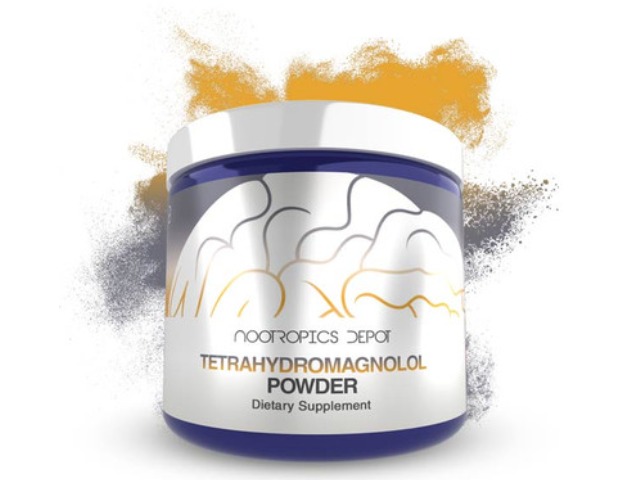
Tetrahydromagnolol Powder | Magnolia Officinalis Extract by Nootropics Depot
Shop Now →
Circadian Rhythm Blend by Vibrant Blue Oils
Shop Now →Disclosure: These are affiliate links. I earn a small commission if you purchase — at no extra cost to you. I only recommend products I personally use or have thoroughly researched.
Research & Studies
This section includes 3 peer-reviewed studies referenced in our analysis.